GS 1: Indian GeographyGS 2: PolityPrelimsGS 3: Major Crops, Cropping Patterns and Irrigation SystemsGS 2: Statutory, Regulatory and Quasi Judicial Bodies
Release 3,000 cusecs to T.N., Cauvery panel tells Karnataka, Pg1
Cauvery Water Regulation Committee directs Karnataka to release 3,000 cusecs daily to Tamil Nadu for 15 days amid severe drought conditions.
Practice MCQs
789 Students attempted
Key Highlights:
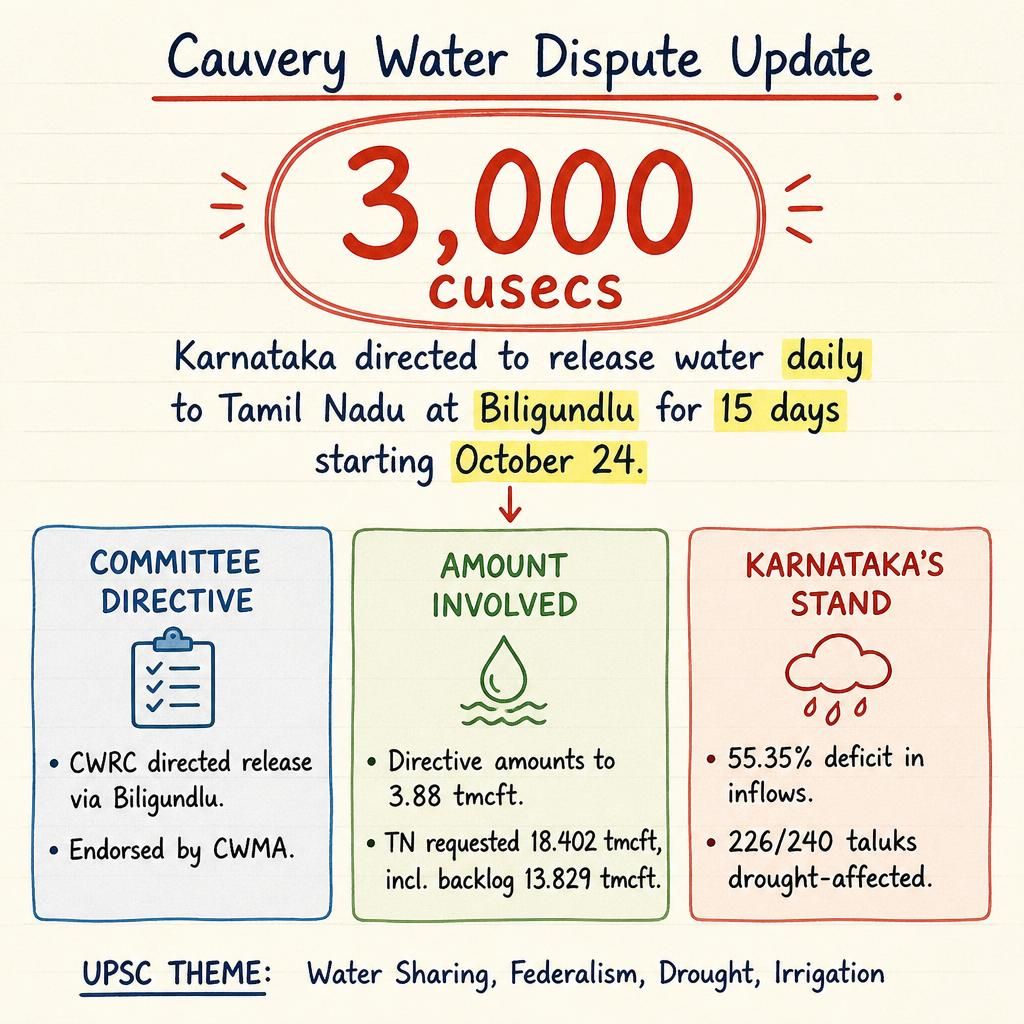
- The Cauvery Water Regulation Committee (CWRC) directed Karnataka to release 3,000 cusecs of water daily to Tamil Nadu at Biligundlu for 15 days starting October 24.
- This directive, endorsed by the Cauvery Water Management Authority (CWMA), amounts to 3.88 tmcft over the 15-day period.
- Tamil Nadu had requested a significantly higher release of 18.402 tmcft, including a claimed backlog of 13.829 tmcft.
- Karnataka opposed the directive, citing a 55.35% deficit in inflows into its four Cauvery basin reservoirs due to poor rainfall.
- Karnataka highlighted severe drought conditions, with 226 out of 240 taluks declared drought-affected, including 55 of 56 in the Cauvery basin.
Cauvery Water Dispute.jpg
Detailed Insights:
- The CWRC is a subordinate body to the CWMA, responsible for monitoring water levels and ensuring compliance with water-sharing decisions.
- Biligundlu is a crucial gauging station on the Cauvery River, located at the inter-state border, where water flow from Karnataka to Tamil Nadu is measured.
- Karnataka argued that it had already released an excess of 1.861 tmcft between July 29 and October 22, exceeding the stipulated 45.231 tmcft.
- The state emphasized that water-sharing decisions during a "distress year" should consider actual inflows, intermediate-catchment contributions, monsoon patterns, and ground conditions.
- Karnataka stated that its combined live reservoir storage was 46.510 tmcft, with approximately 43 tmcft needed for drinking water and priority needs, leaving only about 12 tmcft.
- Tamil Nadu countered that inadequate flows severely impacted delta farmers and agricultural operations, with the Mettur reservoir storage at 20.887 tmcft.
- Karnataka also pointed to Tamil Nadu's combined storage of 29.377 tmcft in the Mettur, Bhavani, and Amaravathi reservoirs, and above-normal rainfall in 13 Tamil Nadu districts.
- The Mettur Dam, built in 1934, is one of the largest dams in India and a vital source of irrigation and drinking water for central Tamil Nadu.
- Tamil Nadu maintained that anticipated rainfall from the Northeast monsoon could not substitute its due share, as future rainfall remains uncertain.
Key Concepts Involved:
- Cauvery Water Management Authority (CWMA): A statutory, quasi-judicial body established in 2018 to implement the Cauvery Water Disputes Tribunal award as modified by the Supreme Court.
- Cauvery Water Regulation Committee (CWRC): A subordinate body to the CWMA that monitors daily water levels, inflows, and storage positions in Cauvery basin reservoirs.
- Cusecs: A unit of flow rate, representing one cubic foot of water per second.
- Tmcft: An abbreviation for "thousand million cubic feet," commonly used in India to measure large volumes of water in reservoirs or river flow.

SuperKalam is your personal mentor for UPSC preparation, guiding you at every step of the exam journey.
Download the App


STUDY RESOURCES
CONTACT US
ⓒ Snapstack Technologies Private Limited