GS 1: Physical GeographyGS 3: Science & TechnologyGS 3: Environment & EcologyPrelimsGS 1: Important Geophysical Phenomena like Earthquakes, Tsunami, Volcanic Activity and Cyclones
U.K. forecasts ‘biggest’ El Niño yet will break heat records, Pg II
UK Met Office forecasts unprecedented El Niño, potentially making 2027 the hottest year on record, exacerbating global climate change impacts.
Practice MCQs
775 Students attempted
Key Highlights:
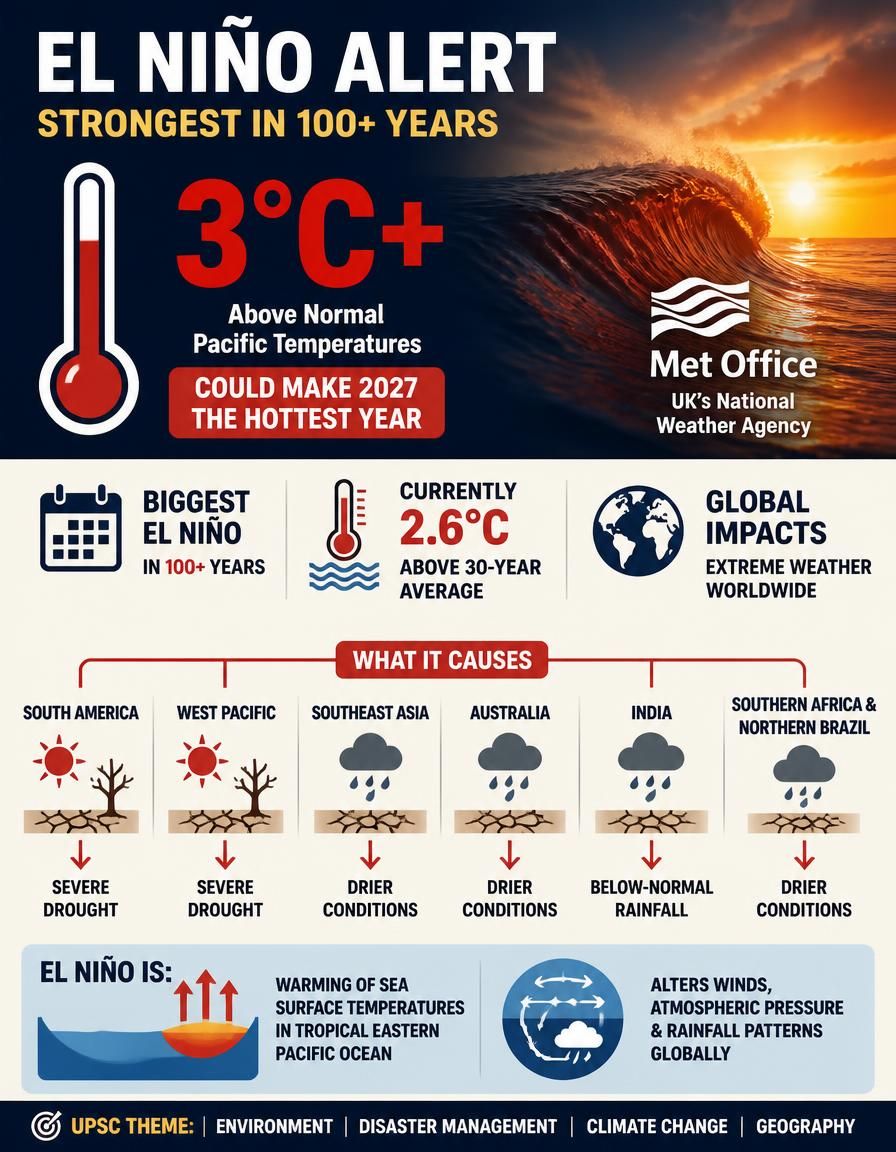
- The Met Office, Britain’s national weather agency, has predicted the biggest El Niño event in over a century
- This record-breaking El Niño is expected to cause Pacific water temperatures to rise over 3 degrees Celsius above the norm.
- The event could make 2027 the hottest year globally, surpassing previous records.
- The Met Office forecasts severe droughts in regions like South America and the West Pacific, and below-normal rainfall in India.
El Nino.jpg
Detailed Insights:
- An El Niño event is characterized by warming sea surface temperatures in the tropical eastern Pacific Ocean.
- This warming triggers significant worldwide changes in winds, atmospheric pressure, and rainfall patterns.
- Typically, El Niño occurs when water temperatures rise at least 0.5 degrees Celsius above the baseline.
- The current forecast indicates an unprecedented intensity, with Pacific temperatures already 2.6 degrees Celsius above the 30-year average.
- The phenomenon is expected to lead to drier conditions across Southeast Asia, Australia, southern Africa, and northern Brazil.
- Conversely, wetter conditions are anticipated in the Horn of Africa, the southern United States, Peru, and Ecuador.
- The term El Niño was coined by Peruvian and Ecuadoran fishermen in the 19th century, referring to an unusually warm ocean current appearing around Christmas.
- This natural climate oscillation occurs every two to seven years, influencing global weather patterns.
- The predicted intensity of this El Niño is expected to exacerbate the stresses of ongoing climate change.
Key Concepts Involved:
- El Niño: A climate pattern describing the unusual warming of surface waters in the eastern tropical Pacific Ocean.
- La Niña: The opposite phase of El Niño, characterized by unusually cold ocean temperatures in the equatorial Pacific.
- ENSO (El Niño-Southern Oscillation): A recurring climate pattern involving changes in the temperature of waters in the central and eastern tropical Pacific Ocean and the overlying atmosphere.
- Met Office: The United Kingdom's national meteorological service, responsible for weather forecasting and climate prediction.

SuperKalam is your personal mentor for UPSC preparation, guiding you at every step of the exam journey.
Download the App


STUDY RESOURCES
CONTACT US
ⓒ Snapstack Technologies Private Limited