GS 2: GovernanceGS 2: PolityPrelimsGS 2: Parliament and State Legislatures
Parliamentary Winter Sessions Skipped Only Four Times Since Independence
Historical Data Reveals Parliament Skipped Winter Sessions Only Four Times, Exposing Executive Discretion Under Article 85 and Calendar Delays
Source: The Hindu (Pg. 13)
Practice MCQs
789 Students attempted
Key Highlights:
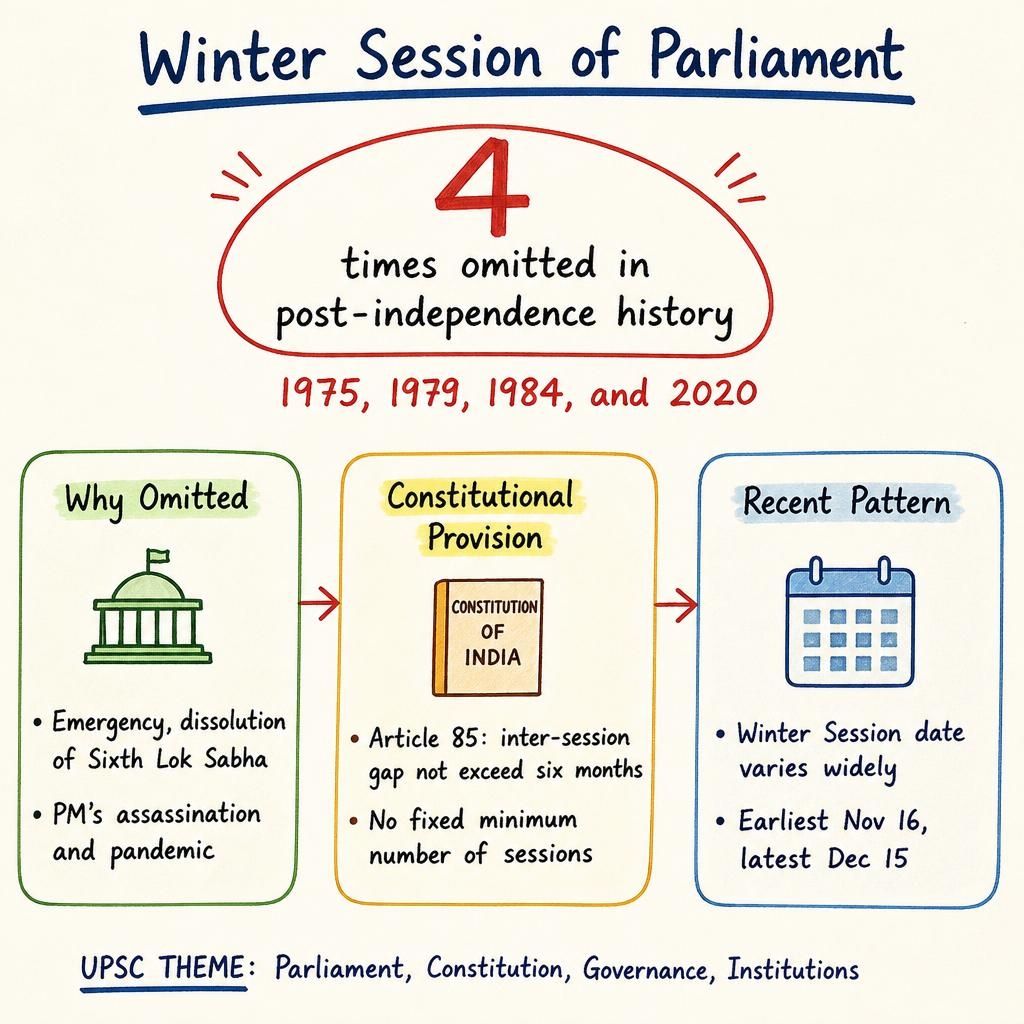
- The Winter Session of Parliament has been omitted only four times in post-independence history: 1975, 1979, 1984, and 2020.
- Historical omissions occurred due to extraordinary disruptions, including the national Emergency, dissolution of the Sixth Lok Sabha, the prime minister's assassination, and the pandemic.
- Article 85 of the Constitution of India mandates only that the inter-session gap must not exceed six months, prescribing no fixed minimum number of annual sessions.
- Over the last 12 years, the convening date of the Winter Session has fluctuated widely, beginning as early as November 16 and as late as December 15.
- Until 1961, the Lok Sabha and the Rajya Sabha frequently met on different dates to optimize the flow of bills between both houses.
Winter Session.jpg
Detailed Insights:
- The conventional three-session calendar—Budget, Monsoon, and Winter—stems from established parliamentary tradition rather than rigid constitutional text.
- The authority to convene a parliamentary session lies with the President on the advice of the Cabinet Committee on Parliamentary Affairs.
- The National Commission to Review the Working of the Constitution previously recommended a mandatory minimum of 120 sittings annually for the Lower House.
- Prolonged delays in prorogation and convening restrict parliamentary scrutiny of executive actions and compress debate time on critical legislation.
- Historical parliamentary records indicate that the Rajya Sabha can function independently during crises when the Lower House is either dissolved or not sitting.
Key Concepts Involved:
- Article 85: Constitutional provision empowering the President to summon, prorogue, and dissolve Parliament within a maximum six-month recess limit.
- Prorogation: The formal presidential act of terminating a legislative session without affecting the survival of the house itself.
- Cabinet Committee on Parliamentary Affairs: The executive cabinet committee responsible for deciding the dates, duration, and legislative agenda of parliamentary sessions.

SuperKalam is your personal mentor for UPSC preparation, guiding you at every step of the exam journey.
Download the App


STUDY RESOURCES
CONTACT US
ⓒ Snapstack Technologies Private Limited