GS 3: Science & TechnologyGS 2: Social JusticePrelimsGS 3: Science and Technology in Everyday LifeGS 2: Health Sector
ICMR Report Warns Rising Antimicrobial Resistance Threatens Critical Medications
ICMR's 2025 surveillance report across 34 secondary-care hospitals reveals surging antimicrobial resistance, endangering neonatal survival and rendering critical antibiotics ineffective.
Source: Indian Express (Pg. 16)
Practice MCQs
789 Students attempted
Key Highlights:
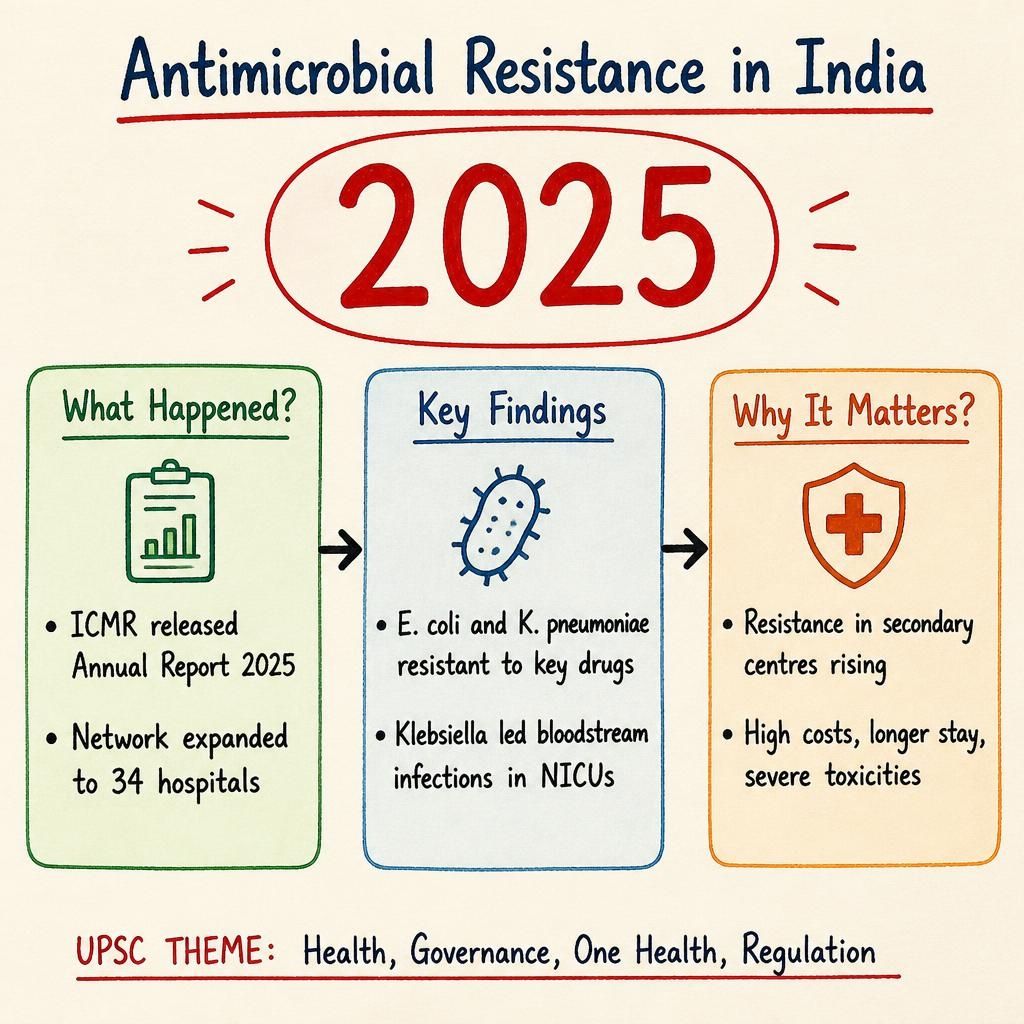
- The Indian Council of Medical Research released its Antimicrobial Resistance Surveillance and Research Network Annual Report 2025.
- The surveillance network expanded for the first time to evaluate antimicrobial trends across 34 secondary-care hospitals.
- Pathogens Escherichia coli and Klebsiella pneumoniae demonstrated acute resistance to commonly prescribed third-generation cephalosporins and fluoroquinolones.
- Klebsiella pneumoniae emerged as the leading cause of bloodstream infections in neonatal intensive-care units, severely endangering newborn survival.
- Resistance to last-resort carbapenem antibiotics was found to be heavily concentrated within specialized tertiary-care and referral hospitals.
AMR in India.jpg
Detailed Insights:
- India formulated the National Action Plan on Antimicrobial Resistance to curb misuse and align domestic surveillance with the World Health Organization.
- Rising resistance in secondary-care centers highlights an urgent governance need for mandatory hospital infection control committees in district facilities.
- High drug resistance forces reliance on reserve antibiotics, leading to escalated patient care costs, longer hospitalizations, and severe toxicities.
- Containment strategies necessitate a multi-sectoral One Health framework to curb antibiotic misuse across agriculture, poultry farming, and human health.
- Regulatory enforcement under Schedule H1 of the Drugs and Cosmetics Rules aims to penalize over-the-counter dispensing of restricted antimicrobials.
Scientific/Technical Concepts Involved:
- Antimicrobial Resistance: Biological mechanism where microorganisms evolve defense pathways against drugs previously capable of neutralizing them.
- Antibiogram: Periodic clinical report displaying local microbial susceptibility patterns to guide hospital antibiotic selection.
- Empirical Therapy: Immediate drug treatment initiated on clinical judgment before definitive laboratory culture results are available.
- Hospital-Acquired Infection: Nosocomial infection contracted during medical treatment that was not present or incubating upon admission.
Previous4/4

SuperKalam is your personal mentor for UPSC preparation, guiding you at every step of the exam journey.
Download the App


STUDY RESOURCES
CONTACT US
ⓒ Snapstack Technologies Private Limited