GS 3: Science & TechnologyGS 3: Environment & EcologyPrelimsGS 3: Economics of Animal RearingGS 3: Science and Technology in Everyday Life
The signs and science of the Shamonda virus, Pg17
France confirms first human Shamonda virus case, a vector-borne disease spread by midges, in an immunocompromised patient, raising concerns about emerging zoonotic threats.
Practice MCQs
782 Students attempted
Key Highlights:
- France confirmed the first known human case of Shamonda virus in a severely immunocompromised patient who died in Lyon in October.
- The virus, belonging to the Simbu group of Orthobunyaviruses, is primarily vector-borne and spread by Culicoides midges.
- First isolated in cattle in Nigeria in 1965, Shamonda virus mainly affects livestock such as cattle, sheep, goats, horses, and alpacas.
- The patient is believed to have contracted the SHAV-EU1 variant through a midge bite in eastern France, where the virus was circulating in animals.
- The World Organisation for Animal Health (WOAH) notes there is currently no commercially available vaccine and recommends vector control measures.
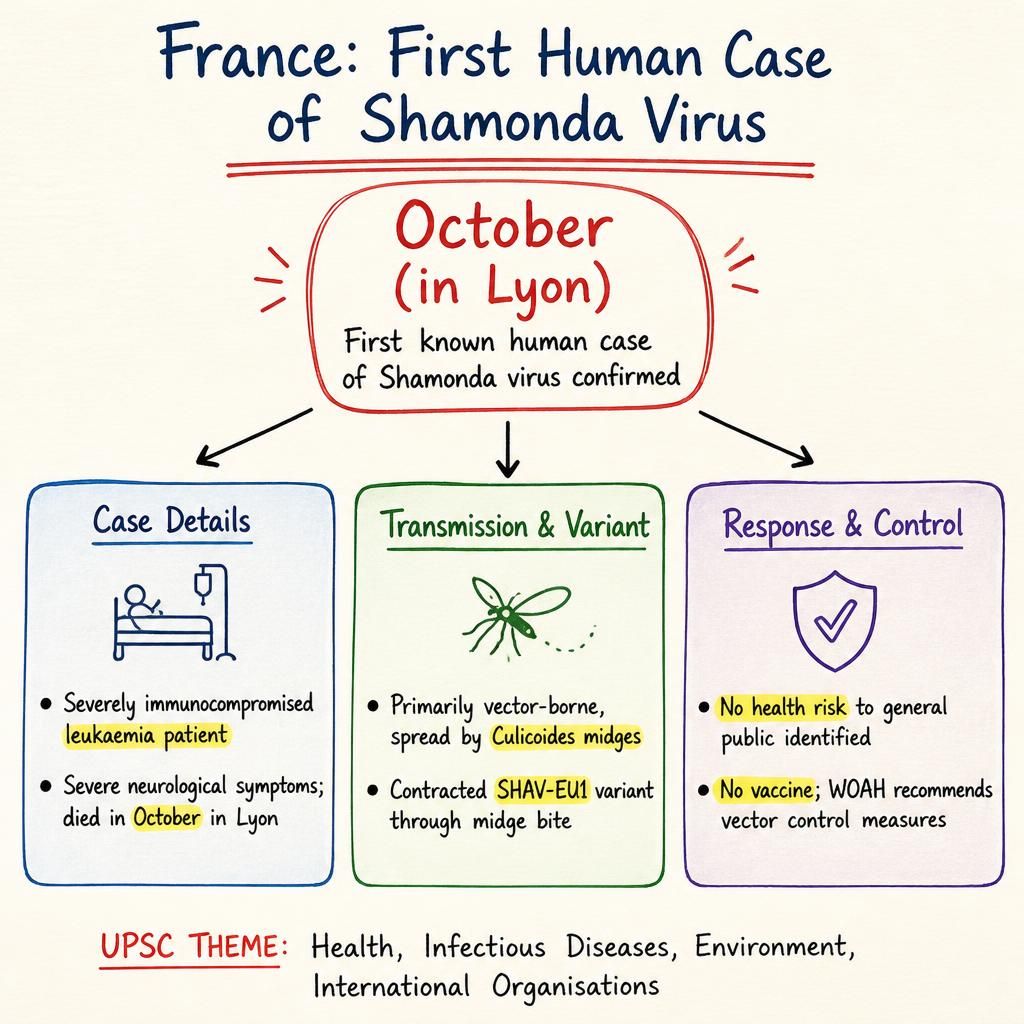
Shamonda Virus.jpg
Detailed Insights:
- French health and agriculture ministries stated that no health risk to the general public has been identified at this time, considering it an exceptional case.
- The patient, a leukaemia patient in their sixties, developed severe neurological symptoms including blindness and confusion before falling into a coma.
- Laboratory testing of cerebrospinal fluid and subsequent genome sequencing confirmed the presence of the SHAV-EU1 variant of Shamonda virus.
- In animals, symptoms include fever, diarrhoea, reduced milk production, and reproductive disorders, with neurological signs being less common.
- Outbreaks caused by the Simbu group of viruses tend to occur in cycles, influenced by the seasonal patterns of midges.
- Control and management strategies focus on physical barriers, reducing vector-breeding sites, vector surveillance, and transporting animals during low vector activity.
- The World Organisation for Animal Health (WOAH), an intergovernmental organization founded in 1924, coordinates and promotes animal disease control globally.
Scientific/Technical Concepts Involved:
- Shamonda virus: A vector-borne RNA virus from the Simbu serogroup that primarily infects livestock and has now caused a documented human fatality.
- Orthobunyavirus: A genus of single-stranded, negative-sense RNA viruses within the family Peribunyaviridae, many of which are zoonotic and arthropod-borne.
- Culicoides midges: Small biting flies (genus Culicoides) that act as biological vectors, transmitting various diseases, including Shamonda virus, to animals and sometimes humans.
- Immunocompromised patient: An individual with a weakened immune system due to disease or medication, making them highly susceptible to infections and severe disease outcomes.

SuperKalam is your personal mentor for UPSC preparation, guiding you at every step of the exam journey.
Download the App


STUDY RESOURCES
CONTACT US
ⓒ Snapstack Technologies Private Limited