GS 2: GovernanceGS 2: PolityPrelimsGS 2: Important Aspects of Governance, Transparency and AccountabilityGS 2: Representation of the People's Act
SC Backs Voters’ Right To Prosecute Candidates, Pg9
Supreme Court empowers ordinary citizens to file criminal complaints against electoral candidates for concealing or providing false information in nomination papers.
Practice MCQs
782 Students attempted
Key Highlights:
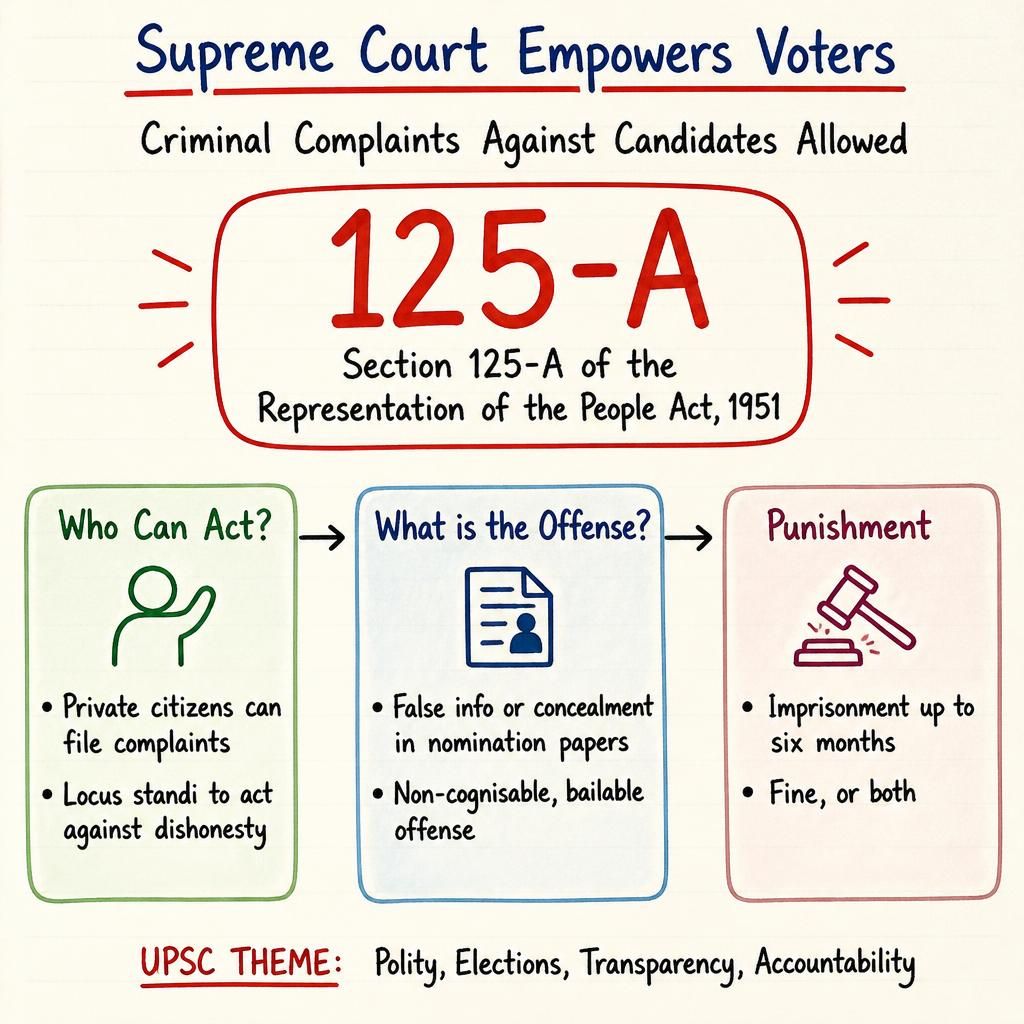
- The Supreme Court has ruled that private citizens can file criminal complaints against electoral candidates for providing false information or concealing details in their nomination papers.
- This judgment pertains to offenses under Section 125-A of the Representation of the People Act, 1951.
- A Bench of Justices Dipankar Datta and Sheel Nagu delivered the verdict, clarifying that the law does not restrict such complaints only to public servants.
- The ruling empowers citizen-voters with the locus standi to act against dishonesty in electoral politics.
Voter Empowerment.jpg
Detailed Insights:
- The Supreme Court clarified that the restrictions under Section 195 of the Code of Criminal Procedure (CrPC), which typically require a complaint from a public servant for certain offenses, do not apply to cases under Section 125-A of the Representation of the People Act, 1951.
- Candidates are mandated to file personal affidavits disclosing their assets, educational qualifications, and criminal antecedents along with their nominations.
- Concealing information or filing false details is a non-cognisable and bailable offense under Section 125-A, punishable with imprisonment up to six months, a fine, or both.
- The Court emphasized that if the legislature intended to limit complaints under Section 125-A to public servants, it would have amended Section 195 CrPC accordingly.
- This judgment aims to enhance transparency and maintain the purity of elections by holding candidates accountable for the information they provide to voters.
Key Concepts Involved:
- Representation of the People Act, 1951: An Act of Parliament to provide for the conduct of elections to the Houses of Parliament and to the House or Houses of the Legislature of each State.
- Code of Criminal Procedure (CrPC): The primary legislation governing the procedure for administration of criminal justice in India.
- Section 125-A of the Representation of the People Act, 1951: Penalizes candidates for knowingly furnishing false information or concealing material facts in their election affidavits.
- Section 195 of the Code of Criminal Procedure (CrPC): Deals with the prosecution for contempt of lawful authority of public servants and certain offenses against public justice, often requiring a complaint by a public servant.
- Locus Standi: The right or capacity of a party to bring an action or appear in a court of law.

SuperKalam is your personal mentor for UPSC preparation, guiding you at every step of the exam journey.
Download the App


STUDY RESOURCES
CONTACT US
ⓒ Snapstack Technologies Private Limited