GS 2: GovernanceGS 3: Science & TechnologyGS 2: Social JusticePrelimsGS 2: Government policies and interventions for development in various sectors
Childhood Obesity Deepens The Nutrition Challenge, Pg13
WHO issues first-ever guidelines as childhood obesity surges globally, creating a double burden of malnutrition and demanding urgent policy interventions.
Practice MCQs
782 Students attempted
Key Highlights:
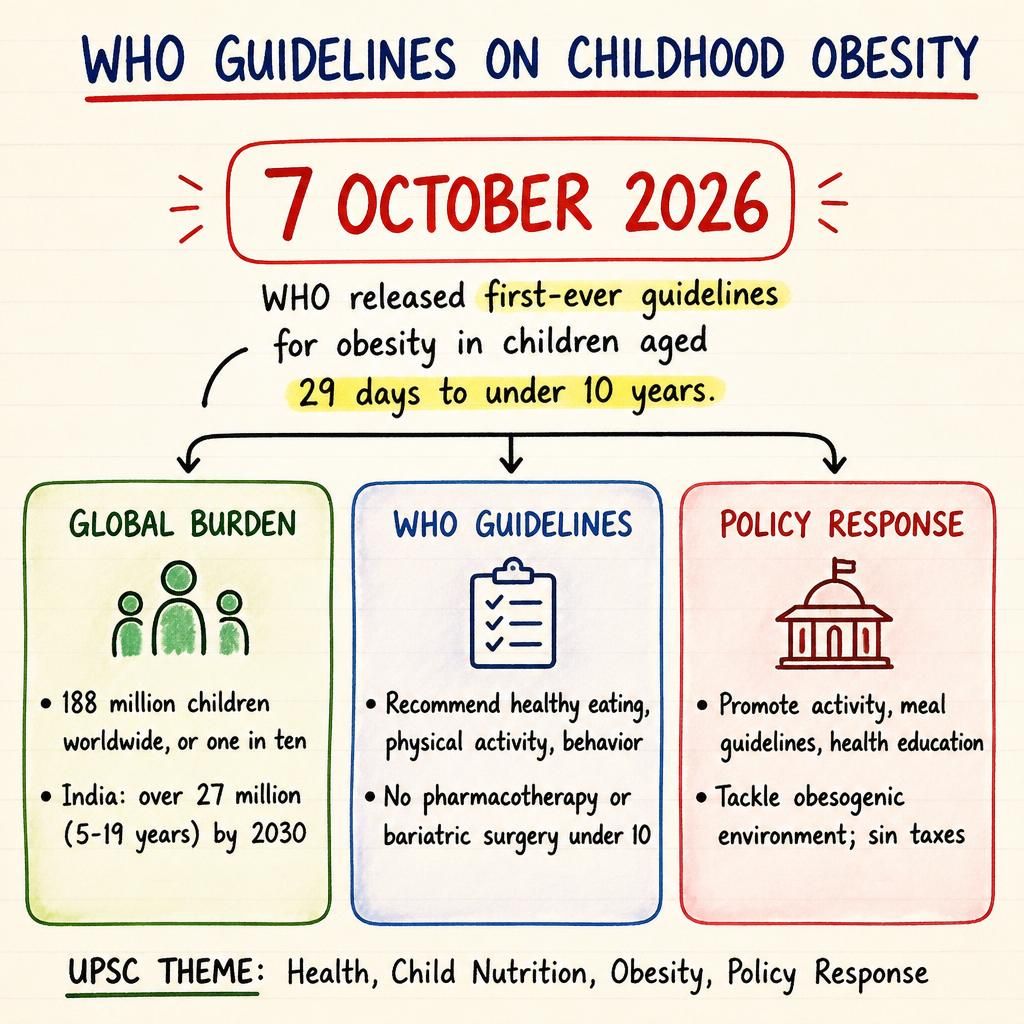
- The World Health Organization (WHO) released its first-ever guidelines on October 7, 2026, for the integrated management of obesity in children aged 29 days to under 10 years.
- These guidelines provide recommendations on dietary interventions, physical activity, sedentary behavior, sleep, and behavioral, digital health, pharmacotherapy, and bariatric surgery interventions.
- UNICEF's Child Nutrition Global Report 2025, titled "Feeding Profit: How food environments are failing children," revealed that childhood obesity has surpassed underweight as the most common form of malnutrition globally among school-aged children and adolescents.
- The report indicated that approximately 188 million children worldwide, or one in ten, are living with obesity.
- India is projected to have over 27 million children and adolescents (5-19 years) living with obesity by 2030, contributing about 11% to the global burden.
- Low- and middle-income countries, including India, face a double burden of malnutrition, grappling with both undernutrition and rising rates of overweight and obesity.
WHO Guidelines.jpg
Detailed Insights:
- The new WHO guidelines emphasize a people-centered approach to care through primary healthcare, also covering adolescents aged 10-19 years.
- They recommend structured support combining healthy eating, physical activity, and behavior-change interventions, tailored to individual needs.
- The guidelines advise a cautious approach to medical treatments like pharmacotherapy and bariatric surgery, not recommending them for children under 10.
- The rise in childhood obesity is linked to a global shift towards high-fat, high-sugar foods and less energy-intensive lifestyles.
- Non-communicable diseases (NCDs), traditionally adult ailments like Type 2 diabetes and cardiovascular diseases, are increasingly diagnosed in obese children and adolescents.
- The UNICEF report highlighted that the prevalence of overweight children and adolescents in South Asian countries increased nearly fivefold across all age bands (5-19) between 2000 and 2022.
- India's National Family Health Survey (NFHS-5) (2019-21) showed an increase in overweight children under five from 2.1% to 3.4%.
- Policy approaches aim to address the obesogenic environment through government intervention in agenda setting, policy framing, and local implementation.
- Key policy pillars include promoting physical activity, establishing meal and obesity guidelines, health education, and early intervention programs like limiting sweetened beverages in schools.
- Challenges in addressing the food environment include weak marketing regulations and a lack of effective front-of-package labeling.
- The Indian Council of Medical Research–National Institute of Nutrition (ICMR-NIN) and NITI Aayog have also launched initiatives like 'Let's Fix Our Food' to combat childhood obesity in India.
- Fiscal measures, such as sin taxes on unhealthy foods, are suggested to generate revenue for public health interventions.
Key Concepts Involved:
- Non-communicable diseases (NCDs): Chronic diseases not transmitted between people, caused by genetic, physiological, environmental, and lifestyle factors.
- Double burden of malnutrition: Coexistence of undernutrition (stunting, wasting) with overweight, obesity, or diet-related NCDs within the same population or individual.
- Obesogenic environment: An environment that promotes weight gain by making unhealthy foods accessible and limiting opportunities for physical activity.
- Sin taxes: Excise taxes levied on goods deemed harmful to health or society, such as sugary drinks, to discourage consumption and raise revenue.

SuperKalam is your personal mentor for UPSC preparation, guiding you at every step of the exam journey.
Download the App


STUDY RESOURCES
CONTACT US
ⓒ Snapstack Technologies Private Limited