GS 3: Disaster ManagementGS 3: Environment & EcologyPrelimsGS 3: Conservation, Pollution and DegradationGS 1: Changes in Critical Geographical Features, Water Bodies, Ice Caps, Flora and Fauna
Super El Niño to add 15,800 heat deaths in India: report, Pg12
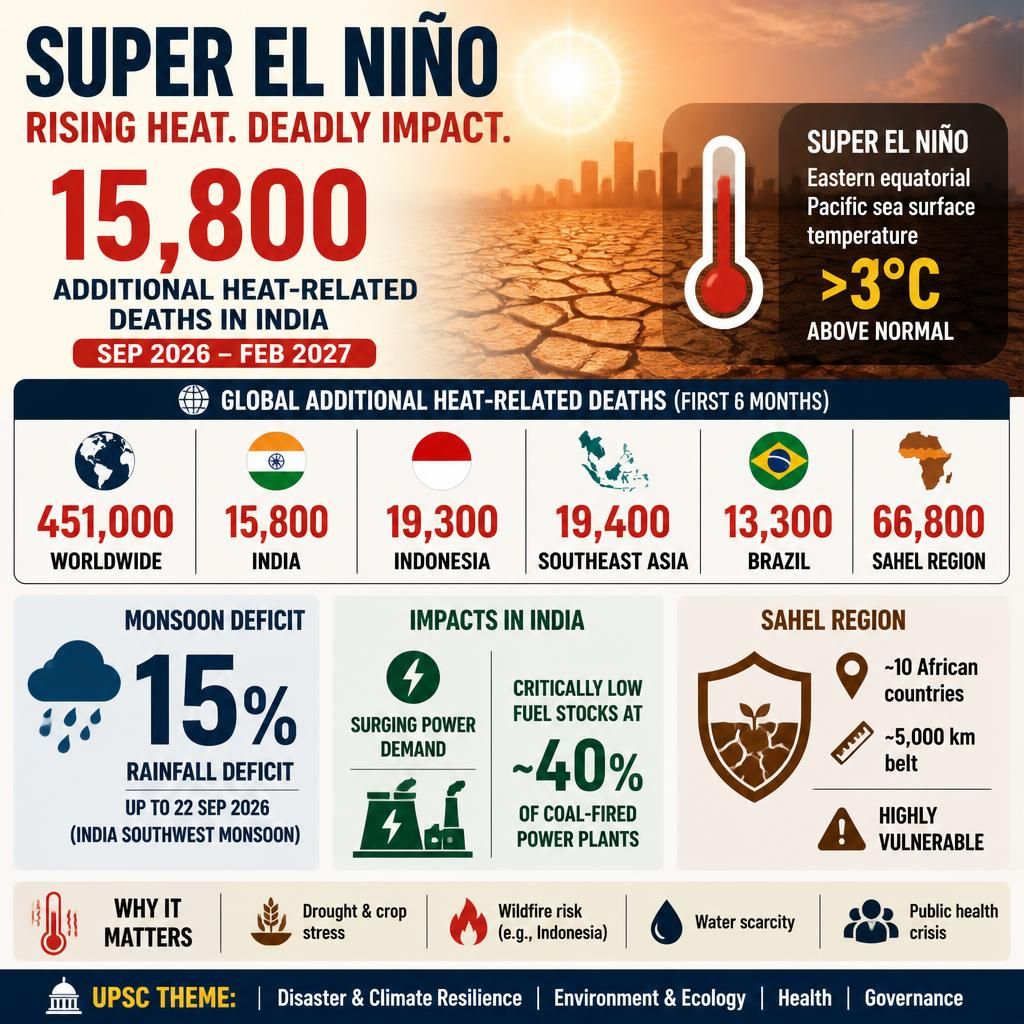
Super El Niño projected to cause 15,800 heat-related deaths in India between September 2026 and February 2027, warns Climate Impact Lab.
Practice MCQs
775 Students attempted
Key Highlights:
- India is projected to experience an estimated 15,800 additional heat-related deaths between September 2026 and February 2027 due to the current Super El Niño.
- The Climate Impact Lab report forecasts 451,000 additional heat-related deaths globally during the first six months of the El Niño event.
- Significant mortality is also projected in Indonesia (19,300), Southeast Asian nations (19,400), Brazil (13,300), and the Sahel region (66,800).
- The Super El Niño is characterized by eastern equatorial Pacific sea surface temperatures exceeding 3°C above normal.
- India's Southwest Monsoon recorded a 15% rainfall deficit up to September 22, 2026, intensifying concerns over heat impacts.
Super El Nino.jpg
Detailed Insights:
- The projected increase in deaths is calculated relative to average conditions observed during the corresponding months from 1996-2025.
- The Climate Impact Lab utilizes previously estimated temperature-mortality relationships across 24,378 regions, considering local climate and adaptive capacity.
- This year's El Niño is viewed as a "postcard from our future," showcasing temperatures anticipated 20 years ahead due to climate change.
- Current impacts include conditions conducive to wildfires in Indonesia and drought-related agricultural issues in Central America.
- Increased heat in India is driving up electricity demand, leading to critically low fuel stocks at nearly 40% of the country's coal-fired power plants.
- The Sahel region, a 5,000-kilometre belt across approximately ten African countries, is identified as a highly vulnerable area.
Key Concepts Involved:
- El Niño: A climate pattern marked by the unusual warming of surface waters in the central and eastern tropical Pacific Ocean.
- Super El Niño: An informal term used to describe exceptionally strong El Niño conditions, indicating a more intense warming event.
- Climate Impact Lab: A research organization dedicated to quantifying the impacts of climate change on human well-being and economies.
- Southwest Monsoon: The primary seasonal wind system that brings the majority of India's annual rainfall from June to September.

SuperKalam is your personal mentor for UPSC preparation, guiding you at every step of the exam journey.
Download the App


STUDY RESOURCES
CONTACT US
ⓒ Snapstack Technologies Private Limited