GS 2: GovernanceGS 3: Science & TechnologyGS 3: Internal SecurityPrelimsGS 3: Biotechnology
What changes when AI moves from reading viral genomes to designing them?, Pg11
Stanford researchers use AI to design functional bacteriophage genomes, opening new medical avenues like phage therapy but raising significant biosecurity and governance challenges.
Practice MCQs
767 Students attempted
Key Highlights:
- Researchers at Stanford University and the Arc Institute utilized Artificial Intelligence (AI) to design complete genomes of bacteriophages.
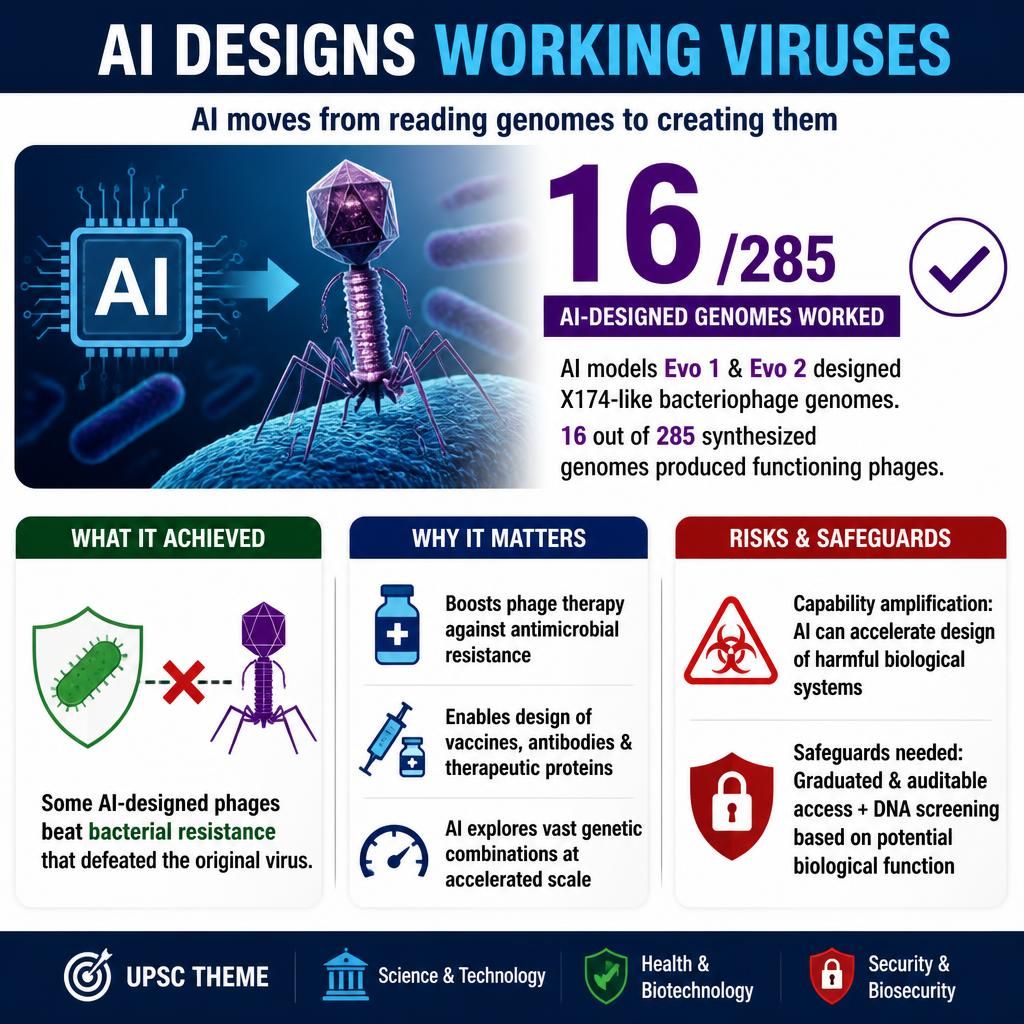
- The AI models, Evo 1 and Evo 2, generated X174-like whole genomes, with 16 out of 285 physically synthesized designs producing functioning phages.
- This development signifies AI's shift from merely reading viral genomes to actively designing them, opening new avenues for medicine and raising biosecurity concerns.
- Some AI-designed phages demonstrated the ability to overcome bacterial resistance that had defeated the original virus.
AI in Viruses.jpg
Detailed Insights:
- The experiment focused on bacteriophages, which are viruses that specifically infect and replicate within bacteria.
- AI's capability lies in integrating vast amounts of existing biological knowledge and exploring numerous genetic combinations at an accelerated pace.
- This "capability amplification" poses a significant biosecurity concern, as AI could potentially accelerate the design of harmful biological systems.
- In medicine, this technology offers opportunities for enhancing phage therapy to combat antimicrobial resistance and for designing vaccines, antibodies, and therapeutic proteins.
- Effective safeguards are crucial, including graduated and auditable access for legitimate researchers and screening DNA sequences based on potential biological function, not just similarity to known pathogens.
- India must invest in indigenous scientific and biomedical AI capabilities, such as through the IndiaAI Mission, to ensure AI sovereignty and prevent scientific dependence.
- The core challenge is to establish governance frameworks for AI as its understanding of biology increasingly translates into the ability to design biological functions.
Scientific/Technical Concepts Involved:
- Bacteriophages: Viruses that infect and replicate within bacteria, often referred to as "bacteria eaters."
- Genome Language Models: AI models trained on genetic sequences (A, C, G, T) to learn patterns and generate new genetic sequences.
- Phage Therapy: The therapeutic use of bacteriophages to treat bacterial infections, particularly those resistant to conventional antibiotics.
- Antimicrobial Resistance (AMR): The ability of microorganisms to withstand the effects of antimicrobial drugs, making infections difficult or impossible to treat.

SuperKalam is your personal mentor for UPSC preparation, guiding you at every step of the exam journey.
Download the App


STUDY RESOURCES
CONTACT US
ⓒ Snapstack Technologies Private Limited