GS 3: Science & TechnologyGS 2: Social JusticePrelimsGS 3: BiotechnologyGS 3: Science and Technology in Everyday Life
The Personalised Vaccine That Could Cut Skin Cancer Death Risk, Pg9
New personalized mRNA cancer vaccine, intismeran, combined with Keytruda, significantly reduces skin cancer recurrence and death risk by up to 59%.
Practice MCQs
767 Students attempted
Key Highlights:
- A new personalized mRNA cancer vaccine, intismeran (also known as mRNA-4157 or V940), developed by Moderna and Merck, has shown significant clinical benefits.
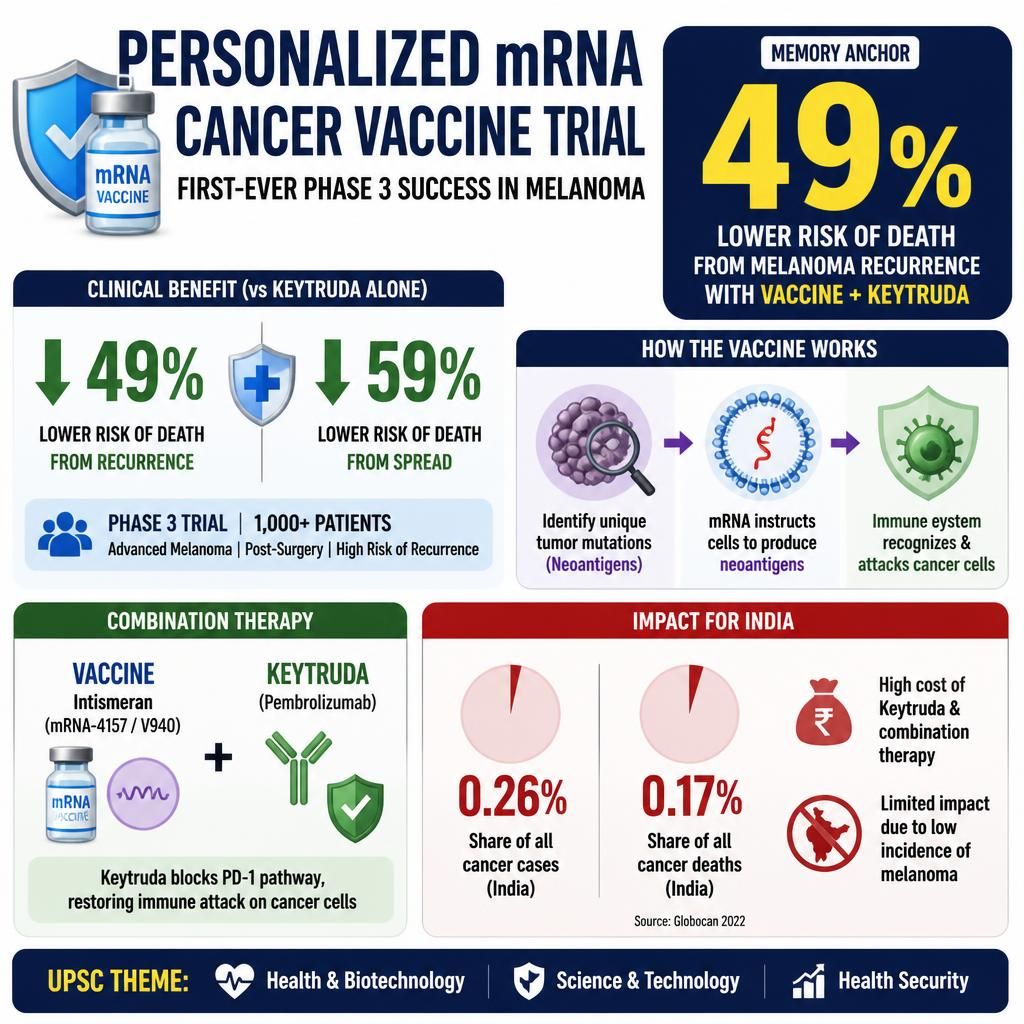
- When administered with the immunotherapy drug Keytruda, intismeran reduced the risk of death from recurrence of melanoma (skin cancer) by 49%.
- The combination therapy also lowered the risk of death due to the spread of melanoma by 59% compared to Keytruda alone.
- This marks the first time a personalized cancer vaccine has successfully completed a Phase 3 clinical trial, demonstrating the efficacy of targeting individual tumor mutations.
- The impact for India is currently limited due to the low incidence of melanoma among the Indian population and the high cost of Keytruda and the combination therapy.
mRNA.jpg
Detailed Insights:
- The personalized vaccine works by identifying unique mutations, called neoantigens, present only on a patient's cancer cells.
- mRNA technology is used to create a vaccine that instructs the body's immune system to recognize and target these specific neoantigens.
- Keytruda (pembrolizumab) is an immune checkpoint inhibitor that helps restore the immune system's ability to attack cancer cells by blocking the PD-1 pathway.
- The study involved over 1,000 patients with advanced melanoma whose tumors had been surgically removed but were at high risk of recurrence.
- Globocan data indicates that melanoma accounts for only about 0.26% of all cancer cases and 0.17% of cancer deaths in India.
- The high cost of existing immunotherapy drugs like Keytruda already limits access for many Indian patients, posing a challenge for the adoption of this new combination therapy.
- This breakthrough could pave the way for personalized cancer treatments for other cancer types, with ongoing trials for bladder and lung cancers.
Scientific/Technical Concepts Involved:
- mRNA (messenger RNA): A single-stranded molecule carrying genetic instructions from DNA to make specific proteins, used here to train the immune system.
- Neoantigens: Unique proteins found only on cancer cells due to tumor mutations, serving as specific targets for personalized cancer vaccines.
- Immunotherapy: A type of cancer treatment that boosts the body's natural defenses to fight cancer.
- PD-1 Inhibitor: A class of drugs, like Keytruda, that block the PD-1 protein on immune cells, preventing cancer cells from evading immune detection.

SuperKalam is your personal mentor for UPSC preparation, guiding you at every step of the exam journey.
Download the App


STUDY RESOURCES
CONTACT US
ⓒ Snapstack Technologies Private Limited