GS 3: Science & TechnologyGS 3: EconomyPrelimsGS 3: Indian Economy, Planning, Mobilization of Resources, Growth, Development and EmploymentGS 3: IT and Computers
Chipflation: Electronics See Years Of Price Hikes Replicated In 6 Mths, Pg13
AI investment boom fuels 'Chipflation,' driving unprecedented electronics price hikes, reversing decades of cost reduction, and impacting global consumer markets significantly.
Practice MCQs
767 Students attempted
Key Highlights:
- Consumer electronics prices have seen rapid increases in 2026, a phenomenon termed Chipflation, driven by a global shortage of memory chips.
- The price hikes, which historically occurred over several years, have been compressed into just six months in 2026, impacting products like smartphones and TVs.
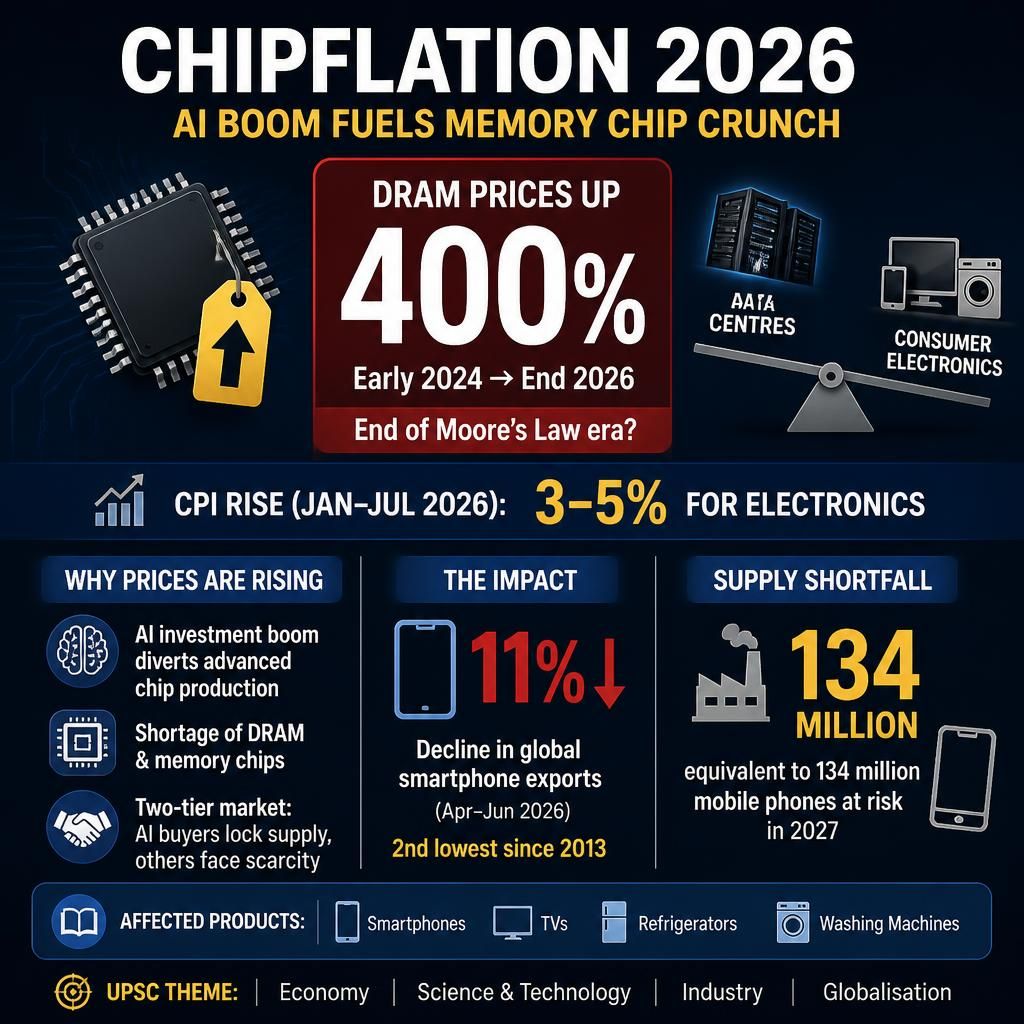
- Data from the Ministry of Statistics and Programme Implementation (MoSPI) indicates a 3-5% rise in the Consumer Price Index (CPI) for various electronics from January to July 2026.
- The shortage is primarily caused by the global Artificial Intelligence (AI) investment boom, which diverts advanced chip production.
- DRAM (Dynamic Random Access Memory) prices are projected to increase by over 400% from early 2024 to the end of 2026, reversing long-standing cost reduction trends.
Chipflation.jpg
Detailed Insights:
- The global AI boom has led major chipmakers to prioritize the production of advanced chips for data centers, creating a scarcity for consumer electronics.
- This supply crunch significantly impacts essential components like DRAM, which are crucial for everyday devices such as refrigerators, washing machines, and smartphones.
- The current trend of rising chip prices stands in stark contrast to Moore's Law, which historically predicted a continuous decrease in chip costs over time.
- A two-tier market has emerged, where large AI and cloud buyers secure long-term agreements, leaving traditional manufacturers to compete for limited chip supply.
- The estimated shortfall in memory chips for 2027 is equivalent to the requirements for manufacturing 134 million mobile phones.
- Global smartphone exports experienced an 11% decline in the April-June quarter, reaching their second-lowest level since 2013.
- Consumers are increasingly becoming value-conscious and more reliant on promotional offers due to the rising prices of electronic devices.
Key Concepts Involved:
- Chipflation: A term coined by Morgan Stanley analysts to describe the rising cost of electronics due to the high demand for memory chips driven by AI.
- Consumer Price Index (CPI): A measure that tracks the average change over time in the prices paid by urban consumers for a market basket of consumer goods and services.
- DRAM (Dynamic Random Access Memory): A type of random-access semiconductor memory that stores each bit of data in a separate capacitor within an integrated circuit.
- Moore's Law: An observation stating that the number of transistors in an integrated circuit doubles approximately every two years, leading to increased processing power and reduced costs.

SuperKalam is your personal mentor for UPSC preparation, guiding you at every step of the exam journey.
Download the App


STUDY RESOURCES
CONTACT US
ⓒ Snapstack Technologies Private Limited