EthicsGS 2: GovernanceGS 2: PolityGS 2: Social JusticePrelims
Is corruption the biggest threat to India’s future?, Pg9
Experts warn corruption, exacerbated by RTI subversion and institutional decay, remains India's gravest threat, hindering development and denying justice to citizens.
Practice MCQs
760 Students attempted
Key Highlights:
- The recent National Eligibility cum Entrance Test (NEET) paper leak has reignited public debate on corruption and accountability in India.
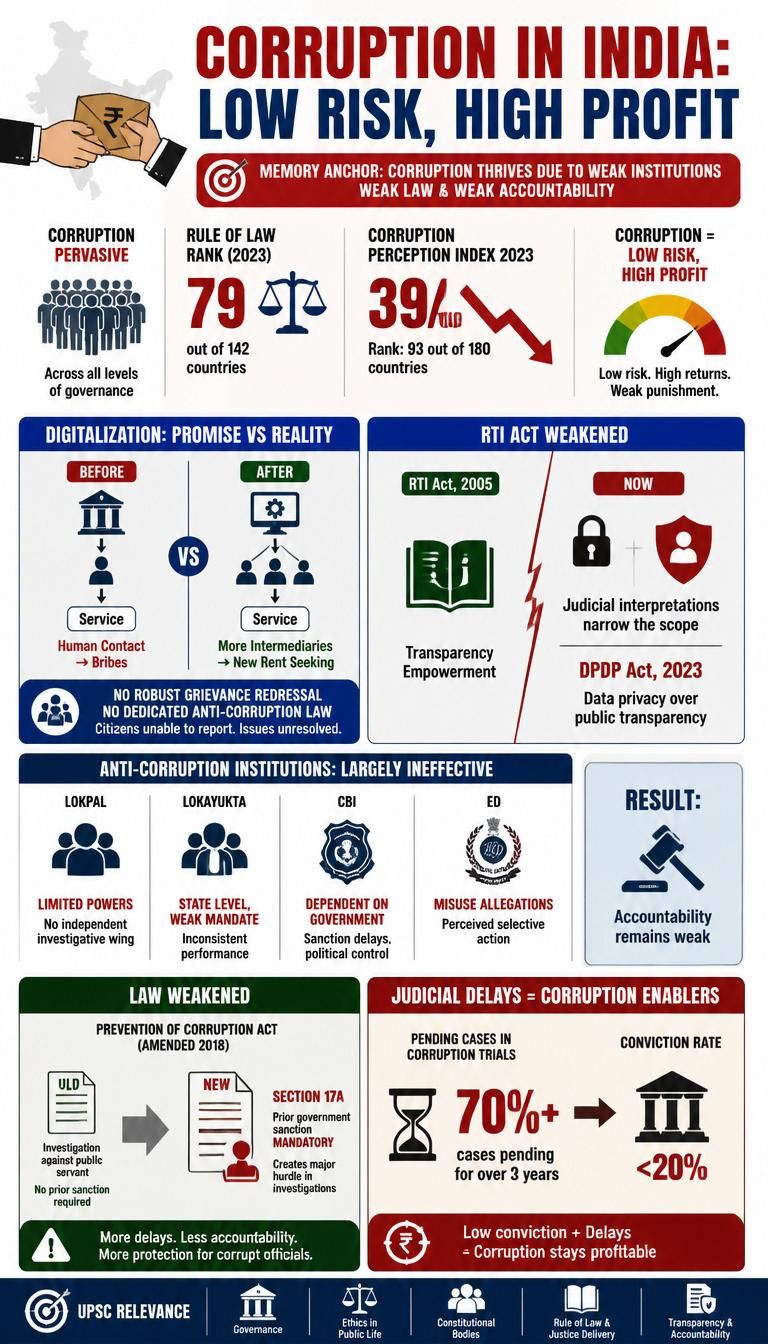
- Experts highlight that corruption persists across all levels, despite the introduction of digitalization and the Right to Information (RTI) Act.
- The RTI Act has been significantly weakened by judicial interpretations and the enactment of the Digital Personal Data Protection (DPDP) Act, 2023.
- Anti-corruption institutions such as Lokpal, Lokayukta, Central Bureau of Investigation (CBI), and Enforcement Directorate (ED) are perceived as largely ineffective.
- Judicial delays and the lack of stringent punishment contribute to corruption being a "low-risk, high-profit" activity in India.
- India's low standing in the Rule of Law Index underscores the systemic challenges posed by pervasive corruption to national development.
Corruption.jpg
Detailed Insights:
- Digitalization, while aiming to curb corruption, has sometimes created new layers of intermediaries, particularly for marginalized citizens seeking government services.
- The absence of a robust grievance redressal mechanism and a dedicated law hinders citizens' ability to report corruption and ensure timely resolution.
- The Prevention of Corruption Act was amended in 2018, introducing Section 17A, which mandates prior government sanction to investigate public servants for corruption.
- The Digital Personal Data Protection (DPDP) Act, 2023, by expanding the definition of "personal information," restricts access to data previously available under the RTI Act.
- Appointments of Information Commissioners have faced criticism for lacking transparency, thereby compromising the independence and efficacy of information commissions.
- The India Against Corruption movement of 2011-2012 galvanized public demand for stronger anti-corruption laws and the establishment of the Lokpal.
- The perceived selective targeting of opposition figures by agencies like the CBI and ED raises concerns about the impartiality of anti-corruption efforts.
- Corruption imposes a substantial human cost by impeding access to fundamental rights and services like healthcare, education, and public distribution systems.
Key Concepts Involved:
- National Eligibility cum Entrance Test (NEET): A national-level entrance examination for admission to undergraduate medical courses in India.
- Right to Information (RTI) Act: A 2005 law empowering citizens to access information from public authorities to promote transparency and accountability.
- Digital Personal Data Protection (DPDP) Act, 2023: An Indian law governing the processing of digital personal data, impacting information disclosure under RTI.
- Lokpal: An anti-corruption ombudsman body in India, tasked with inquiring into corruption allegations against public functionaries.
- Prevention of Corruption Act: An Indian parliamentary act designed to combat corruption within government agencies and public sector undertakings.
- Rule of Law Index: An annual report by the World Justice Project that measures adherence to the rule of law in various countries globally.

SuperKalam is your personal mentor for UPSC preparation, guiding you at every step of the exam journey.
Download the App


STUDY RESOURCES
CONTACT US
ⓒ Snapstack Technologies Private Limited