GS 3: Internal SecurityGS 3: EconomyPrelimsGS 3: Buffer Stocks and Food SecurityGS 3: Infrastructure: Energy, Ports, Roads, Airports, Railways etc.
Of India’s 5.33 mn tonne of strategic oil reserve capacity, 36% is empty, Pg13
India's strategic petroleum reserves hold only 63% capacity amid West Asia tensions, raising concerns over energy security and import dependence.
Practice MCQs
731 Students attempted
Key Highlights:
- India's Strategic Petroleum Reserves (SPRs) hold 3.37 million tonnes (mt) of crude oil, about 63% of their total 5.33 mt capacity.
- The SPRs are located in Andhra Pradesh and Karnataka, acting as a buffer against short-term supply disruptions.
- Combined with commercial crude oil storage, India has 8.5 mt of crude oil in storage, equivalent to approximately 24 days of crude oil needs.
- India aims to expand its SPR capacity with new facilities in Odisha and Karnataka.
Detailed Insights:
- The concept of SPRs emerged in response to the 1973 oil crisis, with countries like the US, China, and Japan maintaining large reserves.
- ISPRL, a subsidiary of the Oil Industry Development Board, manages India's strategic crude oil storage.
- India's current storage capacity, including commercial stocks, covers about 74 days of crude oil needs, less than the IEA's recommended 90 days.
- As the world's third-largest oil consumer, India relies on imports for over 88% of its crude oil requirements.
- Plans are underway to establish additional reserves in locations like Bikaner and Rajkot, potentially increasing the total SPR capacity by another 6 mt.
Key Concepts Involved:
- Strategic Petroleum Reserve (SPR): Stockpiles of crude oil maintained by countries to safeguard against supply disruptions.
- International Energy Agency (IEA): An autonomous intergovernmental organization that provides policy recommendations, analysis and data on the entire global energy sector.
- ISPRL: Indian Strategic Petroleum Reserves Limited, responsible for building and managing India's strategic crude oil storage facilities.
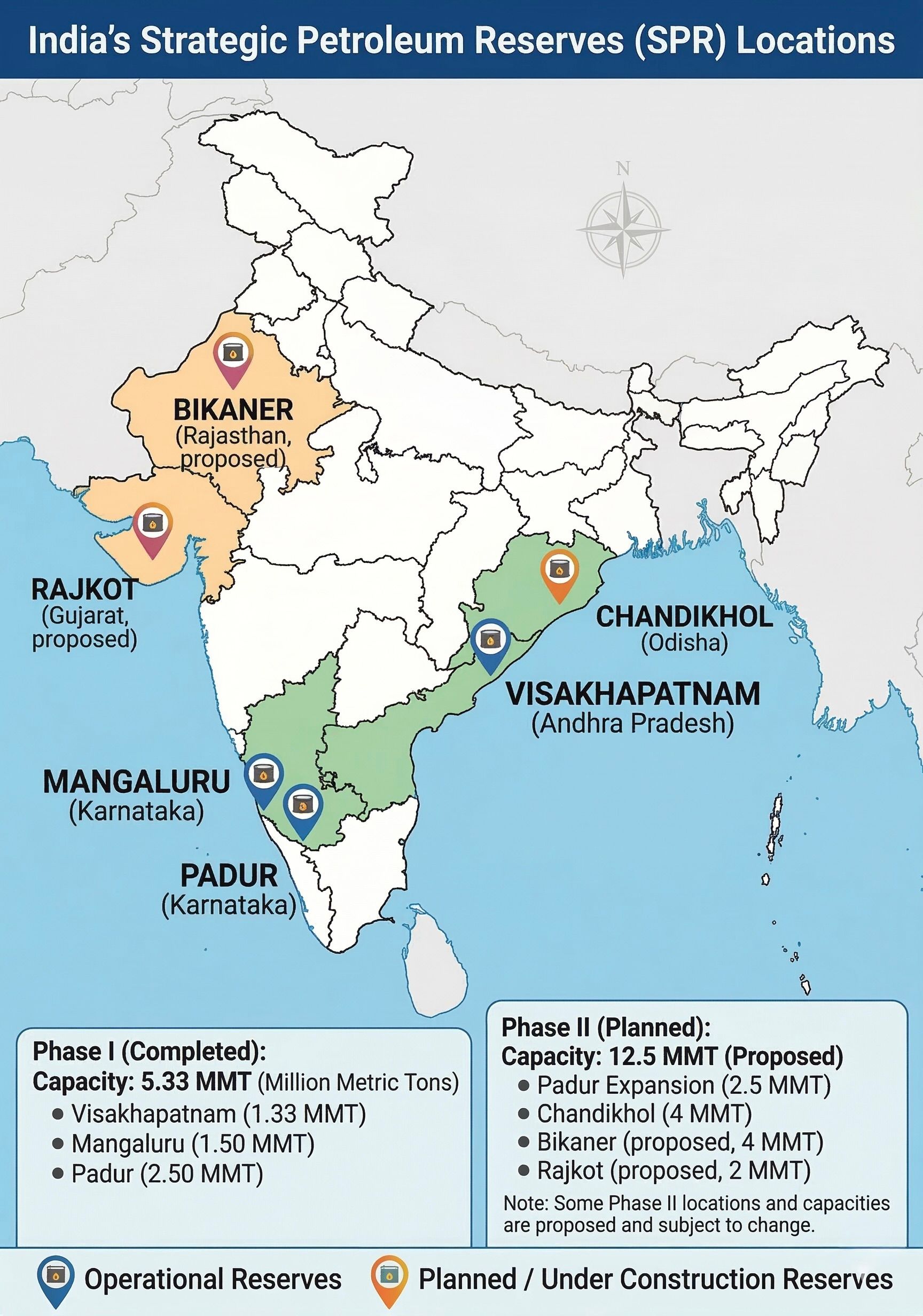
India's Strategic Oil Reserves

SuperKalam is your personal mentor for UPSC preparation, guiding you at every step of the exam journey.
Download the App


STUDY RESOURCES
CONTACT US
ⓒ Snapstack Technologies Private Limited