GS 2: International RelationsGS 1: Art & CulturePrelimsGS 2: Bilateral, Regional and Global Groupings and AgreementsGS 2: Important International Institutions, Agencies and Fora
Inaugural SCO Civilisational Dialogue Forum Adopts Indraprastha Communique
India hosts the inaugural Shanghai Cooperation Organisation Civilisational Dialogue Forum in New Delhi, uniting twenty-two nations behind the landmark Indraprastha Communique.
Sources: PIB | Indian Express (Pg. 11) | The Hindu (Pg. 10)
Practice MCQs
782 Students attempted
Key Highlights:
- The inaugural Shanghai Cooperation Organisation Civilisational Dialogue Forum concluded at Purana Qila, New Delhi, with the adoption of the Indraprastha Communiqué.
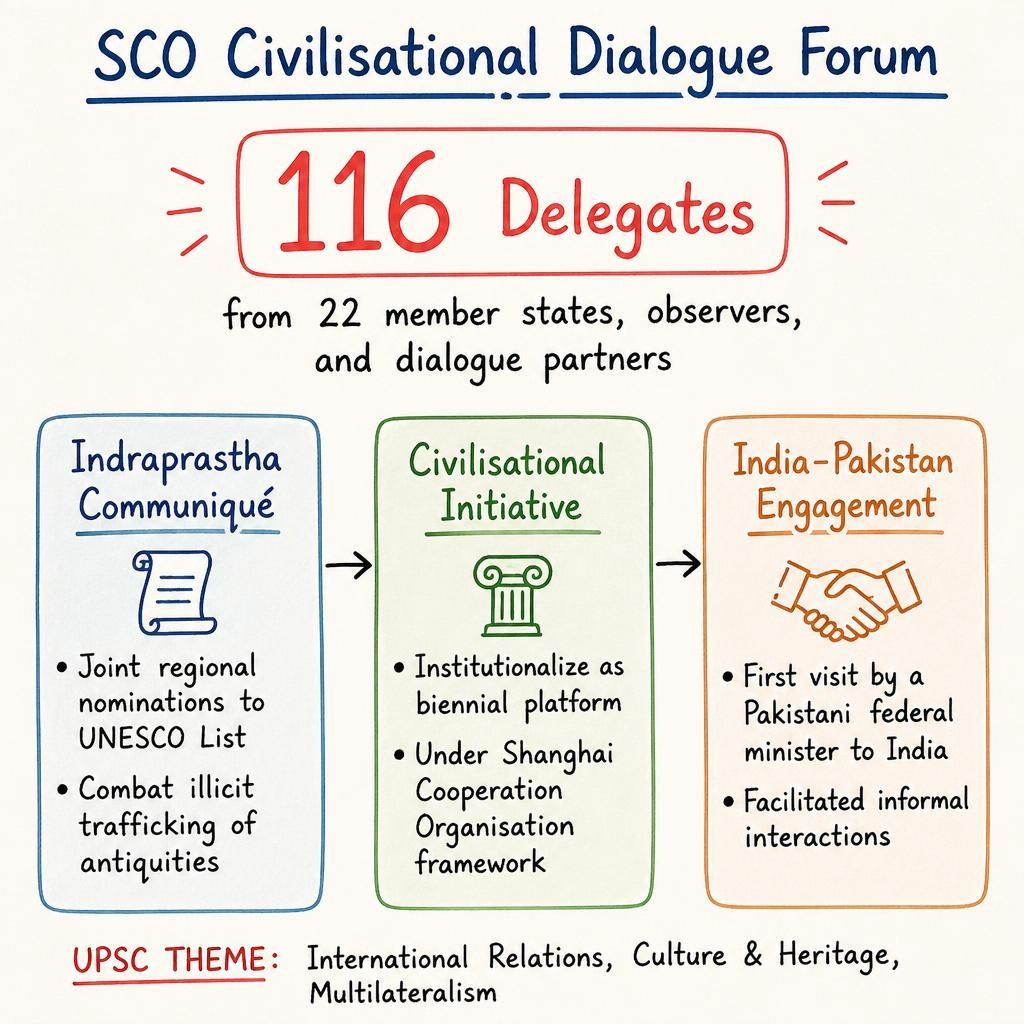
- Jointly organized by the Ministry of Culture and the Ministry of External Affairs, the forum convened 116 delegates from 22 member states, observers, and dialogue partners.
- The Indraprastha Communiqué calls for joint regional nominations for the UNESCO World Heritage List, combating illicit trafficking of antiquities, and deploying artificial intelligence for manuscript preservation.
- India mooted the initiative to institutionalize the civilisational dialogue as a biennial platform under the Shanghai Cooperation Organisation framework.
- The gathering marked the first visit by a Pakistani federal minister to India following prolonged bilateral diplomatic freezes.
SCO Civilisational Dialogue.jpg
Detailed Insights:
- The initiative leverages the philosophical ideal of Vasudhaiva Kutumbakam to project Indian soft power across Central Asia and the wider Eurasian landmass.
- Hosting the forum at Purana Qila reaffirmed the antiquity of ancient Indraprastha, integrating domestic archaeological identity into regional cultural diplomacy.
- The platform diversifies the Shanghai Cooperation Organisation mandate beyond conventional security and counter-terrorism cooperation toward shared monastic and literary heritage.
- The Archaeological Survey of India steered specialized technical sessions to facilitate cross-border conservation frameworks for Bronze Age, Buddhist, and Silk Route legacies.
- The multilateral format facilitated informal interactions between India and Pakistan amidst stalled bilateral discussions concerning the Indus Waters Treaty.
Key Concepts Involved:
- Track II Diplomacy: Unofficial, non-governmental dialogues and interactions conducted between nations to build trust and resolve disputes.
- Cultural Diplomacy: The strategic exchange of heritage, arts, and language to cultivate mutual understanding and bolster soft power.
- Vasudhaiva Kutumbakam: A philosophical doctrine originating from the Maha Upanishad affirming that the entire world is one family.

SuperKalam is your personal mentor for UPSC preparation, guiding you at every step of the exam journey.
Download the App


STUDY RESOURCES
CONTACT US
ⓒ Snapstack Technologies Private Limited