GS 2: International RelationsGS 3: Environment & EcologyPrelimsGS 3: Disaster and Disaster ManagementGS 3: Conservation, Pollution and Degradation
Nepal Becomes First Beneficiary of Global Funding for Loss & Damage, Pg22
Nepal becomes first beneficiary of the newly operationalized Loss and Damage Fund, provisionally allocated $20 million for flash flood recovery, marking a significant climate justice milestone.
Practice MCQs
775 Students attempted
Key Highlights:
- Nepal became the first beneficiary of the newly created Fund for Responding to Loss and Damage (FRLD).
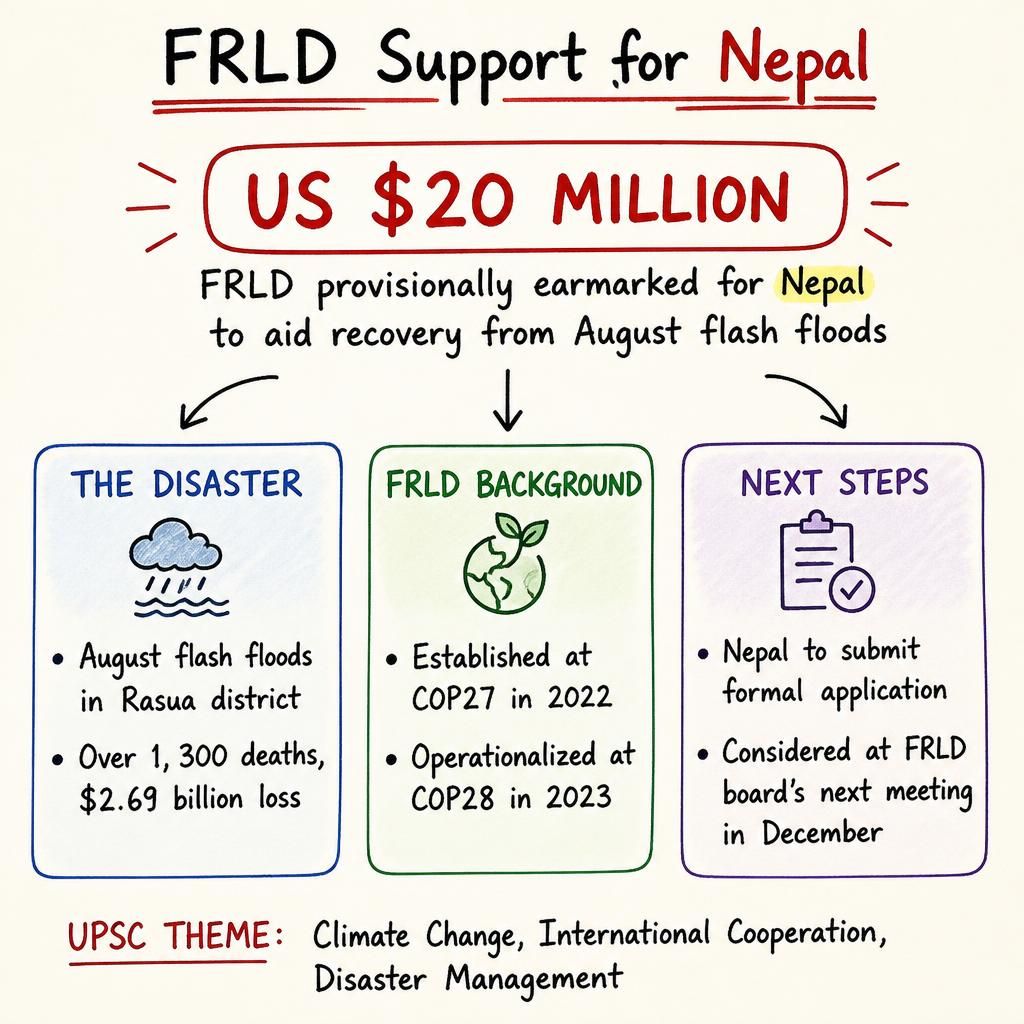
- The FRLD provisionally earmarked US $20 million for Nepal to aid recovery from devastating flash floods in August.
- The floods, scientifically linked to climate change, occurred in Nepal's Rasua district, causing over 1,300 deaths and an estimated $2.69 billion in economic loss.
- The FRLD was established at COP27 in 2022 and operationalized at COP28 in 2023.
- This allocation represents the maximum amount the FRLD can approve for a single event currently.
Loss and Damage Fund.jpg
Detailed Insights:
- The provisional allocation of $20 million is less than one percent of Nepal's estimated $4.71 billion recovery and reconstruction needs.
- Nepal is required to submit a formal funding application, which will be considered at the FRLD board's next meeting in December.
- The FRLD was created in response to long-standing demands from developing countries, particularly small and least developed nations most vulnerable to climate change impacts.
- The August incident involved a rock and ice avalanche, leading to massive flooding, characteristic of a Glacial Lake Outburst Flood (GLOF) event.
- This initial funding is considered a significant step in operationalizing the international loss and damage framework, allowing vulnerable countries to access financial assistance.
Scientific/Technical Concepts Involved:
- Fund for Responding to Loss and Damage (FRLD): An international climate fund designed to provide financial assistance to countries severely impacted by climate-induced disasters.
- Glacial Lake Outburst Flood (GLOF): A sudden and rapid release of a significant volume of water from a glacial lake, often triggered by events like avalanches or glacial melt.
- COP27/COP28: Annual United Nations Climate Change Conferences where global climate policies, agreements, and financial mechanisms are negotiated and established.

SuperKalam is your personal mentor for UPSC preparation, guiding you at every step of the exam journey.
Download the App


STUDY RESOURCES
CONTACT US
ⓒ Snapstack Technologies Private Limited