GS 3: Science & TechnologyGS 2: Social JusticePrelimsGS 3: BiotechnologyGS 3: Science and Technology in Everyday Life
Chemical signatures could help detect diseases early, but accuracy and access remain challenges, Pg II
Chemical signatures offer promising early disease detection for neurological conditions like Alzheimer's, but accuracy, cost, and access challenges persist in India.
Practice MCQs
775 Students attempted
Key Highlights:
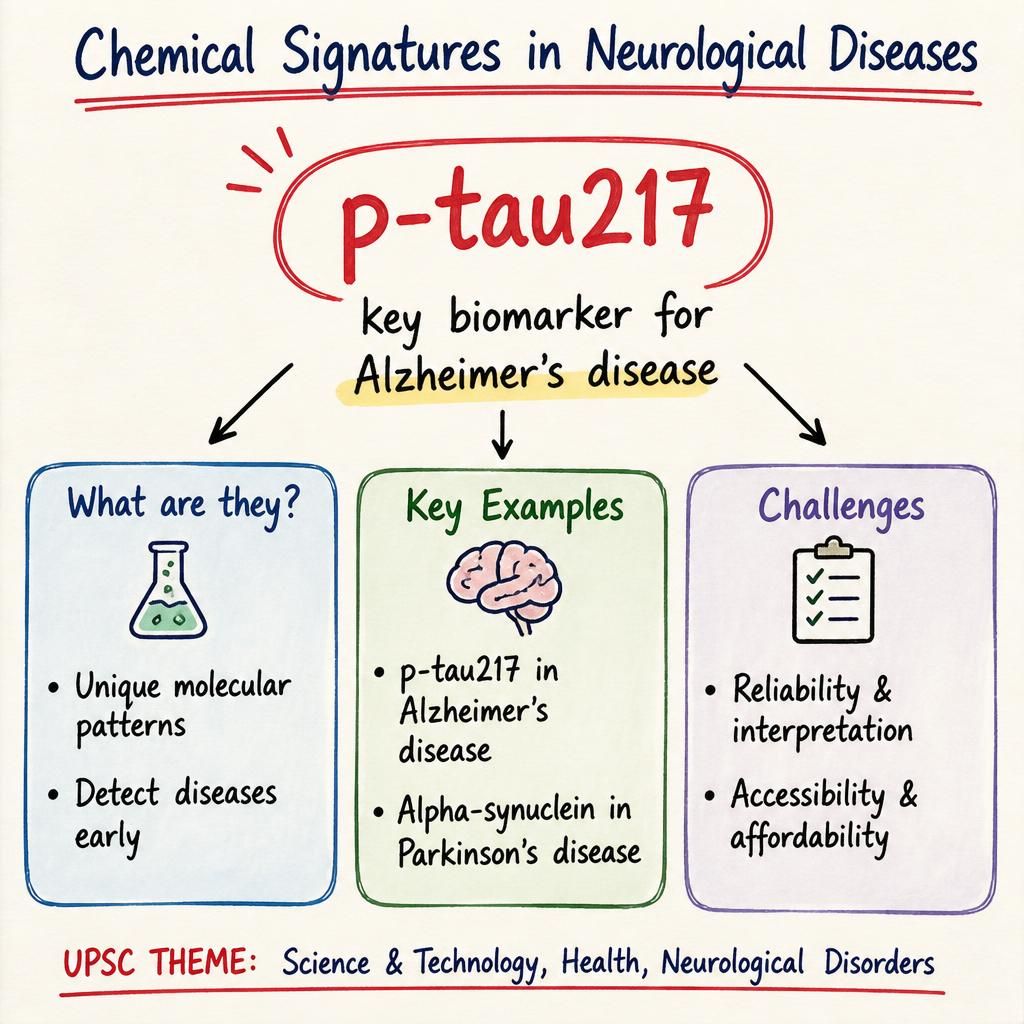
- Chemical signatures, also known as biomarkers, are unique molecular patterns used to detect diseases early, especially those affecting the brain and nervous system.
- These signatures involve measuring changes in proteins and other molecules, such as amyloid-beta and tau for Alzheimer’s disease, and alpha-synuclein for Parkinson’s disease.
- Biomarkers can help differentiate conditions with similar symptoms, like distinguishing autoimmune encephalitis from psychiatric illnesses.
- Key challenges include establishing the reliability of these tests, accurately interpreting results, and ensuring their accessibility and affordability in India.
- Specialized tests for these signatures may not be widely available, requiring patients to travel to larger medical centers.
Chemical Signatures.jpg
Detailed Insights:
- Chemical signatures function as the body's "fingerprints," indicating shifts in chemical balance caused by disease.
- For Alzheimer’s disease, specific forms of phosphorylated tau, particularly p-tau217, are measured in blood and cerebrospinal fluid.
- In Parkinson’s disease, research focuses on the protein alpha-synuclein as a potential biomarker.
- Detecting specific antibodies can diagnose autoimmune encephalitis, guiding appropriate and timely treatment.
- Molecular analysis of brain tumors assists neurosurgeons in classification and treatment planning.
- Neurofilament light is a protein marker that indicates general nerve cell damage, relevant across various neurological conditions.
- Factors like age, kidney function, and medications can influence biomarker levels, necessitating a holistic clinical assessment.
- Variations in laboratory methods can affect the consistency and interpretation of biomarker test results.
Scientific/Technical Concepts Involved:
- Biomarkers: Measurable biological indicators reflecting normal processes, disease states, or responses to treatment.
- Amyloid-beta: A protein fragment that accumulates in the brains of Alzheimer’s disease patients, forming plaques.
- Tau protein: A protein involved in stabilizing neuronal structures; abnormal forms are linked to neurodegenerative diseases like Alzheimer’s.
- Alpha-synuclein: A protein whose aggregation is a hallmark of Parkinson’s disease and other related neurodegenerative disorders.

SuperKalam is your personal mentor for UPSC preparation, guiding you at every step of the exam journey.
Download the App


STUDY RESOURCES
CONTACT US
ⓒ Snapstack Technologies Private Limited