GS 2: GovernanceGS 3: Science & TechnologyGS 2: International RelationsPrelimsGS 2: Important International Institutions, Agencies and Fora
As Ebola Spreads to Nigeria, WHO Official Warns of ‘Complex’ Outbreak, Pg16
WHO warns of 'complex' Ebola outbreak as virus spreads to Nigeria, marking first West African case, raising global health concerns.
Practice MCQs
775 Students attempted
Key Highlights:
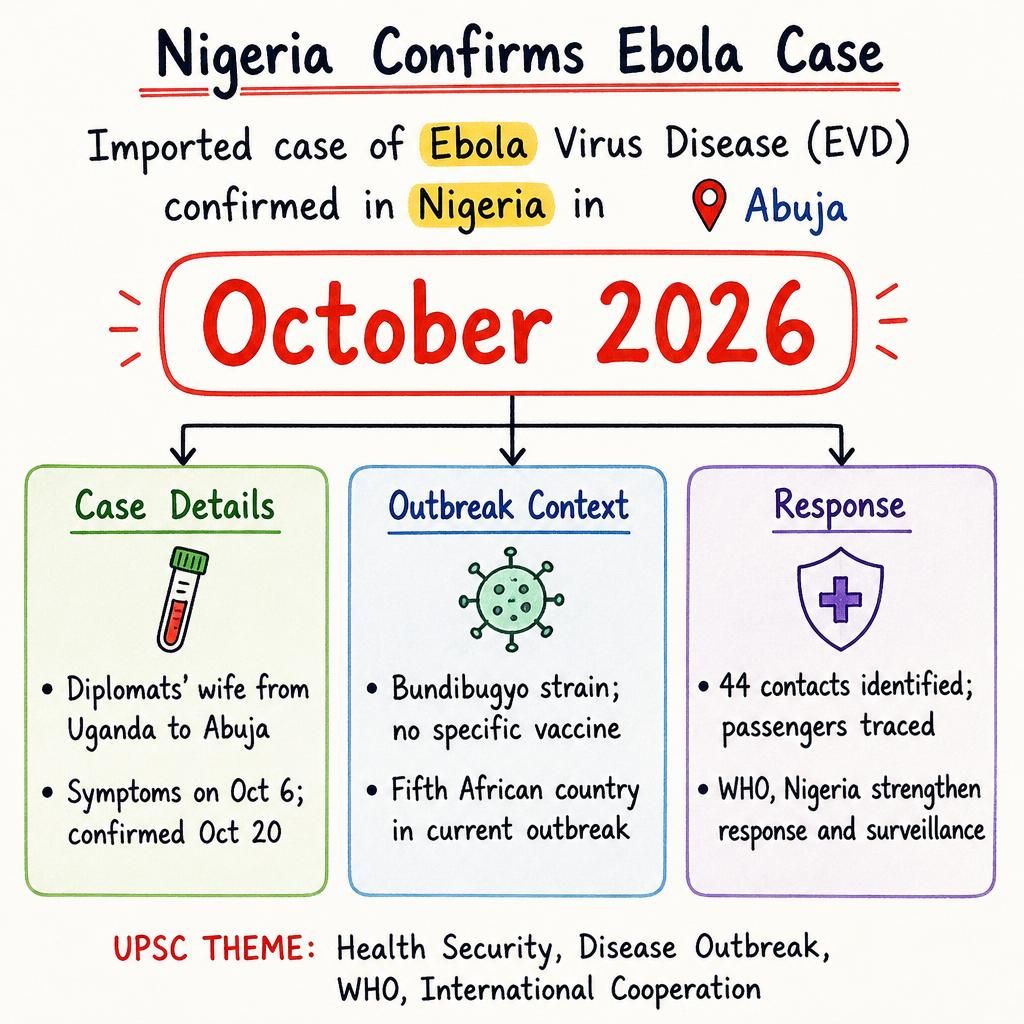
- Nigeria confirmed an imported case of Ebola Virus Disease (EVD) in October 2026.
- The World Health Organization (WHO) Africa chief, Mohamed Janabi, warned that the continent now faces a "complex" Ebola outbreak.
- The confirmed case involves the Bundibugyo strain of the virus, for which there is currently no specific vaccine or treatment.
- The patient, a diplomat's wife, traveled to Abuja, Nigeria, from Uganda.
Ebola Case.jpg
Detailed Insights:
- The patient developed symptoms on October 6, 2026, and her EVD diagnosis was confirmed on October 20, 2026, after three laboratory tests.
- Nigerian health authorities have identified 44 contacts, primarily healthcare workers, and are tracing passengers who traveled with the patient.
- The Bundibugyo strain is also responsible for a significant outbreak in the Democratic Republic of Congo (DRC), making Nigeria the fifth African country affected in this current outbreak.
- The complexity of the outbreak is heightened by the lack of specific treatment for the Bundibugyo strain and the potential for rapid international spread via air travel.
- Nigeria successfully contained a previous Ebola outbreak in 2014, which recorded 19 infections and eight deaths.
- The WHO is collaborating with Nigerian health authorities and partners to strengthen response measures and enhance disease surveillance.
Scientific/Technical Concepts Involved:
- Ebola Virus Disease (EVD): A severe, often fatal illness in humans caused by the Ebola virus, transmitted through direct contact with bodily fluids.
- Bundibugyo strain: One of the species of Ebola virus known to cause disease in humans, characterized by the absence of a specific vaccine or treatment.
- World Health Organization (WHO): A specialized agency of the United Nations that coordinates international public health efforts and responses to global health emergencies.
Previous11/11

SuperKalam is your personal mentor for UPSC preparation, guiding you at every step of the exam journey.
Download the App


STUDY RESOURCES
CONTACT US
ⓒ Snapstack Technologies Private Limited