GS 2: GovernanceGS 3: Science & TechnologyGS 2: Social JusticePrelimsGS 2: Government policies and interventions for development in various sectors
India using too many powerful antibiotics meant for specific infections: Study, Pg8
New Lancet study reveals India's alarming overuse of 'watch' antibiotics at 9.8 DID, fueling antimicrobial resistance and jeopardizing public health outcomes.
Practice MCQs
753 Students attempted
Key Highlights:
- India is overusing powerful 'watch' antibiotics while underusing first-line 'access' and last-resort 'reserve' drugs, according to a study in The Lancet Public Health.
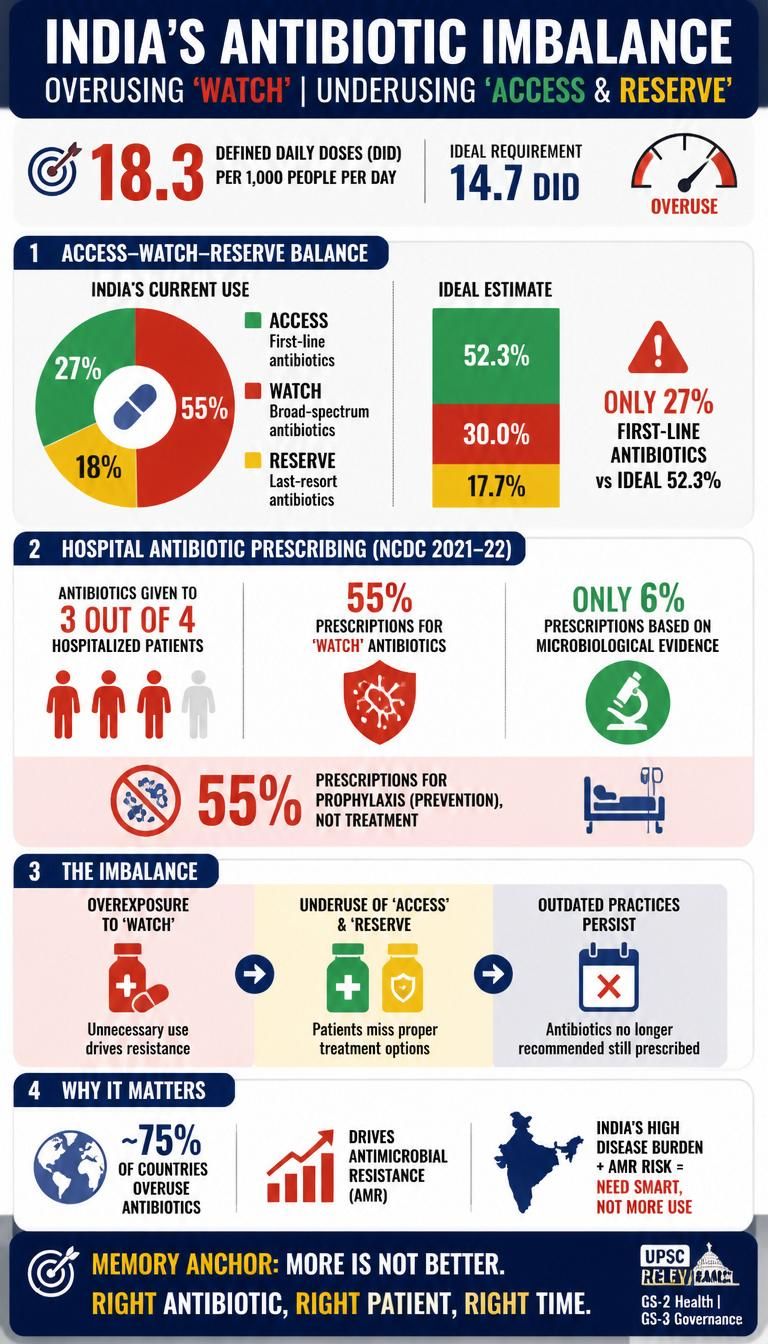
- The study estimates India's actual antibiotic consumption at 18.3 Defined Daily Doses (DID) per 1,000 people per day, exceeding the ideal requirement of 14.7 DID.
- Only 27% of India's antibiotic use comes from the 'access' category, significantly lower than the estimated ideal of 52.3%.
- The National Centre for Disease Control's (NCDC) 2021-22 survey found 55% of hospital prescriptions were for 'watch' antibiotics, with only 6% based on microbiological evidence.
Antibiotic.jpg
Detailed Insights:
- Professor Ramanan Laxminarayan of One Health Trust highlighted that some patients are unnecessarily exposed to 'watch' antibiotics, while others lack access to appropriate medicines.
- Globally, nearly three-fourths of countries overuse antibiotics, contributing significantly to Antimicrobial Resistance (AMR).
- India's higher burden of infectious diseases and AMR legitimately requires more 'watch' antibiotics than many nations, but current usage is still imbalanced.
- Despite the high resistance burden, 'reserve' antibiotics are underused, and antibiotics no longer recommended are still frequently prescribed.
- The NCDC survey revealed that 3 out of 4 hospitalized patients received antibiotics, with 55% of prescriptions being for prophylaxis rather than treatment.
- Dr. Kamini Walia of ICMR noted issues like duplicate antibiotic coverage and extensive use of injectable antibiotics (86.5% administered intravenously).
- She emphasized the need to reduce unnecessary use of common 'watch' antibiotics through better Antimicrobial Stewardship (AMS) and awareness.
- Reserve antibiotics should be strictly limited to patients with documented or strongly suspected multidrug-resistant infections.
Key Concepts Involved:
- Access Antibiotics: First-line drugs for common infections, with a lower risk of resistance development.
- Watch Antibiotics: Broader-spectrum drugs for specific infections, requiring careful use to prevent resistance.
- Reserve Antibiotics: Last-resort drugs for multidrug-resistant infections, to be used sparingly.
- Antimicrobial Resistance (AMR): Microorganisms evolving to resist drugs designed to kill them, making treatments ineffective.
- Antimicrobial Stewardship (AMS): Coordinated programs promoting appropriate antibiotic use to improve patient outcomes and reduce resistance.
- Defined Daily Doses (DID): A statistical measure of drug consumption, representing the assumed average maintenance dose per day.

SuperKalam is your personal mentor for UPSC preparation, guiding you at every step of the exam journey.
Download the App


STUDY RESOURCES
CONTACT US
ⓒ Snapstack Technologies Private Limited