GS 2: GovernanceGS 3: Science & TechnologyGS 2: International RelationsPrelimsGS 4: Ethical Issues in International Relations and Funding
States agree to UN discussions aiming to regulate ‘killer robots’ in two years, Pg14
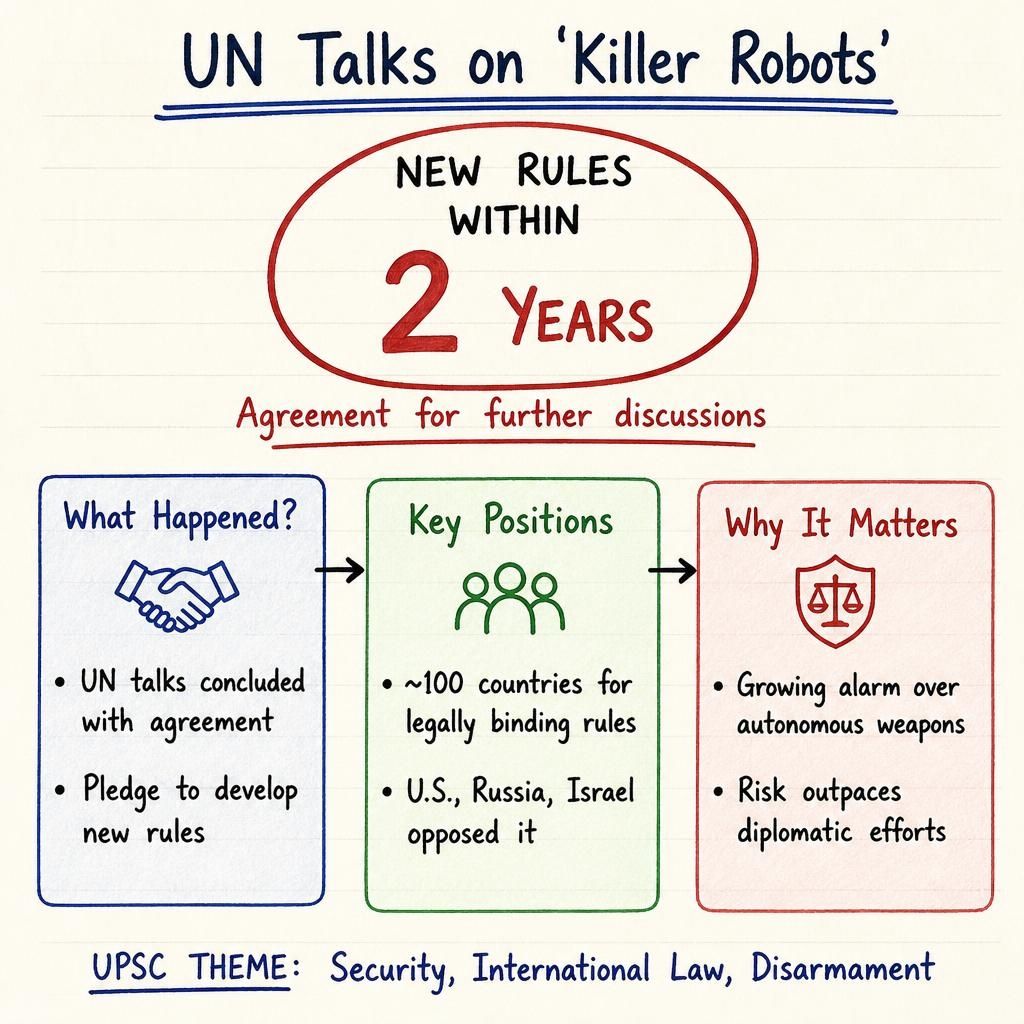
UN talks conclude with agreement for two-year discussions on regulating 'killer robots,' despite opposition from major arms-producing nations like the US and Russia.
Source: The Hindu (Pg. 14)
Practice MCQs
775 Students attempted
Key Highlights:
- UN talks on regulating Lethal Autonomous Weapons Systems (LAWS), often called "killer robots," concluded with an agreement for further discussions.
- Member states pledged to develop new rules within two years, but the outcome was weakened by Russia's opposition to legally binding measures.
- Approximately 100 countries advocated for legally binding regulations, while major arms-producing nations like the U.S., Russia, and Israel opposed this.
- The discussions took place in Geneva among the member states of the Convention on Certain Conventional Weapons (CCW).
- Growing alarm over the use of autonomous weapons in conflicts, including in Ukraine, Sudan, and West Asia, prompted these talks.
Killer Robots.jpg
Detailed Insights:
- The negotiations aimed to establish international norms for weapons systems capable of identifying and engaging targets with minimal or no human oversight.
- The UN Secretary-General, the Pope, and the Red Cross have consistently called for robust and legally binding international rules on these weapons.
- The Swiss chair of the meeting, Julien Thoeni, described the agreement as a significant achievement for humanitarian disarmament after over a decade of discussions.
- Human rights organizations criticized the outcome, expressing concerns that technological advancements in autonomous weapons could outpace diplomatic efforts to control them.
- The CCW serves as a framework instrument in international humanitarian law designed to prohibit or restrict conventional weapons deemed excessively injurious or indiscriminate.
Key Concepts Involved:
- Lethal Autonomous Weapons Systems (LAWS): Weapons systems that can identify, select, and engage targets with force without human intervention.
- Convention on Certain Conventional Weapons (CCW): An international treaty that bans or restricts the use of specific conventional weapons considered to cause excessive suffering or indiscriminate effects.
- Humanitarian Disarmament: A people-centered approach to disarmament that prioritizes preventing and mitigating human suffering and environmental harm caused by weapons.
Previous11/11

SuperKalam is your personal mentor for UPSC preparation, guiding you at every step of the exam journey.
Download the App


STUDY RESOURCES
CONTACT US
ⓒ Snapstack Technologies Private Limited