GS 2: GovernanceGS 2: PolityPrelimsGS 2: Important Aspects of Governance, Transparency and AccountabilityGS 2: Parliament and State Legislatures
When the House ceases to hold power to account, Pg11
Parliamentary sittings plummet, disruptions soar, and law-making becomes superficial, severely eroding accountability of Indian democratic institutions, raising concerns about governance standards.
Practice MCQs
760 Students attempted
Key Highlights:
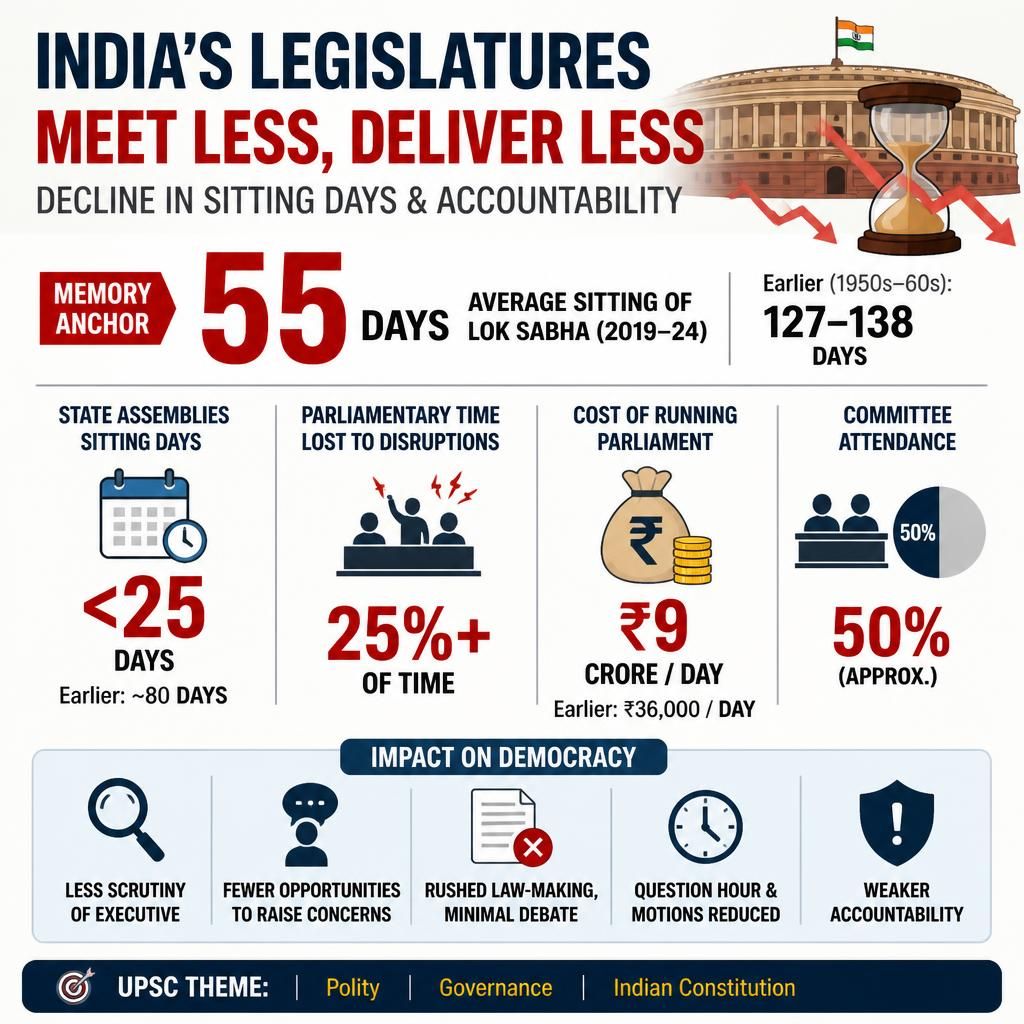
- The average sitting days for the Lok Sabha declined from 127-138 days in the 1950s-60s to just 55 days during the 17th Lok Sabha (2019-2024).
- Over 25% of parliamentary time is now lost due to disruptions.
- State assemblies, which met for around 80 days annually six decades ago, now average less than 25 days.
- The cost of running Parliament has escalated from ₹36,000 per day in the 1950s to an estimated ₹9 crore per day currently.
- Legislative business, including Question Hour and Call Attention Motions, has significantly reduced, impacting governmental accountability.
Indian Legislatures.jpg
Detailed Insights:
- India's democratic institutions, including Parliament and state assemblies, are perceived to have lost their original vibrancy and effectiveness.
- The decline in sitting days has led to less scrutiny of the executive and reduced opportunities for members to articulate constituency concerns.
- Article 174(1) of the Constitution, which mandates a maximum six-month gap between two sittings of a state legislature, is often fulfilled as a mere formality.
- Data from PRS Legislative Research indicates a substantial reduction in sitting days for various state assemblies, including Uttar Pradesh, Karnataka, and Tamil Nadu.
- Law-making processes have become rushed, with several bills, such as the AIIMS (A) Bill and the Protection of Women Against Sexual Harassment at Workplace Bill, passed with minimal or no debate.
- Attendance in parliamentary committees is reported to be around 50%, further weakening legislative oversight.
- Concerns have been raised regarding the special allotment of firearms to Members of Parliament by the Customs Department, including some facing criminal charges.
Key Concepts Involved:
- Lok Sabha: The lower house of India's bicameral Parliament, directly elected by the people.
- Question Hour: The first hour of every parliamentary sitting, where Members of Parliament ask questions to ministers.
- Call Attention Motion: A procedural device in Parliament to draw the attention of a minister to a matter of urgent public importance.
- Article 174(1): A constitutional provision that stipulates there shall not be a gap of six months between two sessions of a State Legislature.
- PRS Legislative Research: An independent research initiative that provides data and analysis on the working of the Indian Parliament and state legislatures.

SuperKalam is your personal mentor for UPSC preparation, guiding you at every step of the exam journey.
Download the App


STUDY RESOURCES
CONTACT US
ⓒ Snapstack Technologies Private Limited