GS 2: GovernanceGS 2: Social JusticeGS 3: EconomyPrelimsGS 3: Buffer Stocks and Food Security
Sugar price hike: Odisha, M.P., Punjab hit hardest; keeping close watch, taking measures to stabilise rates, says Centre, Pg1
Sugar prices surge across 18 states, hitting Odisha hardest; Centre monitors situation, implements stock limits and duty-free imports amidst ethanol blending debate.
Practice MCQs
753 Students attempted
Key Highlights:
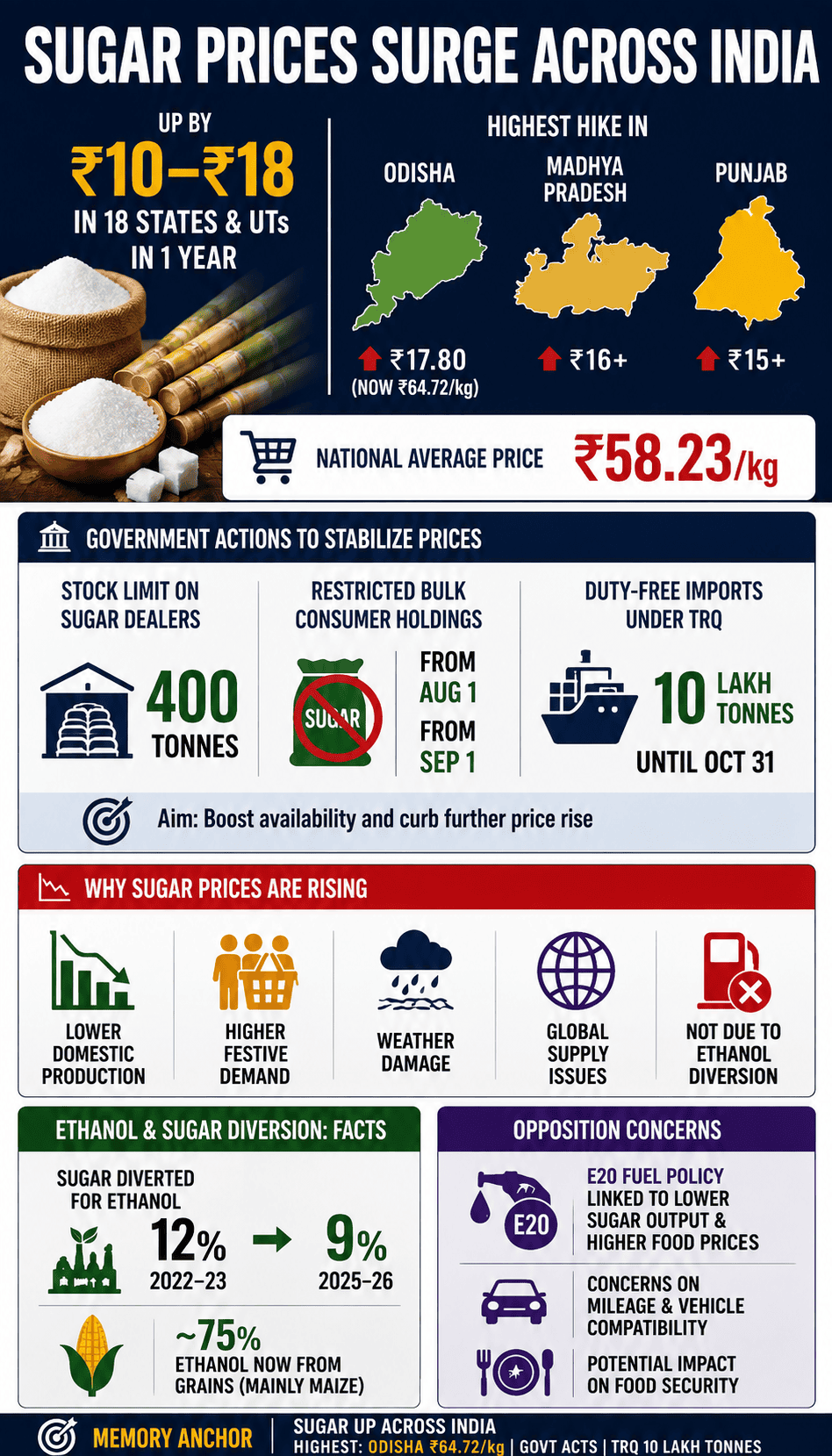
- Sugar prices increased by ₹10-₹18 in 18 States and Union Territories over the past year, with Odisha, Madhya Pradesh, and Punjab experiencing the highest hikes.
- The Ministry of Consumer Affairs, Food and Public Distribution is actively monitoring the situation and has implemented measures to stabilize rates.
- The government imposed a stock limit of 400 tonnes on sugar dealers and restricted bulk consumer holdings from August 1 and September 1, respectively.
- The National Democratic Alliance (NDA) government allowed duty-free imports of 10 lakh tonnes of raw sugar under a Tariff Rate Quota (TRQ) until October 31.
- The Centre attributed the price hike to lower domestic production, increased festive demand, weather damage, and global supply issues, denying a link to ethanol diversion.
Sugar.png
Detailed Insights:
- Odisha recorded the highest sugar price at ₹64.72 per kg, marking a significant increase of ₹17.80 compared to the previous year.
- The national average price for sugar reached ₹58.23 per kg, reflecting a broad upward trend across the country.
- The government stated that the share of sugar diverted for ethanol production has declined from 12% in 2022-23 to 9% in 2025-26.
- Approximately three-fourths of the ethanol produced in India now originates from grains, primarily maize, rather than sugarcane.
- The Tariff Rate Quota (TRQ) aims to enhance domestic availability and curb further price increases by allowing specific duty-free imports.
- Opposition parties, including Congress and AAP, criticized the government's E20 fuel policy, linking it to reduced sugar output and rising food prices.
- Concerns were raised regarding the impact of E20 on vehicle mileage and compatibility, alongside its potential implications for food security.
Key Concepts Involved:
- E20 fuel policy: A policy promoting petrol blended with 20% ethanol to reduce reliance on crude oil imports and cut emissions.
- Ethanol blending: The process of mixing ethanol, an alcohol derived from biomass, with petrol to create a blended fuel.
- Tariff Rate Quota (TRQ): A trade policy tool that allows a specified quantity of a product to be imported at a lower or zero tariff rate.
- Stock limit: A government-imposed restriction on the maximum quantity of a commodity that traders or dealers can hold at any given time.

SuperKalam is your personal mentor for UPSC preparation, guiding you at every step of the exam journey.
Download the App


STUDY RESOURCES
CONTACT US
ⓒ Snapstack Technologies Private Limited