GS 2: GovernanceGS 2: International RelationsGS 3: EconomyPrelimsGS 3: Indian Economy, Planning, Mobilization of Resources, Growth, Development and Employment
The impact of U.S.’s crackdown on skilled migrant labour, Pg7
U.S. crackdown on skilled migrant labor via H-1B and PERM programs impacts Indian IT, risking long-term economic benefits and access to talent.
Practice MCQs
760 Students attempted
Key Highlights:
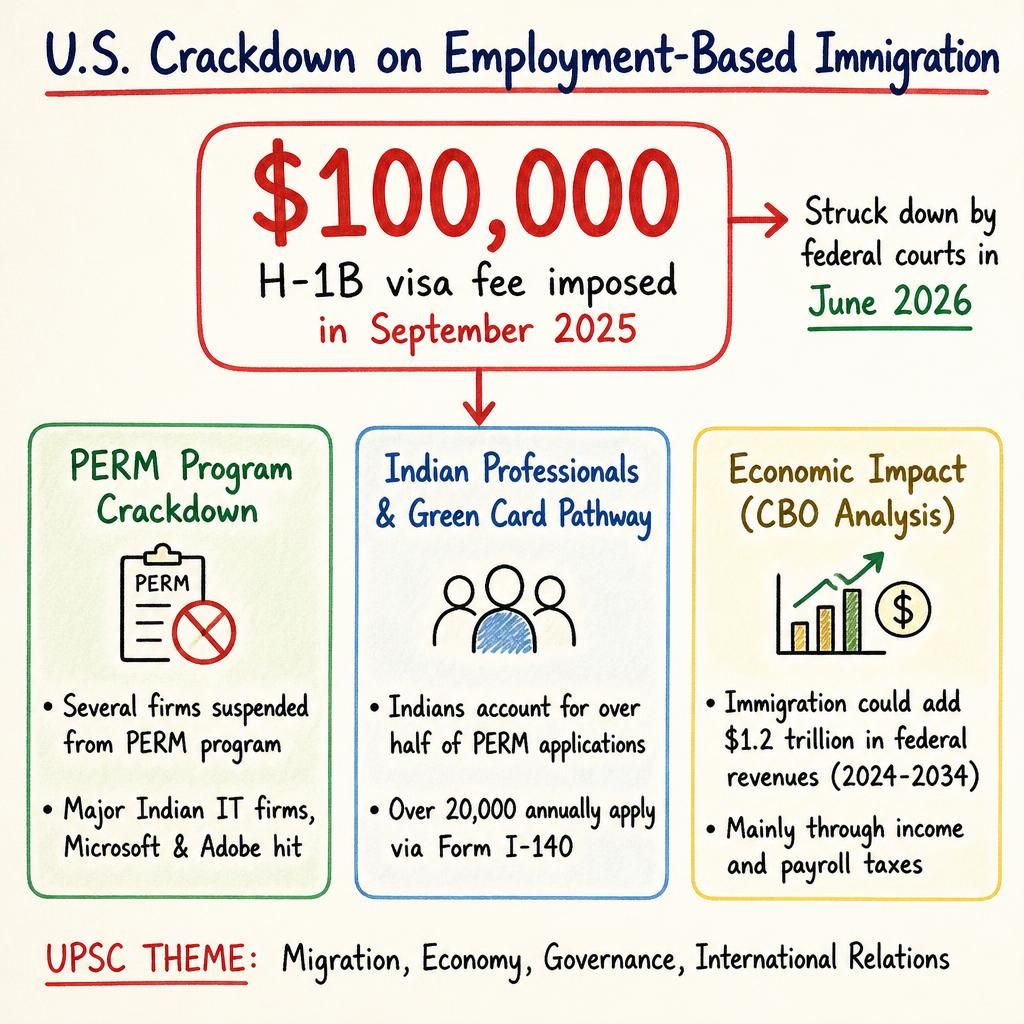
- The U.S. administration under Donald Trump has intensified its crackdown on employment-based immigration, including suspending several firms from the Permanent Labor Certification (PERM) program.
- A significant increase in the H-1B visa fee to $100,000 was imposed in September 2025, though federal courts later struck it down in June 2026.
- Major Indian IT companies and other tech giants like Microsoft and Adobe were among those suspended from the PERM program, though their share of applications had already declined.
- Indian professionals account for over half of PERM applications and more than 20,000 annually apply for U.S. citizenship via Form I-140 with advanced degrees.
- A July 2024 Congressional Budget Office analysis projected that immigration could add $1.2 trillion in federal revenues from 2024-2034, primarily through income and payroll taxes.
US Immigration.jpg
Detailed Insights:
- The U.S. government justifies its stricter immigration policies as an effort to encourage companies to hire more U.S. workers.
- Data indicates that these crackdowns could negatively impact the U.S.'s access to skilled workers and prove counterproductive in the long run.
- Employment-based migration, particularly through the H-1B program, allows highly skilled foreign workers to take temporary jobs in the U.S.
- Processes like PERM certification and Form I-140 are crucial steps for these workers to achieve permanent residency via a Green Card.
- Applications for employment-based Green Cards have been declining under the Trump administration, with family-sponsored preferences dominating permanent residency grants.
- The suspension of major tech firms from PERM is expected to have limited immediate impact as these companies had already reduced their application filings.
- The eligibility for Form I-140 often requires a U.S. master's degree or higher, or a bachelor's degree with five years of specialized work experience.
- Skilled migrants contribute significantly to the U.S. economy as both students and employees, generating substantial tax revenues.
- Continued restrictions on migrant workers could deter international investments and corporate activities outside the U.S.
Key Concepts Involved:
- H-1B Visa: A non-immigrant visa that allows U.S. employers to temporarily employ foreign workers in specialty occupations.
- Permanent Labor Certification (PERM): A process overseen by the U.S. Department of Labor to ensure that hiring a foreign worker will not adversely affect U.S. workers.
- Form I-140: An Immigrant Petition for Alien Worker filed by a U.S. employer with USCIS to classify a foreign worker for employment-based immigration.
- Green Card: A Permanent Resident Card (Form I-551) that grants lawful permanent residency in the United States, allowing individuals to live and work permanently.

SuperKalam is your personal mentor for UPSC preparation, guiding you at every step of the exam journey.
Download the App


STUDY RESOURCES
CONTACT US
ⓒ Snapstack Technologies Private Limited