GS 3: Science & TechnologyPrelimsGS 3: BiotechnologyGS 3: Indigenization of Technology and New Technology DevelopmentGS 3: IT and Computers
Scientists turn to AI-designed viruses to fight drug-resistant infection, Pg18
Scientists deploy AI-designed viruses for the first human treatment against a deadly drug-resistant bacterial infection, signaling a potential breakthrough in phage therapy.
Practice MCQs
760 Students attempted
Key Highlights:
- Scientists have used AI-designed viruses, known as phages, to treat a human patient for a deadly drug-resistant bacterial infection for the first time.
- The start-up Radical Numerics developed these phages using its AI model, Omnii, which was trained on DNA and protein structures to design phages capable of targeting specific bacterial strains.
- The treatment was administered under authorization from the Food and Drug Administration (FDA), though details about the patient and doctors remain confidential.
- This breakthrough aims to overcome the limitations of traditional phage therapy, which often struggles with the time-consuming process of finding naturally occurring phages effective against specific infections.
- The AI model Omnii designed variants of a T7 phage to infect a specific E. coli strain that had resisted antibiotics and existing phages.
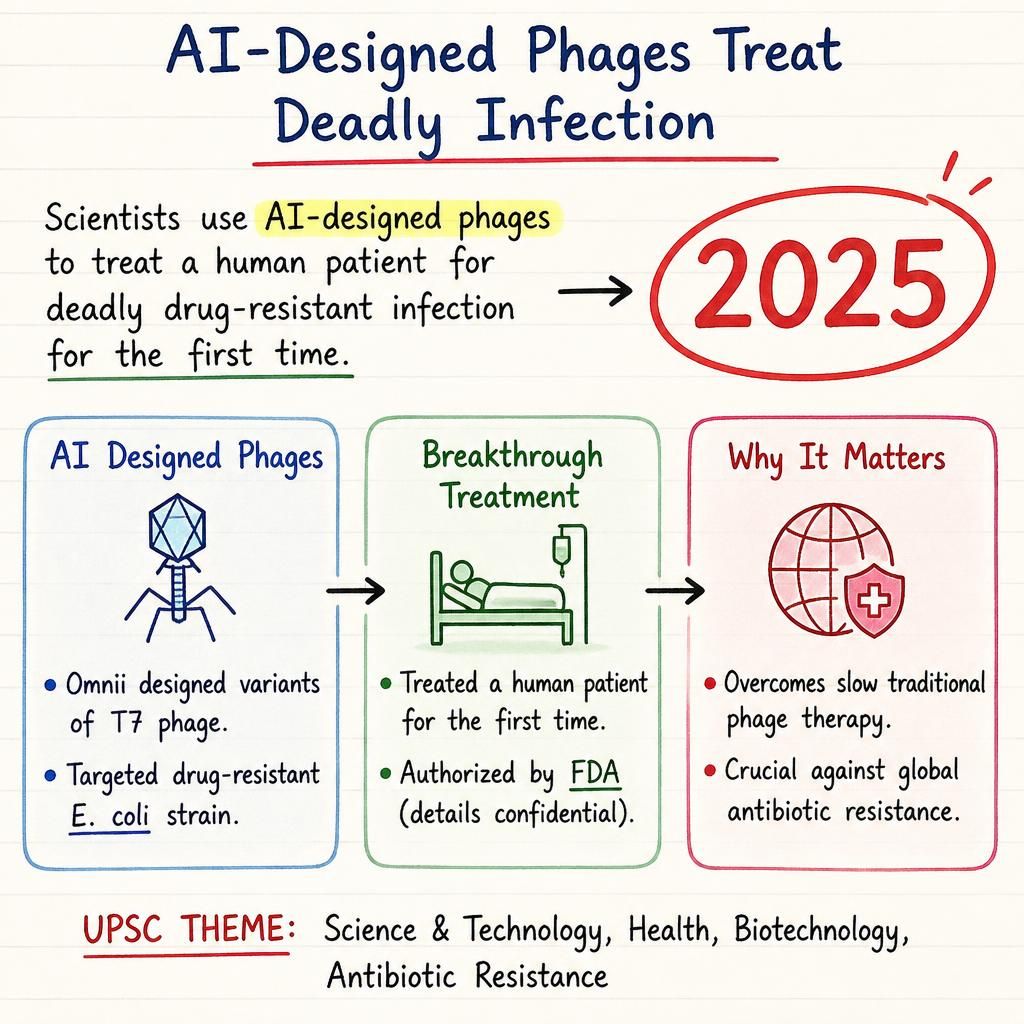
AI Designed Phages.jpg
Detailed Insights:
- Phage therapy, which uses viruses that specifically attack bacteria, has seen renewed interest due to the global rise of antibiotic resistance.
- Traditional phage therapy is often slow because each phage typically infects only a limited range of bacterial strains, making it difficult to find a suitable match quickly.
- In 2025, researchers at Arc Institute developed Evo2, an AI model trained on millions of DNA sequences, which generated numerous virus genomes, with 16 proving viable.
- Omnii, launched by Radical Numerics, is a multimodal genome language model that learns across various biological data, including DNA, RNA, and proteins.
- The AI-designed phages were specifically engineered to alter the shape of the T7 phage's "legs" to effectively latch onto and kill the resistant E. coli bacteria.
- This approach could significantly speed up the development of personalized phage treatments, potentially reducing the time from months to days.
- The FDA authorizes such experimental treatments, often under "compassionate use" or "expanded access" protocols for patients with serious or life-threatening conditions when no other options exist.
- Antibiotic resistance is a major global health threat, linked to millions of deaths annually, making alternative treatments like phage therapy crucial.
Scientific/Technical Concepts Involved:
- Phage Therapy: The use of bacteriophages (viruses that infect and kill bacteria) to treat bacterial infections, especially those resistant to antibiotics.
- Antibiotic Resistance: The ability of bacteria to withstand the effects of antibiotics, rendering the drugs ineffective and making infections harder to treat.
- Bacteriophages (Phages): Viruses that specifically target and replicate within bacteria, leading to the destruction of the bacterial cell.
- Artificial Intelligence (AI) in Drug Design: Utilizing AI models trained on biological data to design novel therapeutic agents, such as phages, with specific functions.
Previous11/11

SuperKalam is your personal mentor for UPSC preparation, guiding you at every step of the exam journey.
Download the App


STUDY RESOURCES
CONTACT US
ⓒ Snapstack Technologies Private Limited