GS 2: GovernanceGS 3: Science & TechnologyGS 2: International RelationsGS 3: EconomyPrelims
Can India turn retrofitment into the next mobility revolution?, Pg9
India can transform existing vehicles into electric ones via retrofitment, creating a decentralized mobility revolution and exportable model for the Global South.
Practice MCQs
760 Students attempted
Key Highlights:
- India aims to position vehicle retrofitment as the next mobility revolution, leveraging its strengths in frugal engineering and scale.
- Vehicle retrofitment converts existing petrol or diesel vehicles into electric ones by replacing the powertrain while keeping the chassis intact.
- This approach fosters a decentralized ecosystem, drawing parallels with the successful implementation of the PM Surya Ghar Yojna for rooftop solar.
- India possesses a robust automotive supply chain, engineering talent, and software capabilities crucial for developing this sector.
- The model offers significant potential for the Global South to reduce oil import dependence and utilize their large fleets of ageing vehicles.
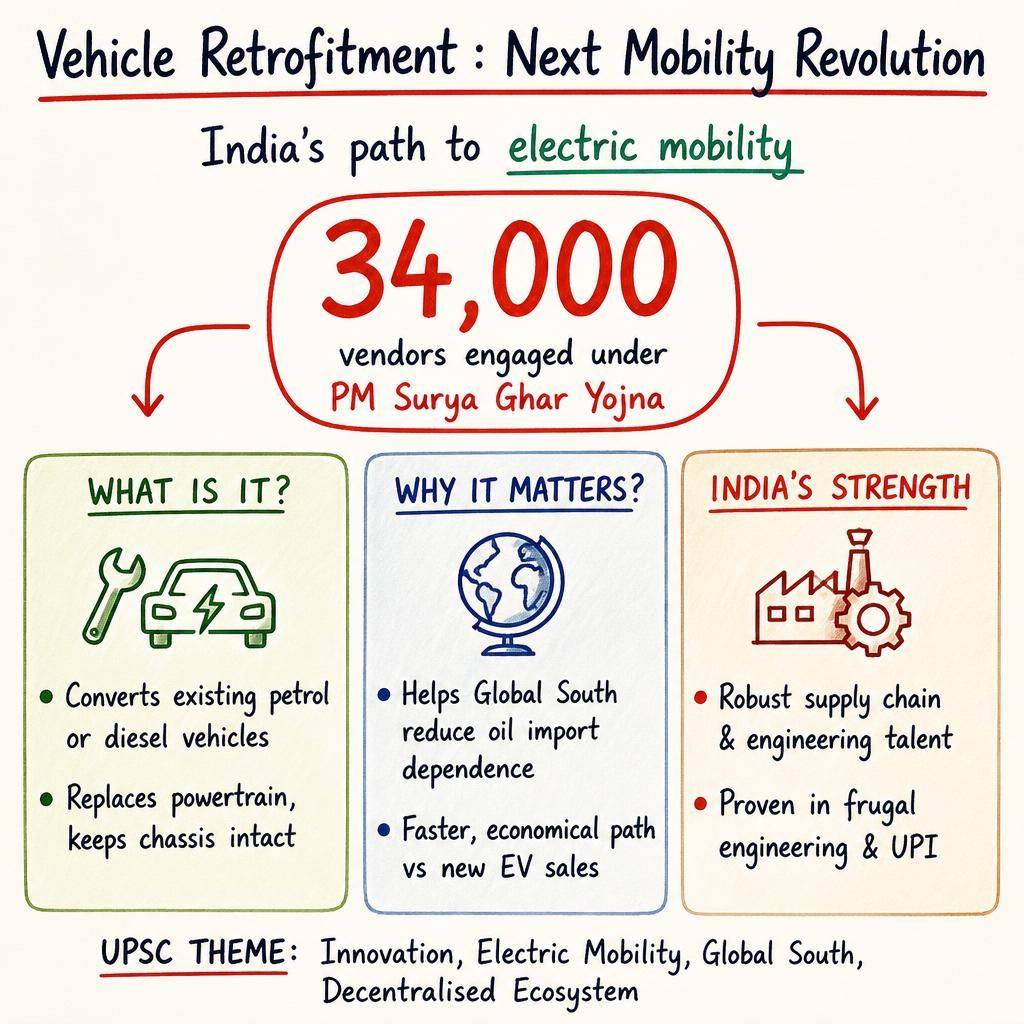
Vehicle Retrofitment.jpg
Detailed Insights:
- India has a proven track record of re-engineering global technologies for cost-effectiveness and mass adoption, as seen in generic drugs and telecom.
- The success of Unified Payments Interface (UPI) demonstrates India's capability to innovate and create new implementation categories for existing systems.
- Developing a vehicle retrofitment ecosystem requires comprehensive solutions, including diagnostics, specialized battery systems, calibration software, and safety certifications.
- Unlike new EV manufacturing, retrofitment benefits from distributed networks of local workshops, technicians, and entrepreneurship.
- The PM Surya Ghar Yojna has successfully engaged over 34,000 vendors and created 4.6 lakh jobs, providing a blueprint for a decentralized retrofitment network.
- India's extensive informal network of mechanics in smaller towns can be formalized and integrated into the certified retrofitment ecosystem.
- Countries in the Global South face similar challenges, including large fleets of ageing vehicles, price-sensitive consumers, and long ownership cycles.
- Retrofitment offers these nations a faster and more economical path to reduce fuel consumption compared to relying solely on new EV sales.
- India can export a replicable retrofitment model, similar to how UPI has expanded its reach to several countries.
- Realizing this potential requires India to treat retrofitment as a deliberate innovation category rather than a temporary measure.
Key Concepts Involved:
- Vehicle Retrofitment: The process of converting an existing internal combustion engine vehicle into an electric vehicle by replacing its powertrain.
- Global South: A term referring to countries in Asia, Africa, and Latin America, often characterized by developing economies and shared socio-economic challenges.
- Unified Payments Interface (UPI): An instant real-time payment system developed by the National Payments Corporation of India (NPCI) facilitating inter-bank transactions.
- PM Surya Ghar Yojna: A government scheme promoting the installation of rooftop solar panels in households across India.

SuperKalam is your personal mentor for UPSC preparation, guiding you at every step of the exam journey.
Download the App


STUDY RESOURCES
CONTACT US
ⓒ Snapstack Technologies Private Limited