GS 3: Science & TechnologyGS 2: International RelationsGS 3: EconomyPrelimsGS 3: Indian Economy, Planning, Mobilization of Resources, Growth, Development and Employment
Russia, West Asia energy sites hit, India has a new problem: Sulphur, Pg1
Geopolitical conflicts in Russia and West Asia have doubled sulphur prices to $1,100/tonne, threatening India's phosphatic fertilizer production and food security.
Practice MCQs
753 Students attempted
Key Highlights:
- India faces a new challenge due to soaring global sulphur prices, impacting the availability of phosphatic fertilizers like Di-ammonium Phosphate (DAP) and Single Super Phosphate (SSP).
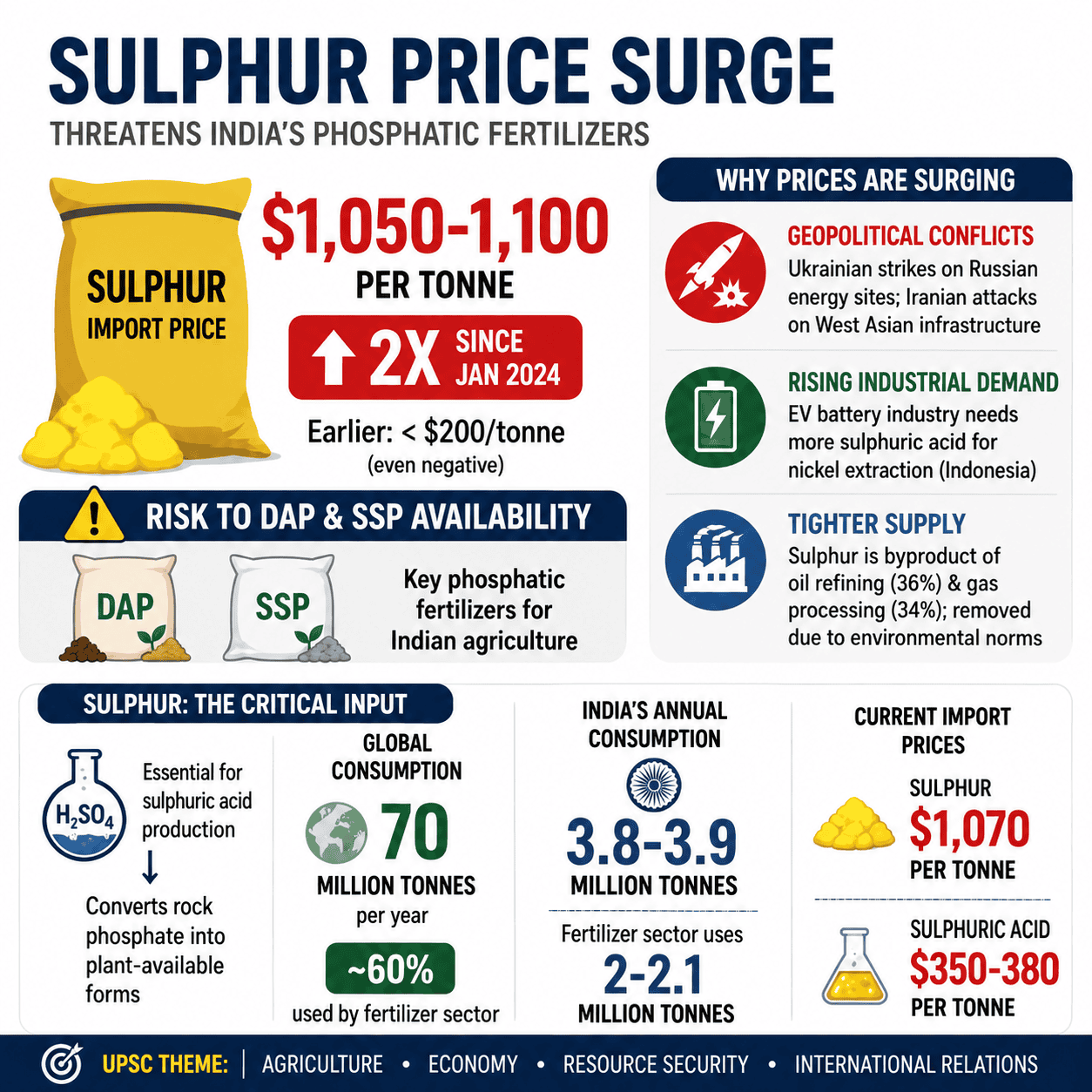
- Landed prices of imported sulphur have doubled to $1,050-1,100 per tonne since the beginning of the year.
- The price surge is primarily linked to escalating geopolitical conflicts, including Ukrainian attacks on Russian energy sites and Iranian targeting of West Asian energy infrastructure.
- Increased global demand for sulphuric acid from the electric vehicle battery industry, particularly for nickel extraction in Indonesia, is also contributing to the price hike.
- Sulphur is a critical raw material for producing sulphuric acid, which is essential for converting rock phosphate into plant-available forms for fertilizer manufacturing.
Sulphur Price Surge.jpg
Detailed Insights:
- Sulphur is largely a byproduct of petroleum oil refining (36%) and natural gas processing (34%), with environmental regulations mandating its removal (desulphurisation).
- The fertilizer sector accounts for approximately 60% of the 70 million tonnes annual global sulphur consumption.
- India's yearly sulphur consumption is 3.8-3.9 million tonnes, with the fertilizer industry consuming 2-2.1 million tonnes.
- Historically, sulphur import prices were below $200 per tonne, even negative, before the recent geopolitical escalations.
- The current crisis sees import prices of sulphur and sulphuric acid at about $1,070 and $350-380 per tonne, respectively.
- Major Indian fertilizer companies like Indian Farmers Fertiliser Cooperative (IFFCO), Coromandel International, and Paradeep Phosphates Ltd rely heavily on imported sulphur.
- Russia has banned sulphur and sulphuric acid exports, and China has restricted sulphuric acid exports, further tightening global supply.
- Domestic sources for sulphur include Indian oil refineries and sulphuric acid from smelters like Hindustan Zinc Ltd and Birla Copper, but these meet only a fraction of India's demand.
Key Concepts Involved:
- Desulphurisation: The process of removing sulphur compounds from crude oil and natural gas to produce cleaner fuels and recover sulphur.
- Di-ammonium Phosphate (DAP): A widely used complex fertilizer providing both nitrogen and phosphorus, crucial for crop growth.
- Single Super Phosphate (SSP): A straight phosphatic fertilizer that supplies phosphorus and sulphur to plants.
- Rock Phosphate: A naturally occurring mineral ore that is the primary source of phosphorus for most phosphatic fertilizers.
- Mixed Hydroxide Precipitate (MHP): An intermediate product in the processing of nickel laterite ores, used as a precursor for electric vehicle battery materials.

SuperKalam is your personal mentor for UPSC preparation, guiding you at every step of the exam journey.
Download the App


STUDY RESOURCES
CONTACT US
ⓒ Snapstack Technologies Private Limited