GS 3: Science & TechnologyGS 2: International RelationsGS 3: EconomyPrelimsGS 2: Bilateral, Regional and Global Groupings and Agreements
Trump Hails ‘Historic’ Meet With Xi, Putin In Shenzhen, Pg1
Trump, Xi, and Putin hold 'historic' trilateral summit in Shenzhen, discussing Ukraine, nuclear risks, and trade amidst global tensions.
Practice MCQs
760 Students attempted
Key Highlights:
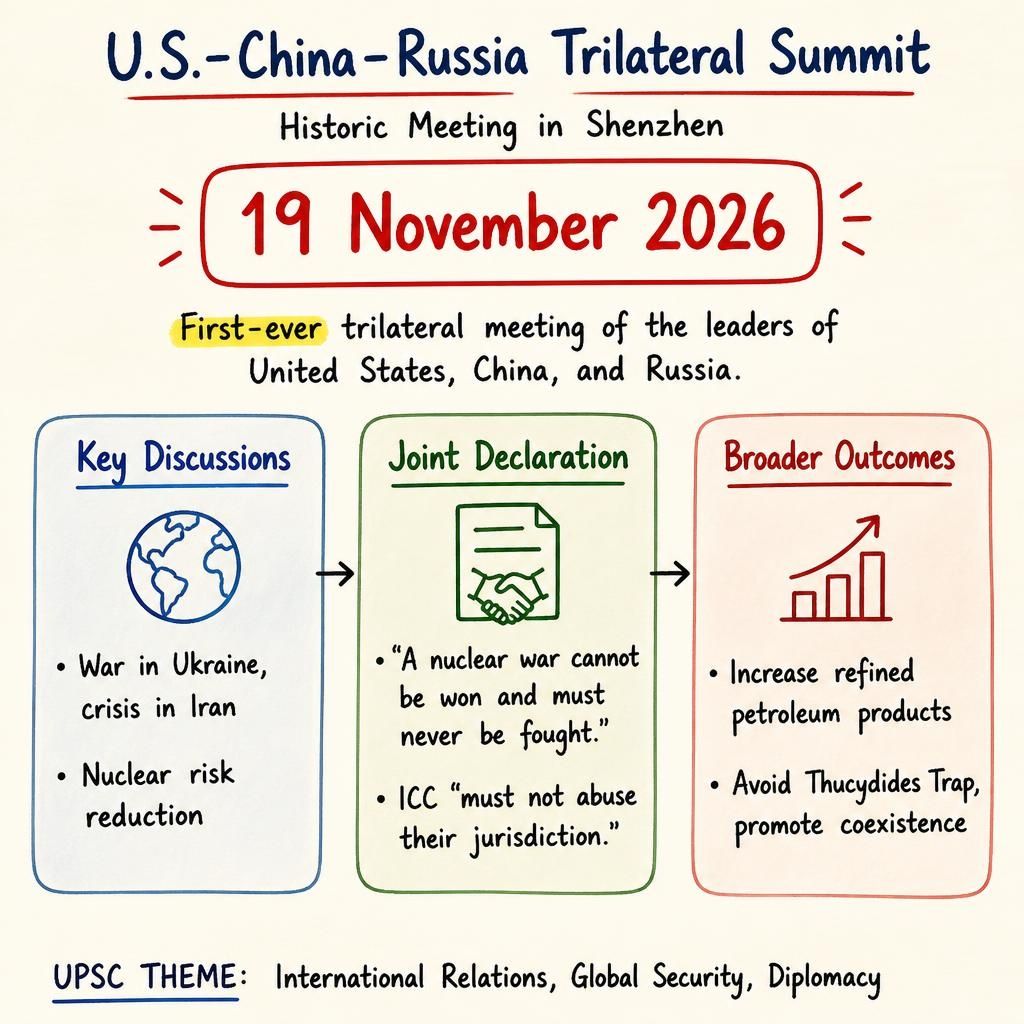
- U.S. President Donald Trump, Chinese President Xi Jinping, and Russian President Vladimir Putin held a historic trilateral summit in Shenzhen on November 19, 2026.
- The leaders discussed global issues including the war in Ukraine, the crisis in Iran, and nuclear risk reduction.
- A joint "China-Russia-U.S. Heads of State Declaration toward Peace" was released, emphasizing dialogue on reducing nuclear risks and reaffirming that "a nuclear war cannot be won and must never be fought."
- The declaration also stated that the International Criminal Court and similar bodies "must not abuse their jurisdiction," highlighting the importance of state consent and immunity for state officials.
- The summit, held on the sidelines of the APEC summit, was framed by China as a landmark moment for "major country diplomacy."
US-China-Russia Trilateral Meet.jpg
Detailed Insights:
- The summit marked the first-ever trilateral meeting between the leaders of the United States, China, and Russia.
- President Trump emphasized the unique position of the three nations as the world's largest nuclear powers to discuss nuclear disarmament.
- President Xi Jinping stressed mutual respect for sovereignty and territorial integrity, urging against challenging each other's "red lines."
- President Putin highlighted converging interests in resolving regional conflicts, including Ukraine, and addressing food and energy security.
- The leaders agreed to increase the production and supply of refined petroleum products globally.
- The joint declaration's stance on the International Criminal Court aligns with concerns about its jurisdiction over state officials, particularly given the ICC's arrest warrant for President Putin.
- China views the summit as a significant step in its "major country diplomacy," asserting its role on the global stage.
- The leaders also discussed avoiding the Thucydides Trap, advocating for peaceful coexistence between established and rising powers.
Key Concepts Involved:
- Major Country Diplomacy: A concept in Chinese foreign policy emphasizing China's proactive role in global affairs and reform of the international order.
- Thucydides Trap: A theory suggesting that war is likely when a rising power threatens to displace an established dominant power.
- International Criminal Court (ICC): An intergovernmental organization and international tribunal that has jurisdiction to prosecute individuals for international crimes of genocide, war crimes, crimes against humanity, and the crime of aggression.

SuperKalam is your personal mentor for UPSC preparation, guiding you at every step of the exam journey.
Download the App


STUDY RESOURCES
CONTACT US
ⓒ Snapstack Technologies Private Limited