GS 2: GovernanceGS 3: Science & TechnologyGS 3: EconomyPrelimsGS 2: Government policies and interventions for development in various sectors
Surveillance pricing: Why two consumers see different prices, Pg15
New York City bans 'surveillance pricing,' where businesses use personal data for differential pricing, sparking global debate on consumer protection and algorithmic fairness.
Practice MCQs
760 Students attempted
Key Highlights:
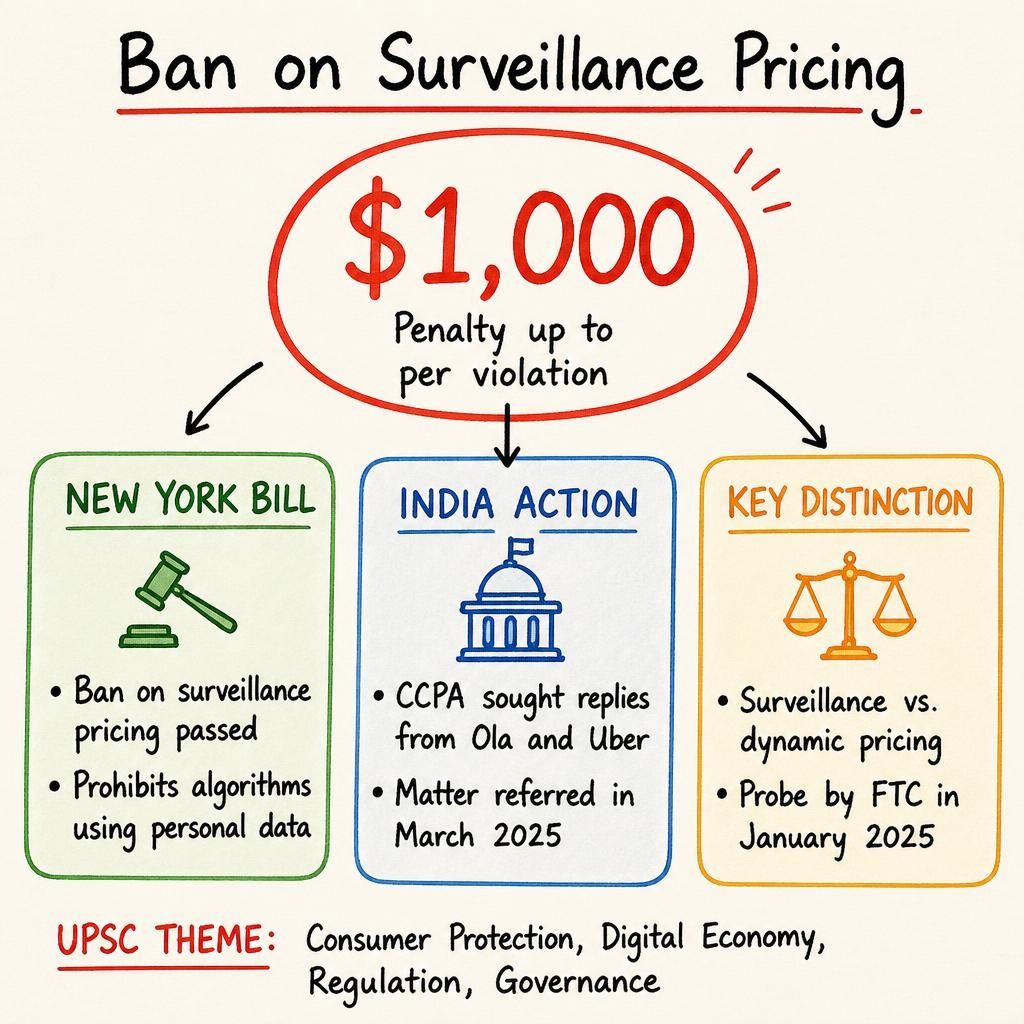
- The New York City Council passed a bill to ban surveillance pricing, a practice where businesses use personal data to determine consumer prices.
- Surveillance pricing involves algorithms analyzing personal information like location and browsing history to estimate a consumer's willingness to pay.
- This practice is distinct from dynamic pricing, which adjusts prices based on demand, availability, and market conditions.
- The U.S. Federal Trade Commission investigated pricing service intermediaries in January 2025 for tailoring prices using detailed consumer information.
- In India, the Central Consumer Protection Authority (CCPA) sought explanations from Ola and Uber in January 2025 regarding alleged fare differences for identical journeys on different devices.
Surveillance Pricing.jpg
Detailed Insights:
- The New York legislation prohibits algorithms from using personal data to offer varied prices for the same goods, with penalties up to $1,000 per violation.
- The bill permits genuine, uniform discounts offered to consumers meeting disclosed eligibility criteria.
- Supporters argue surveillance pricing impedes price comparison and fair deal assessment due to undisclosed pricing mechanisms.
- Consumers can attempt to reduce data collection by clearing cookies or limiting tracking permissions on shopping platforms.
- The Indian government referred the matter of algorithmic pricing on ride-hailing platforms to the CCPA’s Director General (Investigation) in March 2025.
- Fare variations between devices do not automatically confirm surveillance pricing, as dynamic pricing factors can also cause such differences.
Key Concepts Involved:
- Surveillance Pricing: The practice of using an individual's personal data to determine the specific price offered for goods or services.
- Dynamic Pricing: The adjustment of prices in real-time based on market demand, supply, availability, and other external factors.
- Algorithmic Pricing: The use of automated computational processes to set or adjust prices, which can include both surveillance and dynamic pricing methods.
Previous7/7

SuperKalam is your personal mentor for UPSC preparation, guiding you at every step of the exam journey.
Download the App


STUDY RESOURCES
CONTACT US
ⓒ Snapstack Technologies Private Limited