GS 3: EconomyPrelimsGS2: Statutory, Regulatory and Quasi Judicial BodiesGS3: Indian Economy, Planning, Mobilization of Resources, Growth, Development and Employment
RBI policy panel signals rate hike risk as inflation rises, Pg15
RBI's MPC signals potential interest rate hike amidst rising inflation projections, adopting a cautious wait-and-watch approach for policy tightening.
Practice MCQs
739 Students attempted
Key Highlights:
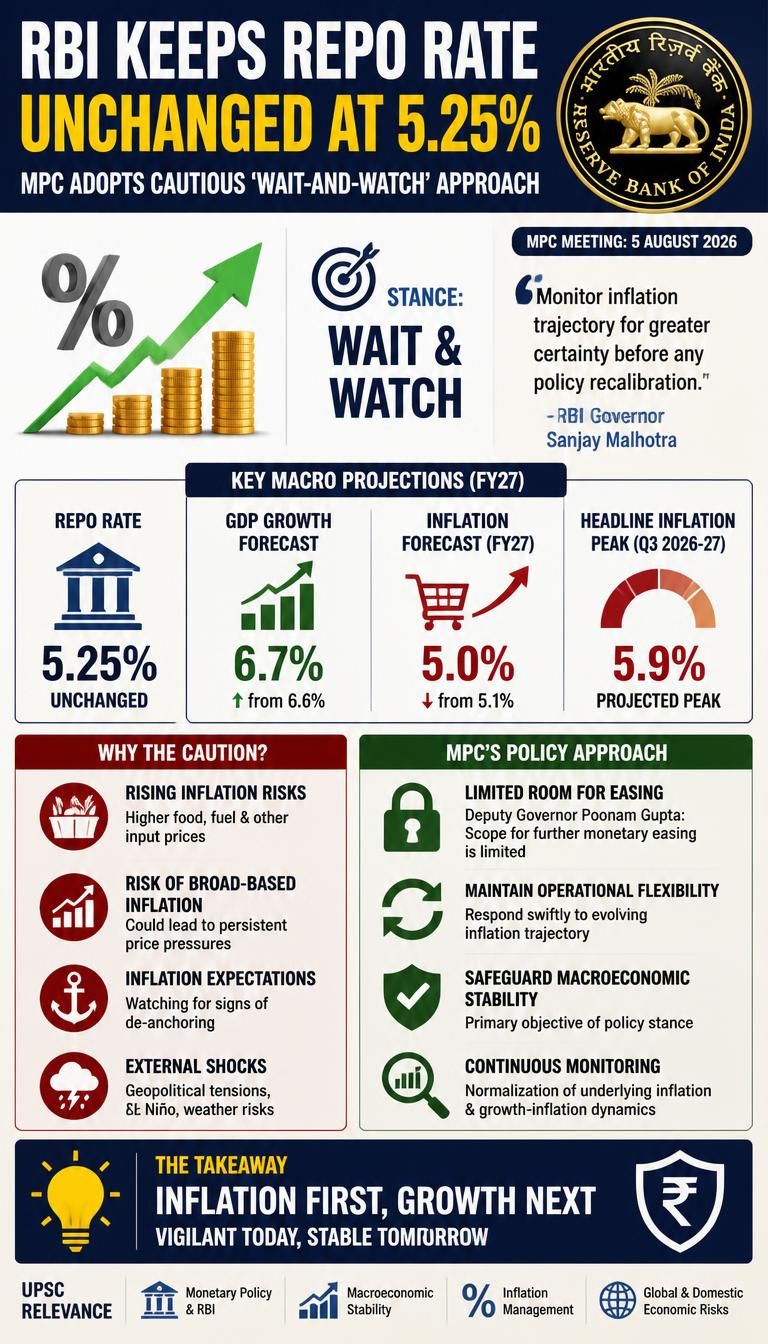
- The Reserve Bank of India's (RBI) Monetary Policy Committee (MPC) unanimously kept the repo rate unchanged at 5.25% during its meeting on August 5, 2026.
- The MPC adopted a cautious "wait-and-watch" approach, citing rising inflation risks.
- Headline inflation is projected to peak at 5.9% in Q3 2026-27, indicating a potential rate hike later in the year.
- The RBI marginally raised the growth forecast for FY27 to 6.7% from 6.6% and lowered its inflation projection to 5% from 5.1%.
- RBI Governor Sanjay Malhotra emphasized the need to monitor the inflation trajectory for greater certainty before any policy recalibration.
RBI.jpg
Detailed Insights:
- The decision to maintain the repo rate reflects the MPC's assessment of current economic conditions and future uncertainties.
- Members expressed concerns that higher food, fuel, and other input prices could lead to a broad-based increase in inflation.
- The MPC is closely observing for any signs of inflation expectations becoming de-anchored, which could necessitate policy tightening.
- Deputy Governor Poonam Gupta explicitly stated that the scope for further monetary easing is limited at the current juncture.
- External shocks, including geopolitical developments and weather-related risks like El Niño, are significant factors influencing the inflation outlook.
- The MPC aims to retain operational flexibility to respond swiftly to an evolving inflation trajectory and safeguard macroeconomic stability.
- The forecast normalization of underlying inflation from earlier benign levels requires continuous monitoring of growth-inflation dynamics.
Key Concepts Involved:
- Monetary Policy Committee (MPC): A statutory body in India responsible for fixing the benchmark interest rate to achieve the inflation target set by the government.
- Repo Rate: The interest rate at which the Reserve Bank of India lends money to commercial banks against government securities.
- Headline Inflation: Measures the total inflation rate in an economy, including all categories of goods and services, such as volatile food and energy prices.
- Core Inflation: A measure of inflation that excludes volatile items like food and fuel prices to indicate the underlying, persistent inflationary trend in the economy.
- Inflation Expectations: What people and businesses anticipate inflation will be in the future, influencing their economic and financial decisions.
Previous10/10

SuperKalam is your personal mentor for UPSC preparation, guiding you at every step of the exam journey.
Download the App


STUDY RESOURCES
CONTACT US
ⓒ Snapstack Technologies Private Limited