GS 2: GovernanceGS 3: Science & TechnologyGS 2: Social JusticeGS 3: Environment & EcologyPrelims
COVID-19 lessons should inform response to air pollution, Pg6
India must apply COVID-19's urgent, coordinated response lessons to tackle severe air pollution, a year-round public health crisis causing millions of deaths and economic losses.
Practice MCQs
753 Students attempted
Key Highlights:
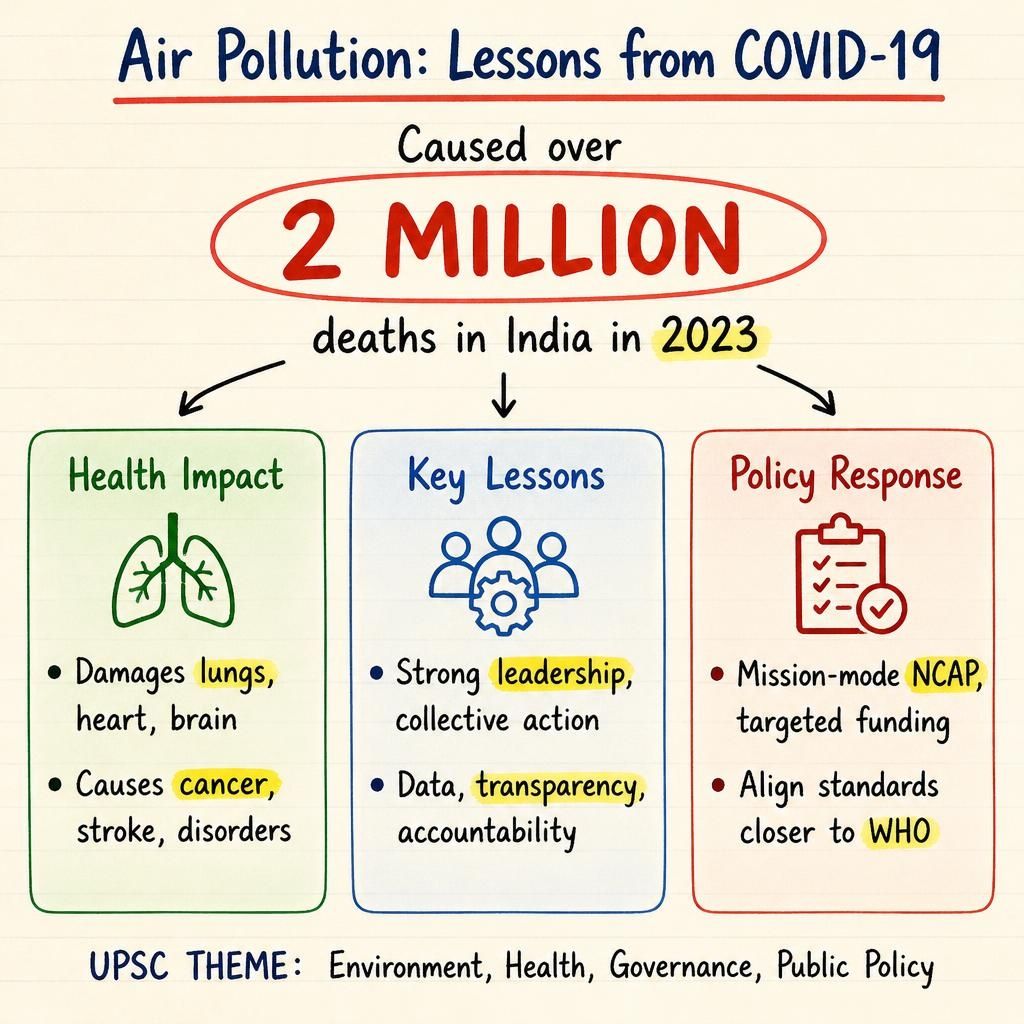
- Air pollution, which enters the body through the respiratory route like SARS-CoV-2, caused over two million deaths in India in 2023.
- Despite its severe health impacts, air pollution is largely treated as a seasonal inconvenience, unlike the emergency response to the COVID-19 pandemic.
- The article proposes applying seven key lessons from India's COVID-19 response to effectively address the air pollution crisis.
- India's annual average PM2.5 standard of 40 micrograms per cubic metre is eight times higher than the WHO guideline of five.
- Economic losses attributable to air pollution in India were estimated at 1.36% of the Gross Domestic Product (GDP) in 2019.
- The National Clean Air Programme (NCAP), launched in 2019, requires mission-mode implementation with increased, targeted funding and outcome-based indicators.
Air Pollution.jpg
Detailed Insights:
- Air pollution damages multiple organs, including the lungs, heart, and brain, and contributes to cardiovascular disease, stroke, lung cancer, and neurological disorders.
- Exposure to outdoor air pollution is largely involuntary, with a disproportionate burden falling on vulnerable populations like poorer households and outdoor workers.
- Lessons from the COVID-19 response include the need for strong political leadership, collective action, and coordinated governance across various ministries and state governments.
- Systematic data collection, timely information sharing, and prompt actions are crucial, necessitating an integrated environmental health intelligence platform.
- Transparency and accountability are vital, with public dashboards reporting annual PM2.5 exposure, emission reductions, expenditure, and health indicators.
- Outcome-based financing is essential, requiring increased allocation towards tackling primary sources of PM2.5 such as combustion, industrial emissions, and household fuels.
- Emergency measures like the Graded Response Action Plan (GRAP) should be distinguished from sustained, year-round prevention and emission reduction strategies.
- Revising and strengthening India's air-quality standards to align them closer to WHO guidelines is a critical and overdue step.
- Public participation, effective risk communication, and avoiding the shift of responsibility from elected governments to individuals are key for successful interventions.
Key Concepts Involved:
- PM2.5: Fine particulate matter with a diameter of 2.5 micrometers or less, posing significant health risks due to its ability to penetrate deep into the lungs.
- National Clean Air Programme (NCAP): A pan-India initiative launched in 2019 to reduce particulate matter pollution by 20-30% by 2024, using 2017 as the base year.
- Air Quality Index (AQI): A tool used to communicate the status of air quality to the public in an easily understandable manner.
- Graded Response Action Plan (GRAP): A set of emergency measures implemented in the Delhi-National Capital Region to combat severe air pollution episodes.

SuperKalam is your personal mentor for UPSC preparation, guiding you at every step of the exam journey.
Download the App


STUDY RESOURCES
CONTACT US
ⓒ Snapstack Technologies Private Limited