GS 2: GovernanceGS 1: Indian SocietyGS 2: Social JusticeGS 2: Government policies and interventions for development in various sectorsGS 3: Communication Networks, Media and Social Media Challenges
Study Flags Impact Of Internet Use On Children, Pg12
ICSSR-backed study reveals internet use causes anxiety, addiction, and vulnerability in children, urging digital literacy and a multi-stakeholder framework.
Practice MCQs
746 Students attempted
Key Highlights:
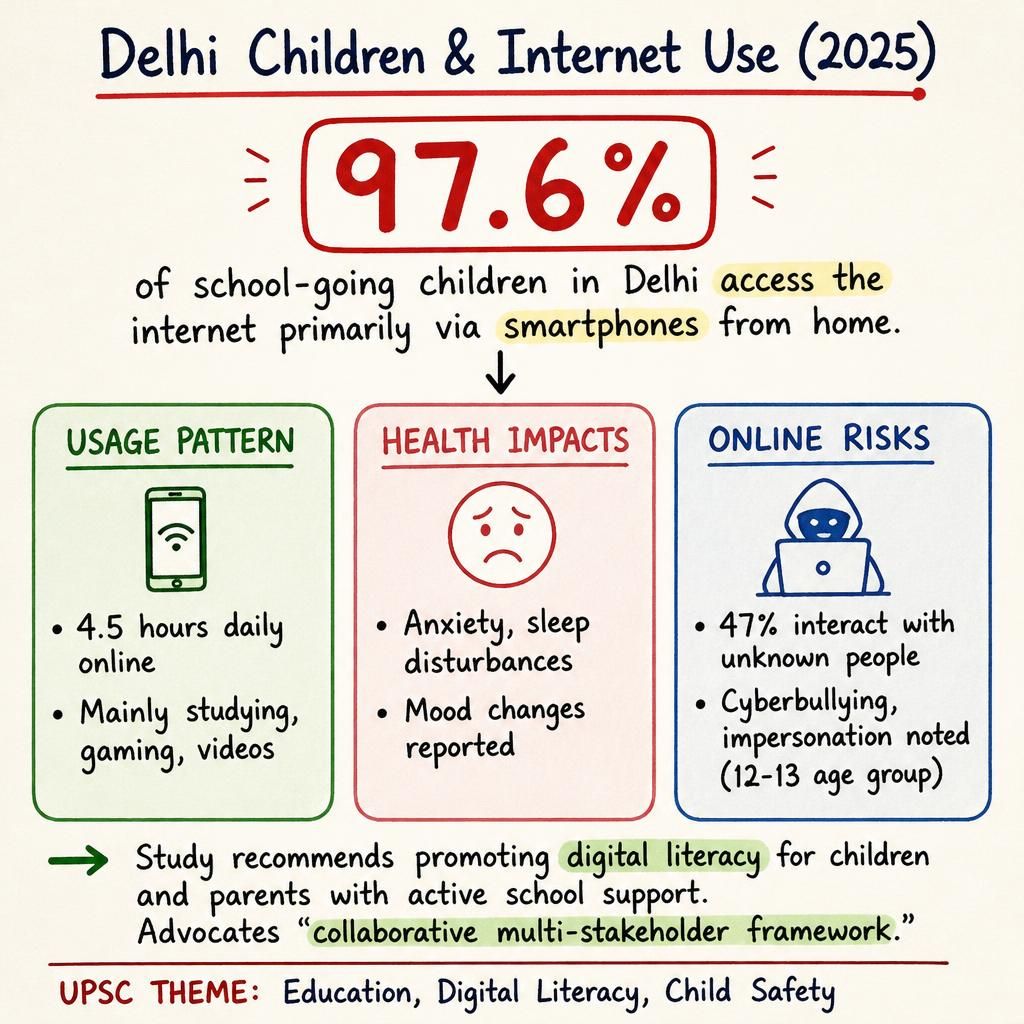
- An Indian Council of Social Science Research (ICSSR)-supported study in 2025 found that 97.6% of school-going children in Delhi access the internet primarily via smartphones from home.
- The study, titled "Empowering Children in the Digital Age," revealed children spend an average of 4.5 hours daily online, mainly for studying, gaming, and watching videos.
- Common health consequences reported include anxiety, sleep disturbances, and mood changes, indicating emotional and physical impacts of internet use.
- Nearly 47% of children reported interacting with unknown people online, with cyberbullying and impersonation also noted, especially in the 12-13 age group.
- The study recommends promoting digital literacy for children and parents with active school support, advocating for a "collaborative multi-stakeholder framework."
Children and Internet Use.jpg
Detailed Insights:
- The research surveyed over 2,000 children aged 9-14 and 500 parents in Delhi, highlighting a gap between children's technical skills and critical understanding of online risks.
- Children often exhibit signs of addiction, such as loneliness without internet access, anger when unable to find desired content, and difficulty stopping usage.
- Many children do not report uncomfortable online experiences to parents or teachers, though parents are considered a preferred choice for reporting.
- Gender differences exist, with boys generally having less controlled internet use, increasing exposure to risks, while girls' restricted access may limit digital literacy development.
- The study aligns with the Viksit Bharat vision and Sustainable Development Goals (SDGs) by focusing on empowering children in the digital age for national development and well-being.
- Government initiatives like Pradhan Mantri Gramin Digital Saksharta Abhiyan (PMGDISHA) and National Education Policy (NEP) 2020 emphasize digital literacy and safe internet use.
Key Concepts Involved:
- Digital Literacy: The ability to find, evaluate, utilize, share, and create content using information technologies and the Internet safely and responsibly.
- Multi-stakeholder Framework: A collaborative approach involving government, civil society, academia, private sector, and individuals to address complex issues.
- Algorithmic Influence: The impact of algorithms on user behavior and content consumption, often leading to personalized but potentially manipulative online experiences.
Previous12/12

SuperKalam is your personal mentor for UPSC preparation, guiding you at every step of the exam journey.
Download the App


STUDY RESOURCES
CONTACT US
ⓒ Snapstack Technologies Private Limited