GS 3: Science & TechnologyPrelimsGS 3: Science and Technology in Everyday LifeGS 2: Health Sector
AIIMS Study Ties Metabolic Health to Accumulation of Fat Around Kidneys, Pg4
AIIMS research reveals metabolic health, not just obesity, drives kidney fat accumulation; NGAL biomarker offers early detection of kidney injury.
Practice MCQs
739 Students attempted
Key Highlights:
- A study by researchers at AIIMS found a significant link between unhealthy metabolic profiles in obese individuals and excess fat accumulation around the kidneys.
- This fat accumulation is associated with an increased risk of kidney and cardiovascular complications.
- The ICMR-supported research identified potential biomarkers, such as NGAL, for early detection of kidney injury.
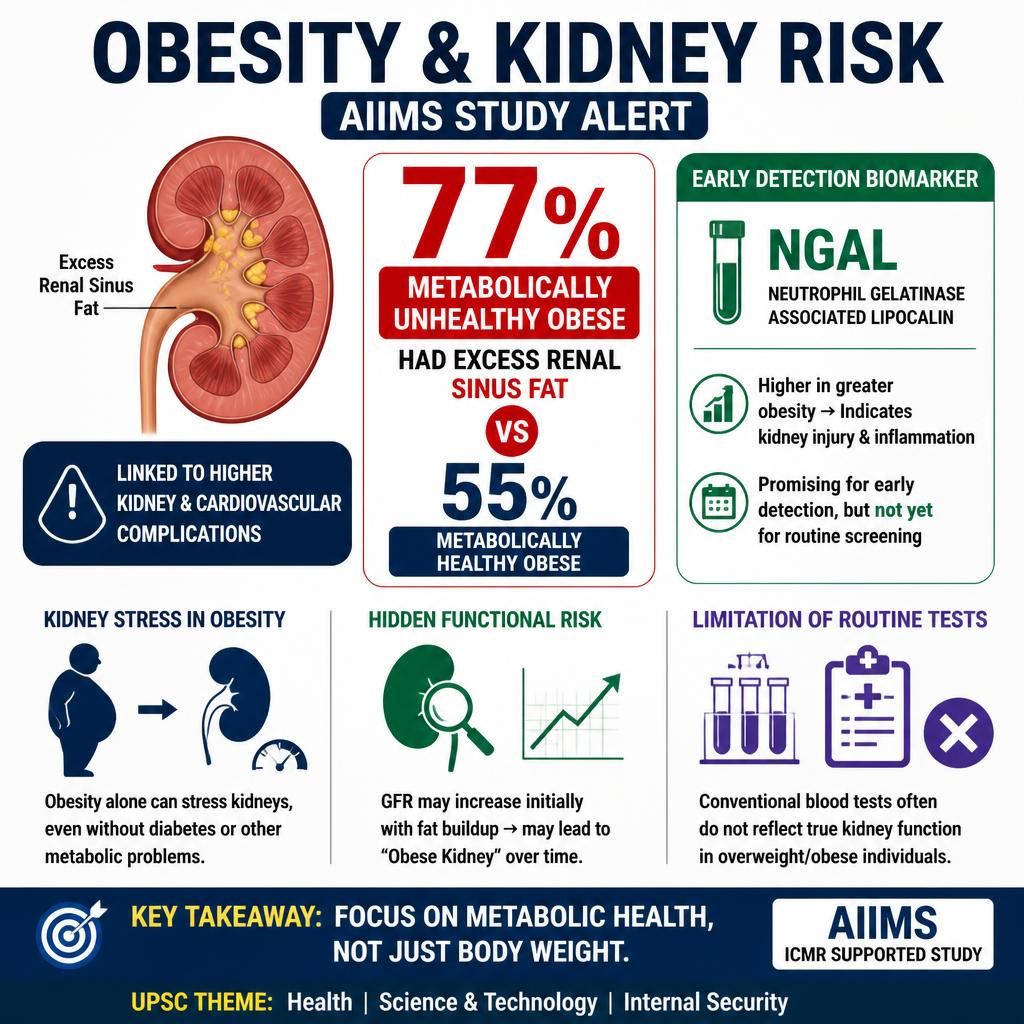
- The study found that 77% of metabolically unhealthy obese patients had excess renal sinus fat, compared to 55% of metabolically healthy ones.
Kidney Risk.jpg
Detailed Insights:
- The study involved 44 obese patients admitted to AIIMS, highlighting the importance of metabolic health over body weight alone.
- Researchers observed that Glomerular Filtration Rate (GFR) might initially increase with fat buildup, potentially leading to an "obese kidney" over time.
- Conventional blood tests often fail to accurately reflect true kidney function in individuals with overweight or obesity.
- NGAL, a protein associated with kidney injury and inflammation, was found to be substantially higher in individuals with greater degrees of obesity.
- While promising for identifying obesity-related renal stress earlier, NGAL is not yet ready for routine clinical screening.
- Another AIIMS study indicated that obesity itself can stress the kidneys, even in individuals without diabetes or other metabolic problems.
- Approximately 30-40% of the patients in the current study had both obesity and Type 2 diabetes with insulin resistance.
- The findings suggest a need for doctors to consider a patient's metabolic health in addition to their BMI or weight.
Scientific/Technical Concepts Involved:
- Metabolic Health: A state where the body's processes like blood sugar, blood pressure, and cholesterol are within healthy ranges.
- Renal Sinus Fat: Adipose tissue accumulated within the central cavity of the kidney, surrounding the renal pelvis and blood vessels.
- Glomerular Filtration Rate (GFR): A measure of how well the kidneys are filtering blood, indicating their functional capacity.
- NGAL (Neutrophil Gelatinase-Associated Lipocalin): A protein that serves as an early biomarker for kidney injury and inflammation.

SuperKalam is your personal mentor for UPSC preparation, guiding you at every step of the exam journey.
Download the App


STUDY RESOURCES
CONTACT US
ⓒ Snapstack Technologies Private Limited