GS 2: PolityGS 2: GovernancePrelimsGS2: Indian Constitutional Evolution, Features, Amendments, Basic Structure DoctrineGS2: Structure and Functioning of Executive and Judiciary
Ready to drop FIRs against student protesters, says SC, Pg1
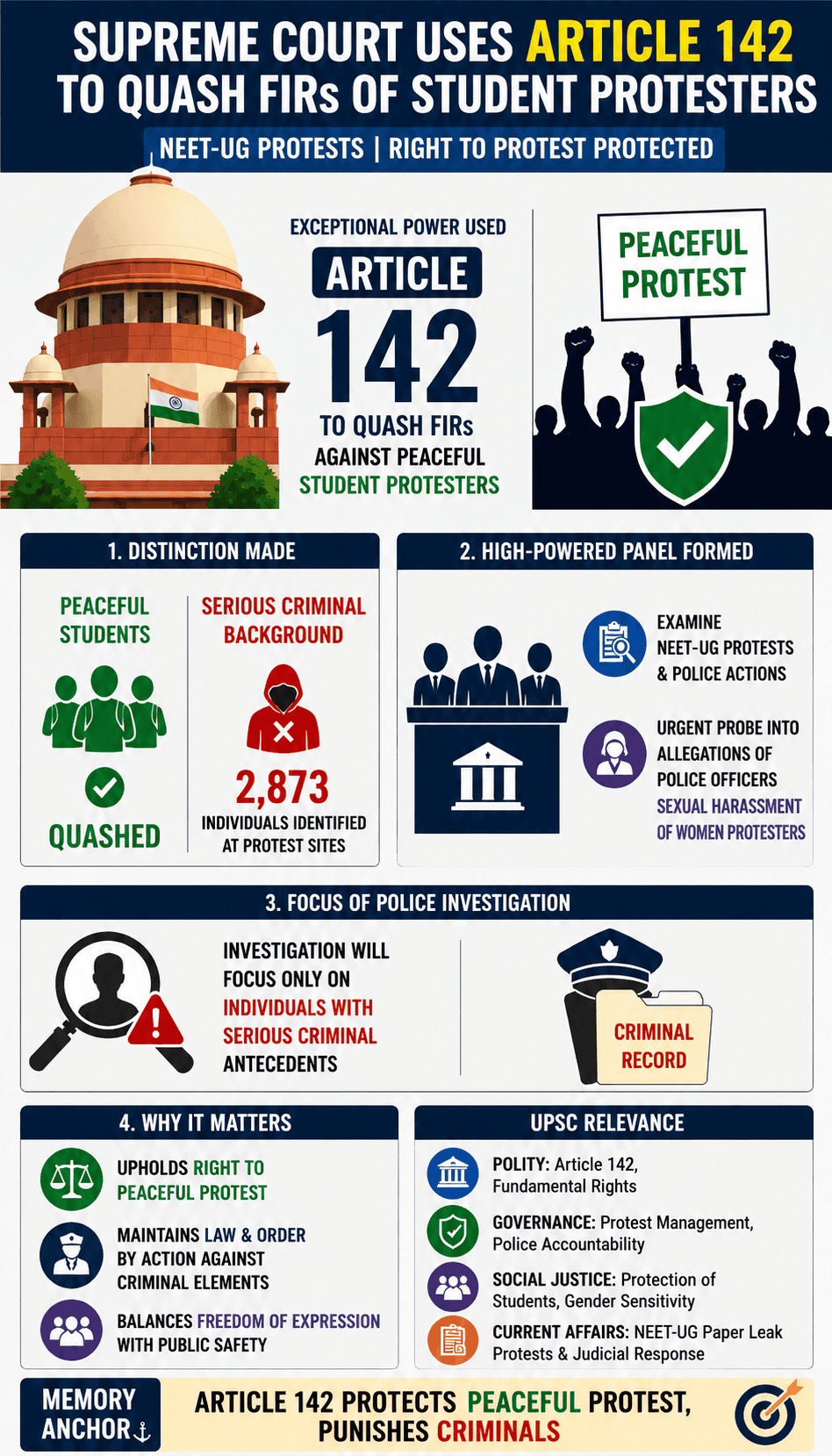
Supreme Court agrees to quash FIRs against peaceful NEET-UG student protesters using Article 142, distinguishing them from criminals.
Practice MCQs
731 Students attempted
Key Highlights:
- The Supreme Court agreed to use its exceptional power under Article 142 of the Constitution to quash First Information Reports (FIRs) against student protesters.
- These FIRs were registered during nationwide protests against the NEET-UG paper leaks.
- The court distinguished between peaceful student protesters and 2,873 individuals with serious criminal backgrounds identified at the protest sites.
- A high-powered panel will be formed to examine issues related to the NEET-UG protests and police actions.
Article 142.png
Detailed Insights:
- The decision by the Supreme Court aims to protect students who participated in peaceful and lawful protests.
- The protests erupted following allegations of paper leaks in the National Eligibility cum Entrance Test (Undergraduate).
- Solicitor-General Tushar Mehta informed the court that police investigation would focus on individuals with serious criminal antecedents.
- The proposed panel will also urgently investigate allegations of police officers sexually harassing women protesters during the demonstrations.
- The court's move signifies a recognition of the right to protest while ensuring law and order.
Key Concepts Involved:
- Article 142: Grants the Supreme Court extraordinary power to pass any decree or order necessary for doing complete justice in any cause or matter pending before it.
- NEET-UG: The National Eligibility cum Entrance Test (Undergraduate) is an all-India pre-medical entrance examination for admission to undergraduate medical courses.
- FIR (First Information Report): A written document prepared by the police when they receive information about the commission of a cognizable offense.

SuperKalam is your personal mentor for UPSC preparation, guiding you at every step of the exam journey.
Download the App


STUDY RESOURCES
CONTACT US
ⓒ Snapstack Technologies Private Limited