GS 2: International RelationsGS 3: EconomyPrelimsGS 3: Infrastructure: Energy, Ports, Roads, Airports, Railways etc.GS 2: Bilateral, Regional and Global Groupings and Agreements
Trump waives sanctions, tariffs linked to Russia, cites national interest, Pg3
US President Trump waives Russia sanctions, tariffs on oil purchases, citing national interest, significantly benefiting India's energy security and trade.
Practice MCQs
739 Students attempted
Key Highlights:
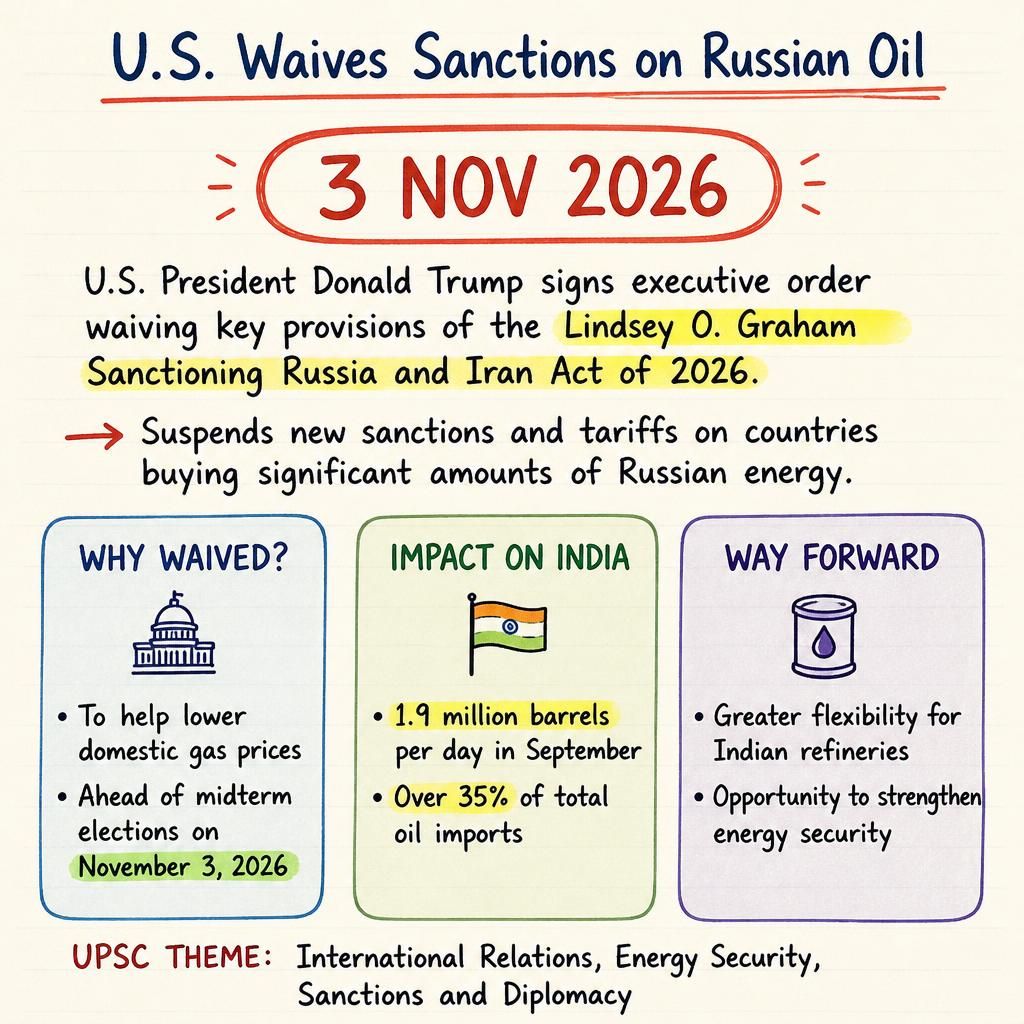
- U.S. President Donald Trump signed an executive order waiving key provisions of the Lindsey O. Graham Sanctioning Russia and Iran Act of 2026.
- The waiver suspends new sanctions and tariffs aimed at penalizing countries that purchase significant amounts of Russian energy.
- The decision was made citing U.S. national interests, particularly to help lower domestic gas prices ahead of the midterm elections on November 3, 2026.
- This waiver temporarily reduces the risk of punitive tariffs for India, which is the world's third-largest crude oil consumer and heavily reliant on Russian oil.
- India imported 1.9 million barrels per day of Russian crude in September, accounting for over 35% of its total oil imports.
US Waves Sanctions.jpg
Detailed Insights:
- The Lindsey O. Graham Sanctioning Russia and Iran Act of 2026, signed into law on September 18, 2026, aimed to increase economic pressure on Russia over the Ukraine war.
- The Act authorized tariffs of up to 500% on U.S. imports from Russia and up to 100% on goods from countries that are top importers of Russian oil and natural gas.
- India's crude oil import dependency is significant, with figures ranging from 88% to over 90% of its needs met by imports.
- The waiver provides Indian refineries greater flexibility to assess Russian crude based on price, availability, and logistics, rather than the threat of additional tariffs.
- Despite the waiver, existing U.S. sanctions imposed under separate executive orders against Russia remain in effect, and Washington retains the ability to re-impose pressure.
- The U.S. decision reflects a prioritization of immediate domestic economic and political pressures over broader foreign policy objectives concerning the Ukraine war.
- For India, the waiver is an opportunity to strengthen energy security and continue diversification efforts, rather than increasing dependence on Russia.
Key Concepts Involved:
- Sanctions: Economic or political penalties imposed by one country on another to compel a change in policy.
- Tariffs: Taxes imposed on imported goods and services, often used to protect domestic industries or as a trade barrier.
- Energy Security: The uninterrupted availability of energy sources at an affordable price.
- Executive Order: A directive issued by the President of the United States that manages operations of the federal government.## Key Highlights:
- U.S. President Donald Trump signed an executive order waiving key provisions of the Lindsey O. Graham Sanctioning Russia and Iran Act of 2026.
- The waiver suspends new sanctions and tariffs aimed at penalizing countries that purchase significant amounts of Russian energy.
- The decision was made citing U.S. national interests, particularly to help lower domestic gas prices ahead of the midterm elections on November 3, 2026.
- This waiver temporarily reduces the risk of punitive tariffs for India, which is the world's third-largest crude oil consumer and heavily reliant on Russian oil.
- India imported 1.9 million barrels per day of Russian crude in September, accounting for over 35% of its total oil imports.
Detailed Insights:
- The Lindsey O. Graham Sanctioning Russia and Iran Act of 2026, signed into law on September 18, 2026, aimed to increase economic pressure on Russia over the Ukraine war.
- The Act authorized tariffs of up to 500% on U.S. imports from Russia and up to 100% on goods from countries that are top importers of Russian oil and natural gas.
- India's crude oil import dependency is significant, with figures ranging from 88% to over 90% of its needs met by imports.
- The waiver provides Indian refineries greater flexibility to assess Russian crude based on price, availability, and logistics, rather than the threat of additional tariffs.
- Despite the waiver, existing U.S. sanctions imposed under separate executive orders against Russia remain in effect, and Washington retains the ability to re-impose pressure.
- The U.S. decision reflects a prioritization of immediate domestic economic and political pressures over broader foreign policy objectives concerning the Ukraine war.
- For India, the waiver is an opportunity to strengthen energy security and continue diversification efforts, rather than increasing dependence on Russia.
Key Concepts Involved:
- Sanctions: Economic or political penalties imposed by one country on another to compel a change in policy.
- Tariffs: Taxes imposed on imported goods and services, often used to protect domestic industries or as a trade barrier.
- Energy Security: The uninterrupted availability of energy sources at an affordable price.
- Executive Order: A directive issued by the President of the United States that manages operations of the federal government.

SuperKalam is your personal mentor for UPSC preparation, guiding you at every step of the exam journey.
Download the App


STUDY RESOURCES
CONTACT US
ⓒ Snapstack Technologies Private Limited