GS 2: GovernanceGS 3: Environment & EcologyPrelimsGS 3: Infrastructure: Energy, Ports, Roads, Airports, Railways etc.GS 3: Conservation, Pollution and Degradation
The tree bridges that help gibbons ‘cross’ highways, Pg11
Innovative tree and rope bridges are helping Hoolock gibbons and other arboreal species overcome habitat fragmentation caused by highways and railways, boosting conservation efforts.
Practice MCQs
739 Students attempted
Key Highlights:
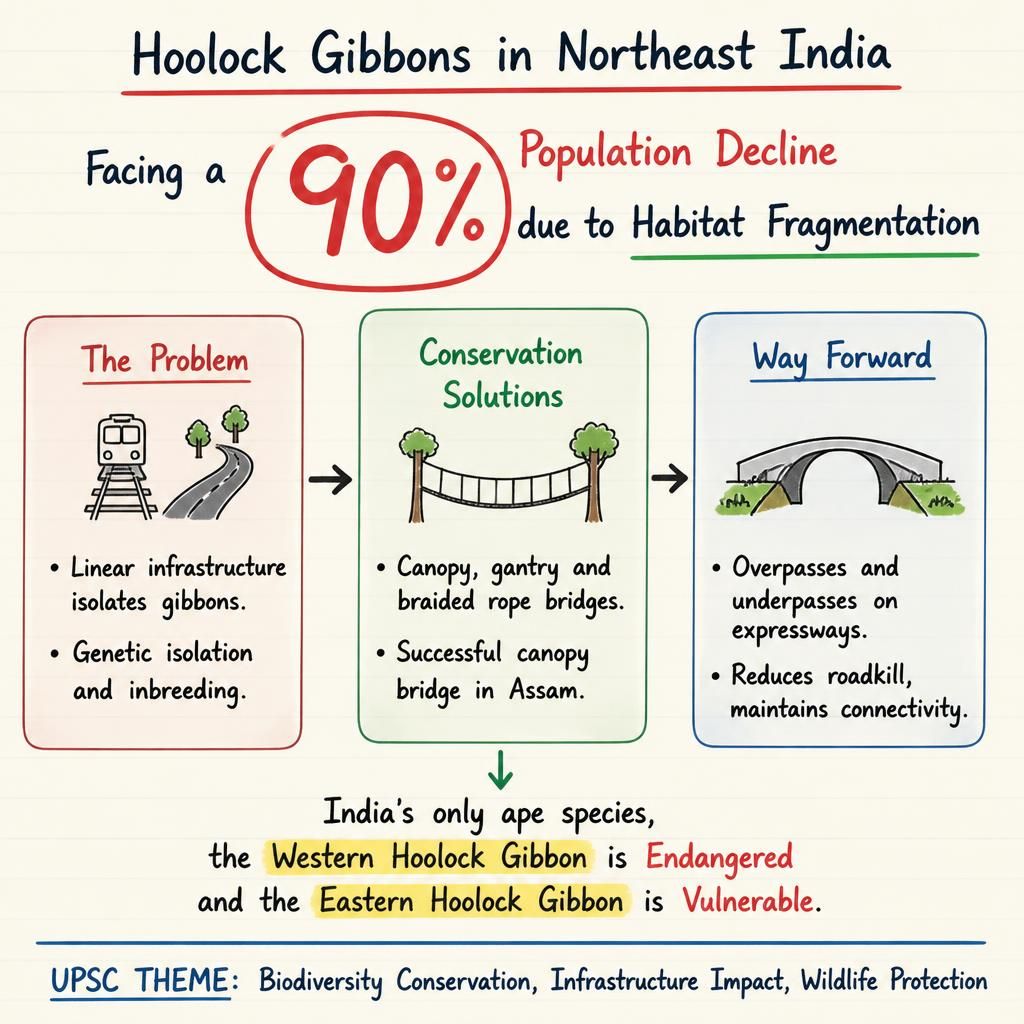
- Hoolock gibbons, India's only ape species, face a 90% population decline in Northeast India due to habitat fragmentation.
- Linear infrastructure like roads and railways isolate gibbon populations, leading to genetic isolation and inbreeding.
- Conservation efforts include establishing canopy bridges, gantry bridges, and braided rope bridges to connect fragmented habitats.
- The Hoollongapar Gibbon Sanctuary in Assam, home to western hoolock gibbons, has seen successful canopy bridge development over a railway line.
- India is also implementing large-scale wildlife crossings, including overpasses and underpasses, on major expressways to mitigate fragmentation.
Hoolock Gibbon.jpg
Detailed Insights:
- Hoolock gibbons are highly arboreal, making them vulnerable to habitat breaks as they struggle to move on land.
- The fragmentation of their habitat began as early as 1887 with the expansion of railway networks in Eastern Assam.
- The Western Hoolock Gibbon is classified as Endangered, while the Eastern Hoolock Gibbon is Vulnerable by the IUCN, and both are protected under Schedule I of the Wildlife (Protection) Act of India, 1972.
- Local organizations like Aranyak have been instrumental in conservation, including training forest staff and establishing a Gibbon Conservation Centre.
- Other arboreal species like the Lion-tailed Macaque (Endangered) and Giant Indian Squirrel (Least Concern) also suffer from habitat fragmentation.
- The Delhi-Mumbai Expressway features India's longest animal overpass system, and the Delhi-Dehradun Expressway includes a significant elevated wildlife corridor.
- These wildlife crossings are designed to allow safe passage for animals, reduce roadkill, and maintain ecological connectivity.
Key Concepts Involved:
- Habitat Fragmentation: The process where large, continuous habitats are divided into smaller, isolated patches, often by human activities.
- Arboreal Lifestyle: Animals that primarily live in trees, relying on continuous canopy cover for movement and survival.
- Genetic Isolation: The lack of gene flow between populations, leading to reduced genetic diversity and increased susceptibility to diseases.
- Wildlife Crossings (Eco-ducts): Structures like overpasses, underpasses, and canopy bridges designed to help animals safely cross human-made barriers.

SuperKalam is your personal mentor for UPSC preparation, guiding you at every step of the exam journey.
Download the App


STUDY RESOURCES
CONTACT US
ⓒ Snapstack Technologies Private Limited