GS 2: PolityGS 3: Science & TechnologyGS 2: Social JusticePrelimsGS 2: Government policies and interventions for development in various sectors
Children Have Fundamental Right To Access Internet: SC, Pg1
Supreme Court declares internet access a fundamental right for children under Articles 19(1)(a) and 21, urging intelligent restraints over blanket bans.
Practice MCQs
739 Students attempted
Key Highlights:
- The Supreme Court has declared that children possess a fundamental right to access and use the Internet.
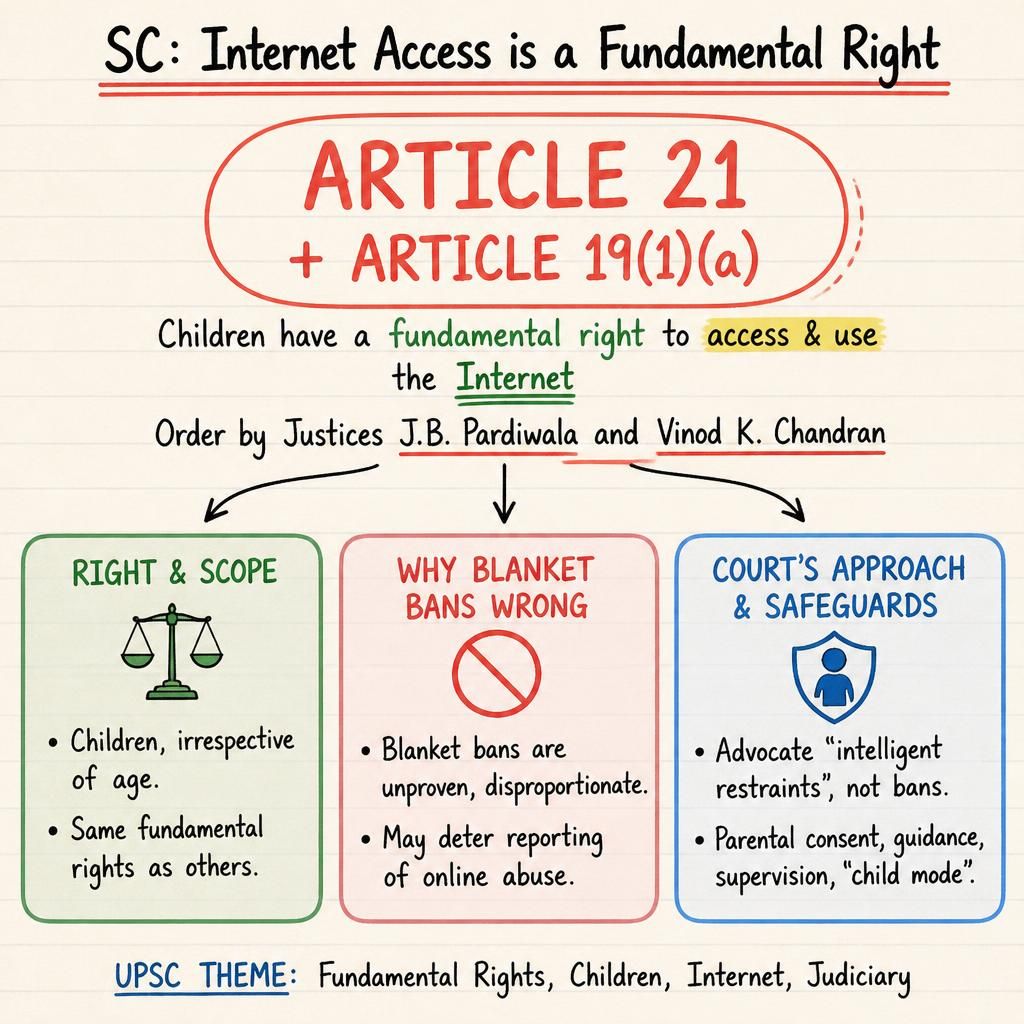
- This right is enshrined under Article 21 (Right to Life and Personal Liberty) read with Article 19(1)(a) (Freedom of Speech and Expression) of the Indian Constitution.
- Justices J.B. Pardiwala and Vinod K. Chandran delivered the order, emphasizing that children's safety and freedom are not mutually exclusive.
- The court advocated for "intelligent restraints" and proportionate measures instead of blanket bans on internet access for children.
- It highlighted that denying internet access to children would be absurd and ineffective, potentially pushing them to unregulated platforms.
Internet Access.jpg
Detailed Insights:
- The ruling asserts that children, irrespective of age, enjoy the same fundamental rights as any other individual.
- The court observed that blanket restrictions are unproven measures of disproportionality and do not guarantee increased safety for children.
- It noted that stringent restrictions might deter children from reporting online abuse to parents or guardians due to fear of reprisal, undermining the POCSO Act.
- The judgment suggests that keeping children away from social media platforms does not necessarily reduce incidents of online abuse.
- The court acknowledged the necessity of safeguards and moderation, supporting age-based restrictions if they are proportionate to safety objectives.
- Recommended measures include greater emphasis on parental consent, guidance, supervision, and a dedicated "child mode" for social media platforms.
Key Concepts Involved:
- Article 21: Guarantees the right to life and personal liberty, including the right to live with human dignity.
- Article 19(1)(a): Enshrines the fundamental right to freedom of speech and expression for all citizens.
- POCSO Act: The Protection of Children from Sexual Offences Act, 2012, aims to protect children from sexual abuse and exploitation.

SuperKalam is your personal mentor for UPSC preparation, guiding you at every step of the exam journey.
Download the App


STUDY RESOURCES
CONTACT US
ⓒ Snapstack Technologies Private Limited