GS 2: GovernanceGS 3: Science & TechnologyGS 3: Internal SecurityPrelimsGS 2: Government policies and interventions for development in various sectors
Caller name display from Nov 1: How will it work, can you opt out?, Pg13
DoT mandates Caller Name Presentation (CNAP) from November 1 for 4G users to combat online fraud, with opt-out for CLIR subscribers.
Practice MCQs
739 Students attempted
Key Highlights:
- The Department of Telecommunications (DoT) has mandated the implementation of Caller Name Presentation (CNAP) service for mobile users starting November 1, 2026.
- This service will display the caller's registered name along with their number for incoming calls on 4G and higher-generation networks.
- The primary objective is to enhance caller identification and combat online frauds, including digital arrests and financial scams.
- The Telecom Regulatory Authority of India (TRAI) had previously recommended the introduction of CNAP, with the DoT ultimately deciding on a default-on model with an opt-out option.
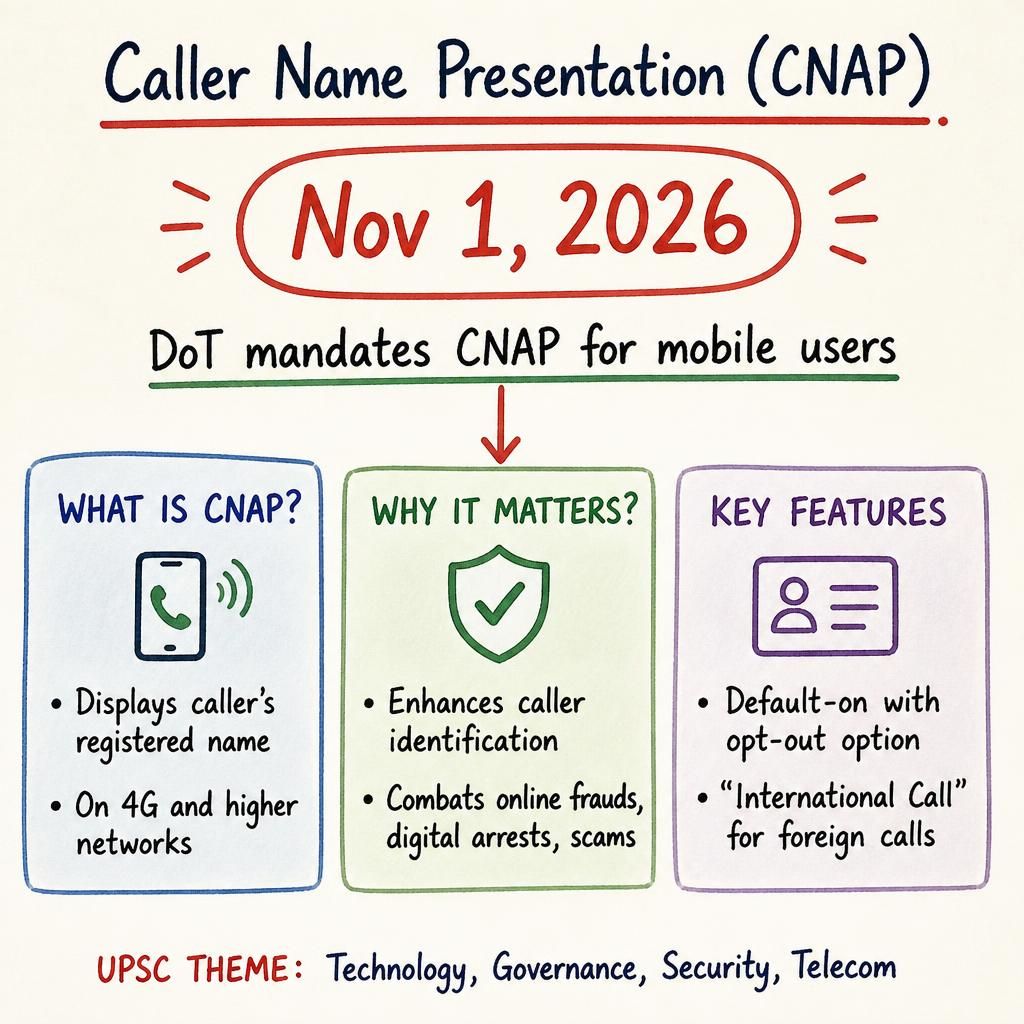
Caller Name Presentation.jpg
Detailed Insights:
- The DoT issued a circular on October 13, 2026, instructing all telecom service providers to introduce the CNAP service across all service areas.
- The service will automatically display the caller's name as recorded in the originating telecom operator's subscriber database if the number is not saved in the recipient's contacts.
- For calls originating from abroad, the display will show "International Call" instead of a name.
- Users who have activated Calling Line Identification Restriction (CLIR) will be exempt, and their names will not be displayed.
- Businesses and bulk connection holders can register a preferred name, such as a registered trademark or a trade name from the Goods and Services Tax (GST) portal, for display.
- The DoT has emphasized a "security-by-design approach" to ensure that calling name identity is not retained after a call is completed, addressing privacy concerns.
- The rollout for 2G, 3G, and landline connections will be considered separately after further examination.
Key Concepts Involved:
- Caller Name Presentation (CNAP): A service that displays the registered name of the calling party on the recipient's phone screen.
- Department of Telecommunications (DoT): The government body responsible for policy, licensing, and coordination in India's telecommunications sector.
- Telecom Regulatory Authority of India (TRAI): The independent regulatory body that makes recommendations on telecommunications policy and tariffs in India.
- Calling Line Identification Restriction (CLIR): A service that allows a caller to prevent their phone number from being displayed to the recipient.

SuperKalam is your personal mentor for UPSC preparation, guiding you at every step of the exam journey.
Download the App


STUDY RESOURCES
CONTACT US
ⓒ Snapstack Technologies Private Limited