GS 3: EconomyPrelimsGS 3: Indian Economy, Planning, Mobilization of Resources, Growth, Development and EmploymentGS 2: Effect of Policies and Politics of Developed and Developing Countries on India's Interests
After US Fed and others, will RBI also raise interest rates in Oct?, Pg17
US Fed hikes rates, triggering global central bank actions; RBI likely to raise repo rate in October to combat persistent domestic inflation.
Practice MCQs
731 Students attempted
Key Highlights:
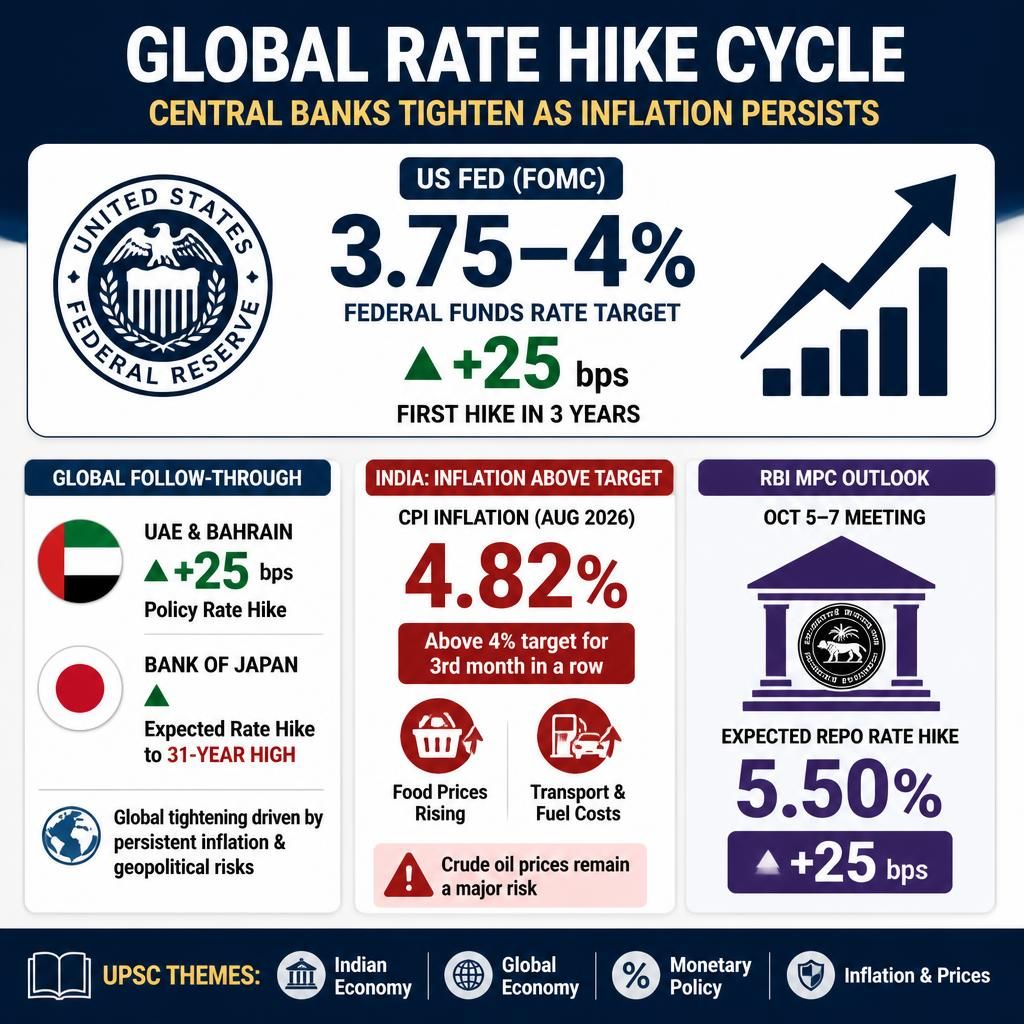
- The US Federal Reserve's Federal Open Market Committee (FOMC) increased the federal funds rate target range by 25 basis points (bps) to 3.75-4%.
- This marks the first rate hike by the US Fed in three years, with all 12 FOMC members, including new Chair Kevin Warsh, voting in favor.
- Central banks in the UAE and Bahrain also raised their main interest rates by 25 bps, mirroring the US decision.
- The Reserve Bank of India's (RBI) Monetary Policy Committee (MPC) is widely expected to raise the repo rate by 25 bps to 5.5% in its upcoming October 5-7 meeting.
- India's Consumer Price Index (CPI) inflation rose to 4.82% in August 2026, exceeding the 4% target for the third consecutive month.
Global Rate Hike Cycle.jpg
Detailed Insights:
- The US Fed's decision was made despite the White House expressing dissatisfaction, citing "elevated inflation" and a need to return to the 2% inflation target.
- Global central banks are tightening monetary policy in response to persistent inflation, often exacerbated by geopolitical developments and rising energy prices.
- The Bank of Japan is also anticipated to raise interest rates to a 31-year high, driven by inflation risks from a weak yen, high import prices, and strong AI demand.
- The European Central Bank previously raised rates due to upward price pressures stemming from the West Asia conflict.
- India's August CPI inflation was primarily driven by increases in food and transport prices, with crude oil prices posing a significant risk.
- The RBI is mandated to maintain CPI inflation within a tolerance band of 2-6%, with a target of 4%.
- Economists predict India's CPI inflation could reach 5.7% in September and potentially cross 6.5% before moderating in early 2027.
- The RBI's Monetary Policy Committee had kept the repo rate unchanged at 5.25% for four consecutive times before the current rate hike expectations.
Key Concepts Involved:
- Federal Funds Rate: The target interest rate set by the Federal Open Market Committee (FOMC) for overnight borrowing between banks in the United States.
- Basis Points (bps): A common unit of measure in finance, equal to one-hundredth of a percentage point (0.01%), used to denote small changes in interest rates or yields.
- Repo Rate: The interest rate at which the Reserve Bank of India (RBI) lends money to commercial banks for short periods against government securities.
- Consumer Price Index (CPI): A measure that tracks the average change over time in the prices paid by urban consumers for a market basket of consumer goods and services, indicating retail inflation.
- Monetary Policy Committee (MPC): A six-member body of the Reserve Bank of India responsible for fixing the benchmark interest rate (repo rate) to achieve the inflation target set by the government.
Previous12/12

SuperKalam is your personal mentor for UPSC preparation, guiding you at every step of the exam journey.
Download the App


STUDY RESOURCES
CONTACT US
ⓒ Snapstack Technologies Private Limited