GS 3: Disaster ManagementGS 3: EconomyPrelimsGS 3: Infrastructure: Energy, Ports, Roads, Airports, Railways etc.GS 2: Parliament and State Legislatures
House panel urges Petroleum Ministry to maintain 90-day crude oil stock, Pg6
Parliamentary panel recommends Petroleum Ministry to maintain 90-day crude oil stock and build more strategic reserves for energy security.
Practice MCQs
869 Students attempted
Key Highlights:
- The Standing Committee on Petroleum and Natural Gas has advised the Petroleum Ministry to maintain a 90-day crude oil stock.
- The committee suggests exploring the construction of more strategic reserve caverns nationwide.
- There has been a gap between the Budget Estimate (BE), Revised Estimate (RE), and Actual Expenditure (AE) in the last three financial years.
- The actual expenditure stood at 75%, 45% and 47% of BE allocated in 2023-24, 2024-25 and 2025-26, respectively.
Detailed Insights:
- The recommendation aims to protect against supply shocks and external uncertainties, aligning with global standards for energy security.
- The ministry cited reasons such as non-deployment of security personnel, lower electricity and manpower costs, delays in staff deputation, lower crude oil operational activities and delays in finalizing the warehousing agreement with Mangalore Refinery and Petrochemicals Limited for the reduction in expenditure.
- Strategic petroleum reserves are vital for ensuring energy security and mitigating risks associated with fluctuating global oil markets.
- Maintaining adequate crude oil reserves can help stabilize the economy during geopolitical crises or disruptions in oil production.
Key Concepts Involved:
- Strategic Petroleum Reserve: Stockpiles of crude oil maintained by a country to safeguard against supply disruptions.
- Budget Estimate (BE): Initial allocation of funds proposed in the budget for a specific financial year.
- Revised Estimate (RE): A mid-year review of the budget, adjusting allocations based on actual expenditure and revised needs.
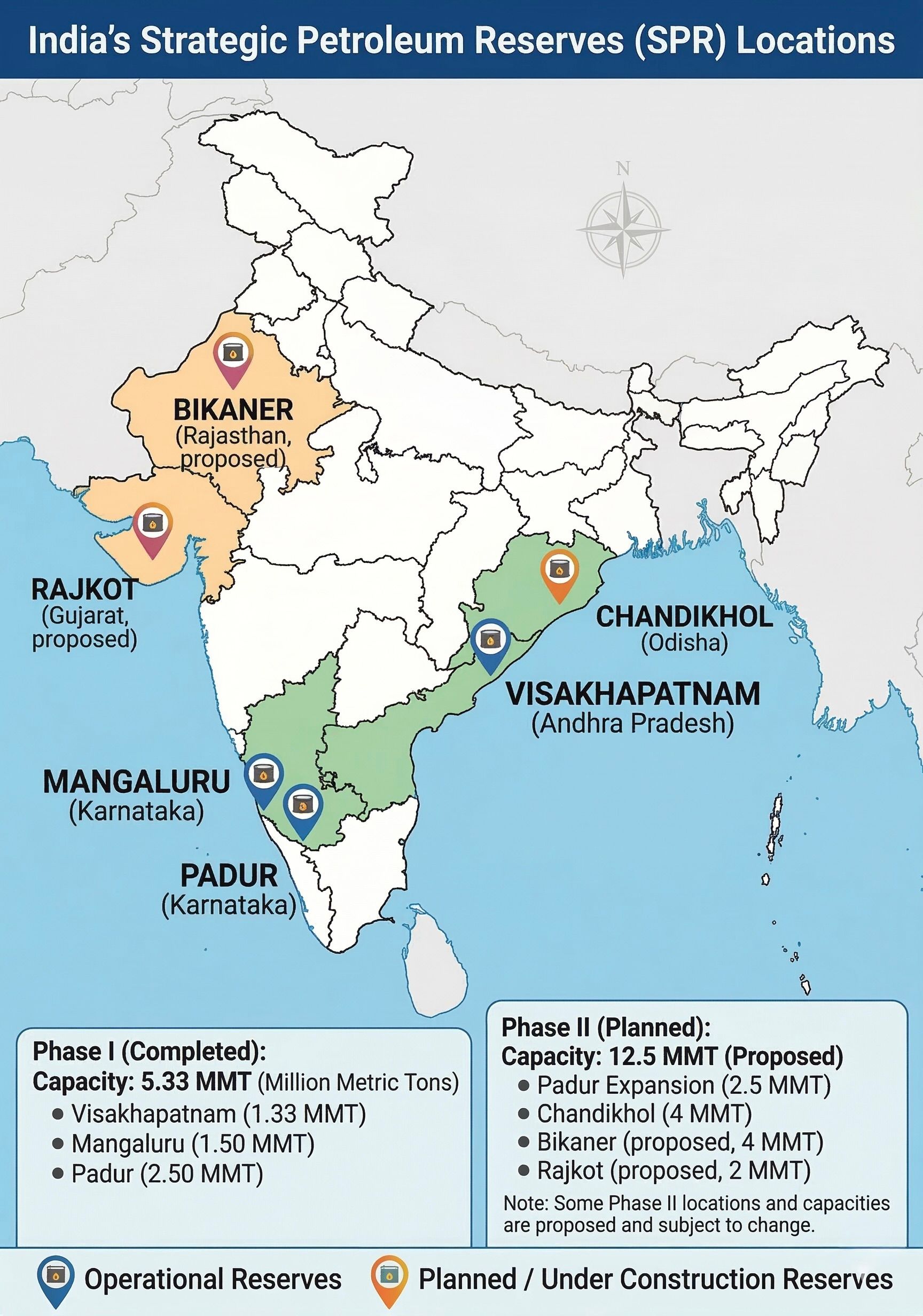
India's Strategic Oil Reserves

SuperKalam is your personal mentor for UPSC preparation, guiding you at every step of the exam journey.
Download the App


STUDY RESOURCES
CONTACT US
ⓒ Snapstack Technologies Private Limited