GS 3: EconomyPrelimsGS 3: Indian Economy, Planning, Mobilization of Resources, Growth, Development and EmploymentGS 2: Effect of Policies and Politics of Developed and Developing Countries on India's Interests
Fed Hikes Rates, Sees More Tightening to Tame Inflation, Pg23
US Federal Reserve raises interest rates to 3.75%-4.00% range, signaling further tightening to combat persistent inflation and meet 2% target.
Practice MCQs
724 Students attempted
Key Highlights:
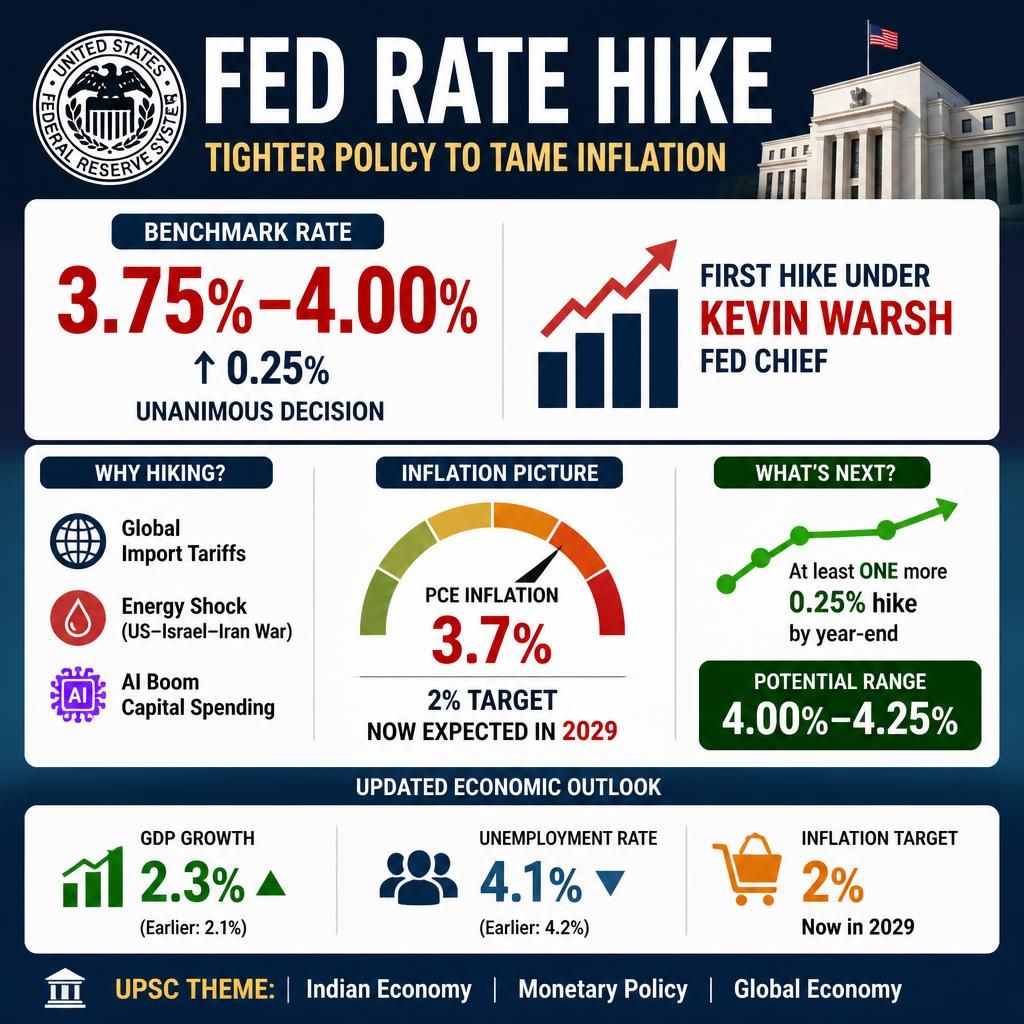
- The Federal Reserve raised its benchmark overnight interest rate by 0.25 percentage points, setting the new range at 3.75%-4.00%.
- The unanimous decision, including new Fed chief Kevin Warsh, aims to combat persistent inflation.
- Inflation is attributed to global import tariffs, an energy shock from the US-Israeli war with Iran, and capital spending from the artificial intelligence boom.
- Policymakers project at least one more quarter-percentage-point hike by the end of the year, with rates potentially reaching 4.00%-4.25%.
- The Personal Consumption Expenditures Price Index (PCE) inflation is estimated at 3.7%, with the 2% target not expected until 2029.
Fed Rate Hike.jpg
Detailed Insights:
- This marks the first policy adjustment under Kevin Warsh, who assumed the role of Fed chief in late May.
- The move indicates a commitment to tighter monetary policy, despite earlier expectations that Warsh might favor rate cuts.
- The Federal Reserve aims to achieve its 2% inflation target, which has been pushed back by a year to 2029.
- The rate hike occurs less than two months before midterm elections, amidst public dissatisfaction over rising gasoline prices and mortgage rates.
- The Fed's updated economic projections show a slight increase in economic growth to 2.3% and a decrease in the unemployment rate to 4.1%.
- The central bank removed its previous reference to "supply shocks" as a cause for inflation, suggesting broader concerns about price pressures.
Key Concepts Involved:
- Federal Reserve: The central banking system of the United States, responsible for conducting monetary policy.
- Interest Rates: The cost of borrowing money or the return on savings, influenced by central bank decisions.
- Inflation: The rate at which the general level of prices for goods and services is rising, leading to a decrease in purchasing power.
- Monetary Policy: Actions undertaken by a central bank to influence the availability and cost of money and credit to promote economic goals.
- Personal Consumption Expenditures (PCE) Price Index: A measure of the prices of goods and services purchased by consumers, used by the Fed as a key inflation indicator.

SuperKalam is your personal mentor for UPSC preparation, guiding you at every step of the exam journey.
Download the App


STUDY RESOURCES
CONTACT US
ⓒ Snapstack Technologies Private Limited