How AI can be optimised for better healthcare, Pg9
AI offers a transformative solution to India's healthcare challenges, optimizing efficiency, expanding access, and improving patient outcomes through digital integration.
Practice MCQs
898 Students attempted
Key Highlights:
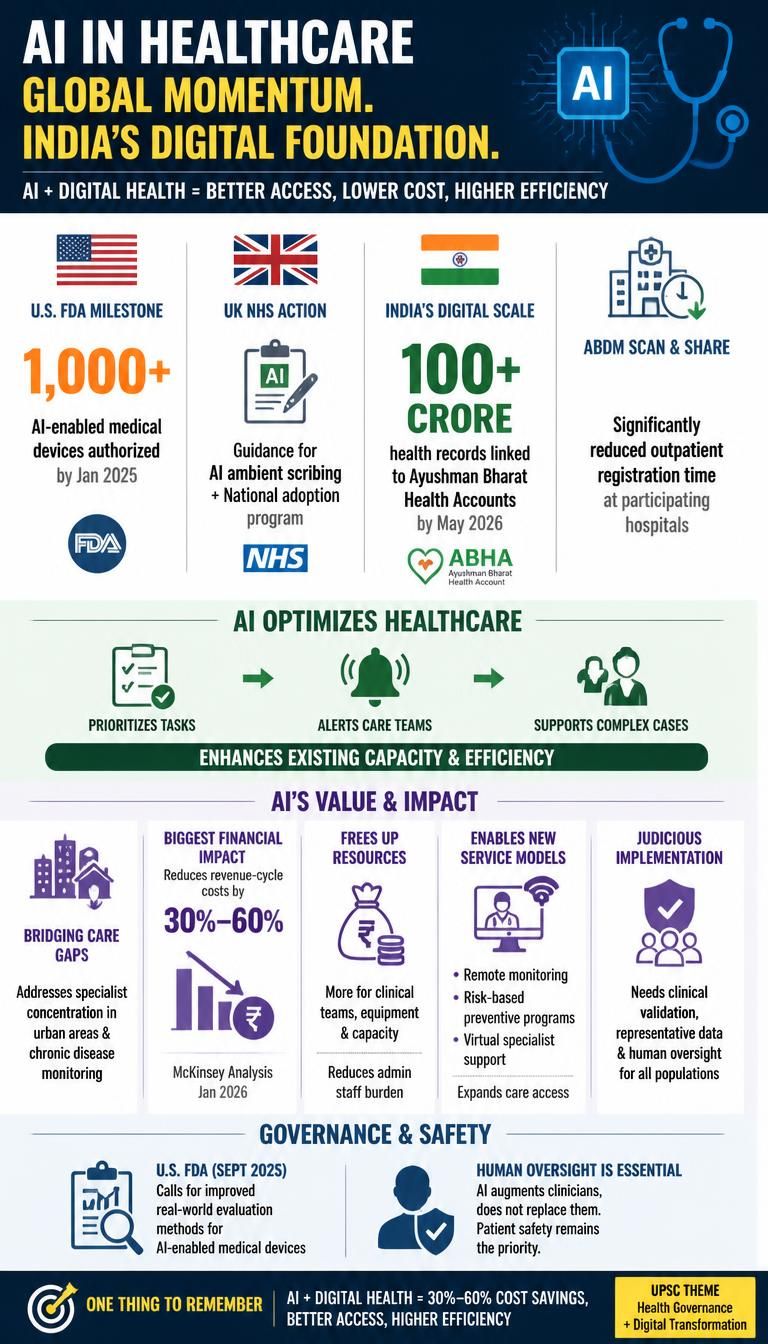
- Over 1,000 AI-enabled medical devices were authorized by the U.S. Food and Drug Administration (FDA) by January 2025, indicating global adoption.
- The National Health Service (NHS) in the U.K. issued guidance for AI-enabled ambient scribing and is developing a national adoption program.
- India has linked over 100 crore health records to Ayushman Bharat Health Accounts by May 2026, establishing a strong digital foundation.
- The Ayushman Bharat Digital Mission (ABDM) Scan and Share service has significantly reduced outpatient registration times at participating hospitals.
- AI can optimize healthcare by prioritizing tasks, alerting care teams, and supporting complex cases, enhancing existing capacity efficiency.
AI in Healthcare.jpg
Detailed Insights:
- AI helps address challenges such as the concentration of specialist care in urban areas and the extensive monitoring required for chronic conditions.
- A January 2026 McKinsey analysis estimated that AI could reduce healthcare revenue-cycle costs by 30% to 60%.
- These financial benefits can free up resources for clinical teams, equipment, and capacity, while also reducing administrative staff burden.
- AI enables new service models like remote monitoring, risk-based preventive programs, and virtual specialist support, expanding care access.
- Judicious AI implementation necessitates clinical validation, representative data, and human oversight to ensure performance across diverse populations.
- The U.S. FDA in September 2025 emphasized the need for improved real-world evaluation methods for AI-enabled medical devices.
- AI's contribution to healthcare is crucial for India's economic development by enhancing population health, longevity, and productivity.
Key Concepts Involved:
- Artificial Intelligence (AI): Computer systems performing tasks typically requiring human intelligence, such as learning and problem-solving.
- Ayushman Bharat Digital Mission (ABDM): India's initiative to create an integrated digital health infrastructure for universal health coverage.
- U.S. Food and Drug Administration (FDA): U.S. federal agency ensuring the safety and efficacy of medical devices and public health.
- National Health Service (NHS): The publicly funded healthcare system of the United Kingdom.

SuperKalam is your personal mentor for UPSC preparation, guiding you at every step of the exam journey.
Download the App


STUDY RESOURCES
CONTACT US
ⓒ Snapstack Technologies Private Limited