GS 3: EconomyGS 2: GovernancePrelimsGS1: Population and Associated IssuesGS2: Statutory, Regulatory and Quasi Judicial Bodies
Gen Z's buy-now, pay-later habit fuelling unsecured loans, worrying regulator, Pg17
RBI expresses concern over surging unsecured retail loans, fueled by Gen Z's consumption habits, posing risks to financial stability and asset quality.
Practice MCQs
898 Students attempted
Key Highlights:
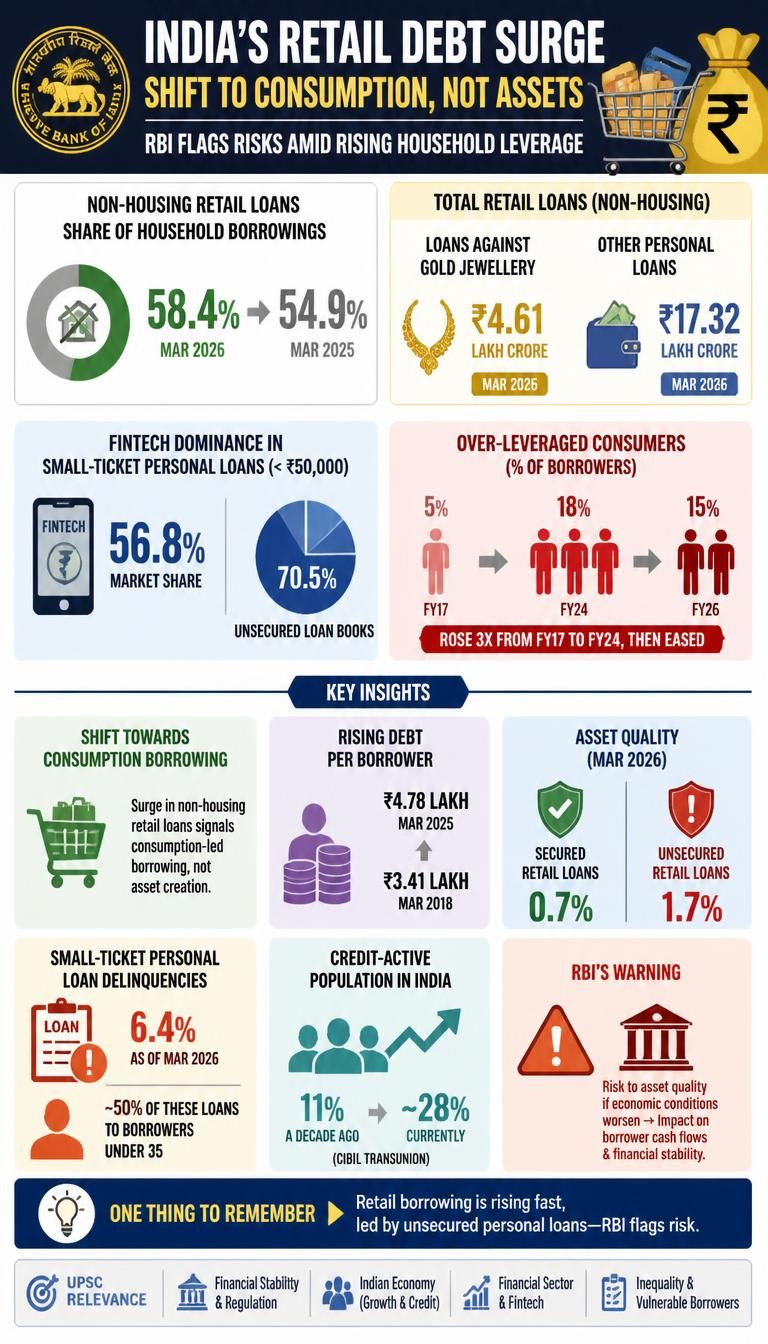
- Non-housing retail loans constituted 58.4% of households' total borrowings as of March 2026, up from 54.9% in March 2025.
- The Reserve Bank of India (RBI) has flagged household debt accumulation, especially among lower-rated borrowers, as requiring close monitoring.
- Outstanding loans against gold jewellery jumped to ₹4.61 lakh crore by March 2026, while other personal loans reached ₹17.32 lakh crore.
- Fintech firms hold a 56.8% market share in small-ticket personal loans (less than ₹50,000), with 70.5% of their loan books being unsecured.
- The share of over-leveraged consumers rose threefold from 5% in FY17 to 18% in FY24, before easing to 15% in FY26.
Retail Debt.jpg
Detailed Insights:
- The surge in non-housing retail loans indicates a shift towards consumption-led borrowing rather than asset creation.
- Average outstanding debt per borrower increased to ₹4.78 lakh by March-end 2025, from ₹3.41 lakh in March-end 2018.
- Gross Non-Performing Asset (NPA) ratios stood at 0.7% for secured retail loans and 1.7% for unsecured retail loans by March 2026.
- The RBI's Financial Stability Report highlighted potential risks to asset quality if economic conditions worsen, impacting borrower cash flows.
- Delinquencies in small-ticket personal loans stood at 6.4% as of March 2026, with roughly half of these loans extended to borrowers under 35.
- The credit-active population in India has risen from 11% a decade ago to approximately 28% currently, according to CIBIL TransUnion data.
- Consumption borrowing, driven significantly by younger consumers including Gen Z, often has repayment tenures of less than three years.
- Outstanding credit card debt surpassed ₹3 lakh crore last fiscal, with delinquencies (overdue payments between 90 and 360 days) rising over 40% year-on-year, as per CRIF High Mark.
Key Concepts Involved:
- Unsecured Loans: Loans not backed by collateral, posing higher risk to lenders due to lack of asset recovery options.
- Non-Performing Assets (NPA): Loans or advances for which the principal or interest payment remained overdue for a period of 90 days.
- Delinquency: The state of being behind on payments, indicating a borrower's failure to make timely payments on debt obligations.
- Household Debt: The total amount of debt owed by individuals and households, including mortgages, credit card debt, and personal loans.
Previous10/10

SuperKalam is your personal mentor for UPSC preparation, guiding you at every step of the exam journey.
Download the App


STUDY RESOURCES
CONTACT US
ⓒ Snapstack Technologies Private Limited