GS 2: GovernanceGS 3: Science & TechnologyGS 3: Environment & EcologyPrelims
Govt plans tighter fuel-economy norms, credit market from FY28, Pg21
Government proposes stringent CAFE-III fuel-economy norms for passenger vehicles from FY28, integrating carbon neutrality benefits and super credits for cleaner mobility.
Practice MCQs
891 Students attempted
Key Highlights:
- The Power Ministry has proposed new Corporate Average Fuel Economy (CAFE)-III norms for passenger vehicles in India.
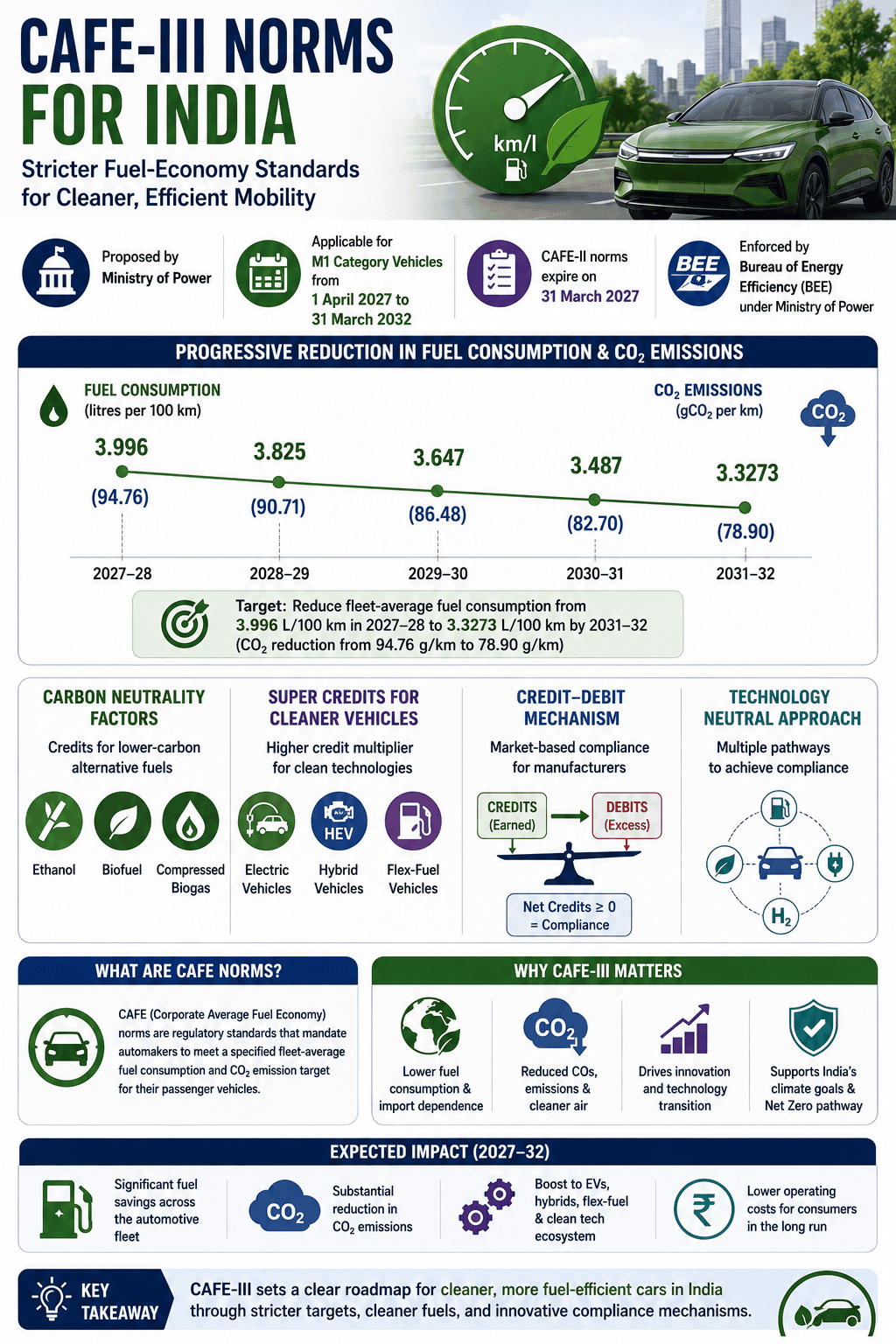
- These stricter fuel-economy standards will be applicable to M1-category vehicles manufactured or imported for sale in India from April 1, 2027, to March 31, 2032.
- The norms aim to progressively reduce fleet-average fuel consumption from 3.996 litres per 100 km (94.76 gCO₂ per km) in 2027-28 to 3.3273 litres per 100 km (78.90 gCO₂ per km) by 2031-32.
- The draft introduces Carbon Neutrality Factors for alternative fuels like ethanol, biofuel, and compressed biogas.
- It also includes super credits for electric, hybrid, and flex-fuel vehicles, along with a credit-and-debit compliance mechanism.
- The existing CAFE-II norms are scheduled to expire on March 31, 2027.
CAFE 3 norms.png
Detailed Insights:
- CAFE norms are regulatory standards enforced by the Bureau of Energy Efficiency (BEE) under the Ministry of Power to mandate fleet-average fuel consumption and CO2 emission targets for passenger cars.
- The primary objectives of these norms are to enhance energy security, reduce oil imports, and mitigate the environmental impact of road transport.
- M1-category vehicles encompass passenger vehicles with not more than eight seats in addition to the driver's seat, covering standard hatchbacks, sedans, and SUVs.
- Compliance with the CAFE-III norms will be assessed over two blocks: an initial three-year period followed by a two-year period.
- Carbon Neutrality Factors will allow a specified reduction in declared tailpipe CO2 emissions for vehicles utilizing approved alternative fuels, with an 8% reduction proposed for current ethanol blending levels.
- Super credits incentivize manufacturers to expand their cleaner vehicle portfolios by assigning a multiplier to electric, plug-in hybrid, strong hybrid, and flex-fuel vehicles in fleet-average calculations.
- A credit-and-debit system will enable manufacturers exceeding their targets to earn tradable compliance credits, while those falling short can purchase credits from the BEE or other manufacturers.
- The initial buyout price for compliance credits from the BEE is proposed at ₹2,500 per gCO₂/km, increasing annually.
- Manufacturers with annual sales below 1,000 vehicles will be exempt from these norms.
- The draft norms are currently open for stakeholder consultation, with feedback invited until August 6, 2026.
Key Concepts Involved:
- Corporate Average Fuel Economy (CAFE) Norms: Regulatory framework mandating automakers to achieve specific fleet-average fuel consumption and CO2 emission targets across their passenger vehicle sales.
- M1-category vehicles: A classification for motor vehicles designed for passenger transport, having a maximum of eight seats in addition to the driver's seat.
- Carbon Neutrality Factors: A mechanism that allows for a reduction in declared tailpipe CO2 emissions for vehicles using specified carbon-neutral or low-carbon fuels.
- Super Credits: An incentive system within CAFE norms that grants additional compliance credit for selling electric, hybrid, and flex-fuel vehicles, easing overall fleet-average targets.
- Credit-and-Debit System: A market-based compliance mechanism allowing manufacturers to earn, trade, or purchase credits to meet fuel efficiency targets.

SuperKalam is your personal mentor for UPSC preparation, guiding you at every step of the exam journey.
Download the App


STUDY RESOURCES
CONTACT US
ⓒ Snapstack Technologies Private Limited