GS 3: Science & TechnologyGS 3: Internal SecurityGS 3: EconomyPrelimsGS 2: Statutory, Regulatory and Quasi Judicial Bodies
12 NBFCs lose over Rs 12 crore in 10 months to cyberattacks, Pg8
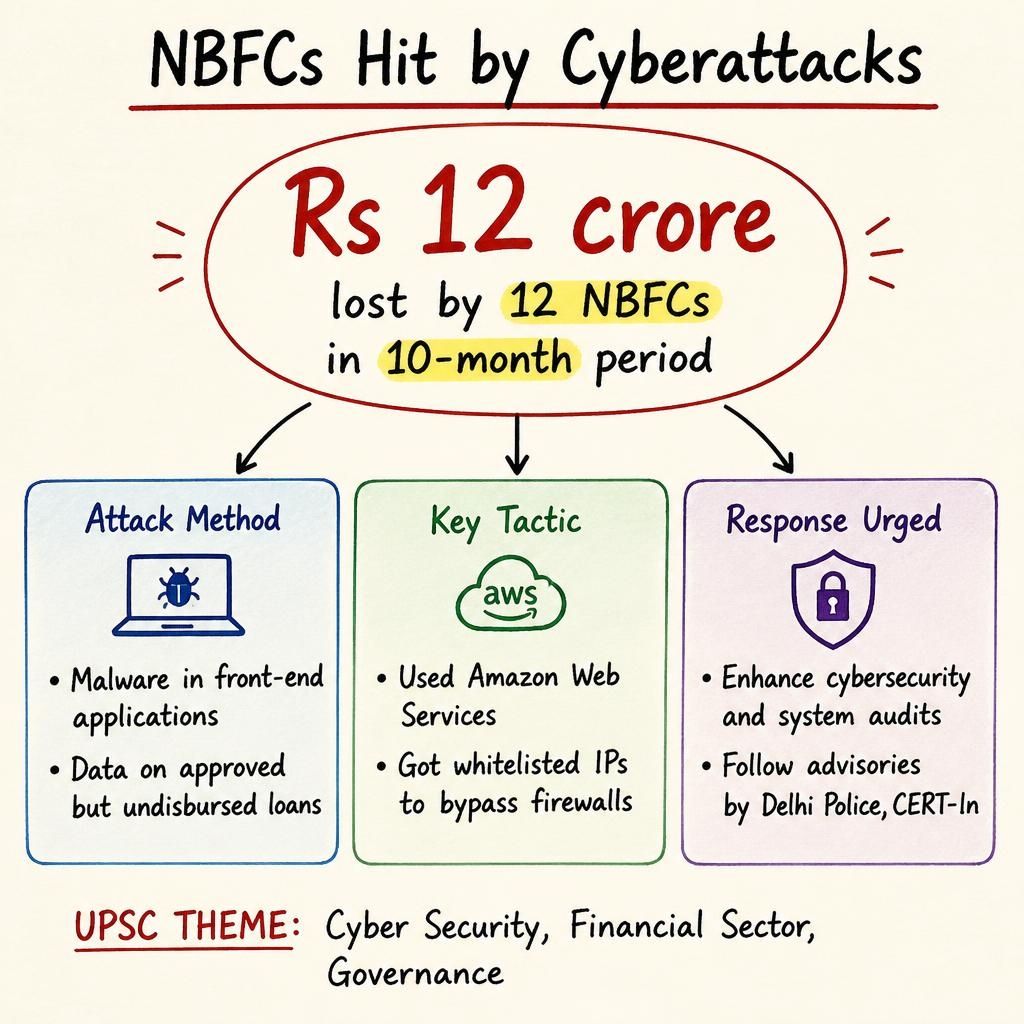
12 NBFCs lost over Rs 12 crore in 10 months to sophisticated cyberattacks leveraging AI tools and exploiting software vulnerabilities, Delhi Police reveals.
Practice MCQs
731 Students attempted
Key Highlights:
- 12 Non-Banking Financial Companies (NBFCs) collectively lost over Rs 12 crore to cyberattacks within a 10-month period.
- The Delhi Police's Intelligence Fusion and Strategic Operations (IFSO) unit detected the use of Artificial Intelligence (AI) tools by fraudsters in these attacks.
- The cyberattacks exploited vulnerabilities in the public-facing cyber systems and software code gaps of NBFCs, particularly smaller entities.
- Authorities have urged NBFCs to enhance their cybersecurity measures, conduct system audits, and adhere to advisories issued by Delhi Police and CERT-In.
NBFC and Cyberattacks.jpg
Detailed Insights:
- Cybercriminals deployed malware to infiltrate the front-end applications of NBFCs, specifically targeting user interfaces for services like loan applications.
- The malware remained dormant in the systems for approximately seven to eight days, gathering data on approved but undisbursed loans.
- Fraudsters then identified and executed specific commands required for loan disbursement, leveraging the compromised systems.
- A key tactic involved exploiting publicly available cloud services, such as Amazon Web Services, to obtain whitelisted IP addresses, thereby bypassing NBFC security firewalls.
- Smaller NBFCs were found to be more susceptible due to less robust software infrastructure and inadequate cybersecurity protocols.
- The Intelligence Fusion and Strategic Operations (IFSO) unit functions as the dedicated cyber fraud investigation arm of the Delhi Police.
Key Concepts Involved:
- Non-Banking Financial Company (NBFC): A financial institution that provides banking services but does not hold a banking license and cannot accept demand deposits.
- CERT-In: The Indian Computer Emergency Response Team, India's national agency responsible for cybersecurity incident response and issuing advisories.
- Malware: Malicious software designed to disrupt, damage, or gain unauthorized access to a computer system or network.
- IP Address: A unique numerical label assigned to each device connected to a computer network, enabling communication.
- Cloud Services: On-demand delivery of IT resources like servers, storage, databases, networking, software, analytics, and intelligence over the Internet.

SuperKalam is your personal mentor for UPSC preparation, guiding you at every step of the exam journey.
Download the App


STUDY RESOURCES
CONTACT US
ⓒ Snapstack Technologies Private Limited