GS 2: GovernanceGS 2: Social JusticeGS 3: EconomyPrelimsGS 2: Government policies and interventions for development in various sectors
Diabetes is a disease of childhood habits; the fight against it must start from school, Pg17
Childhood diabetes and obesity surge, demanding urgent school-based policy innovations to foster healthy habits and prevent future public health crises.
Practice MCQs
724 Students attempted
Key Highlights:
- A recent article highlights the alarming rise of Type 2 diabetes and obesity in Indian children, linking it to poor childhood habits.
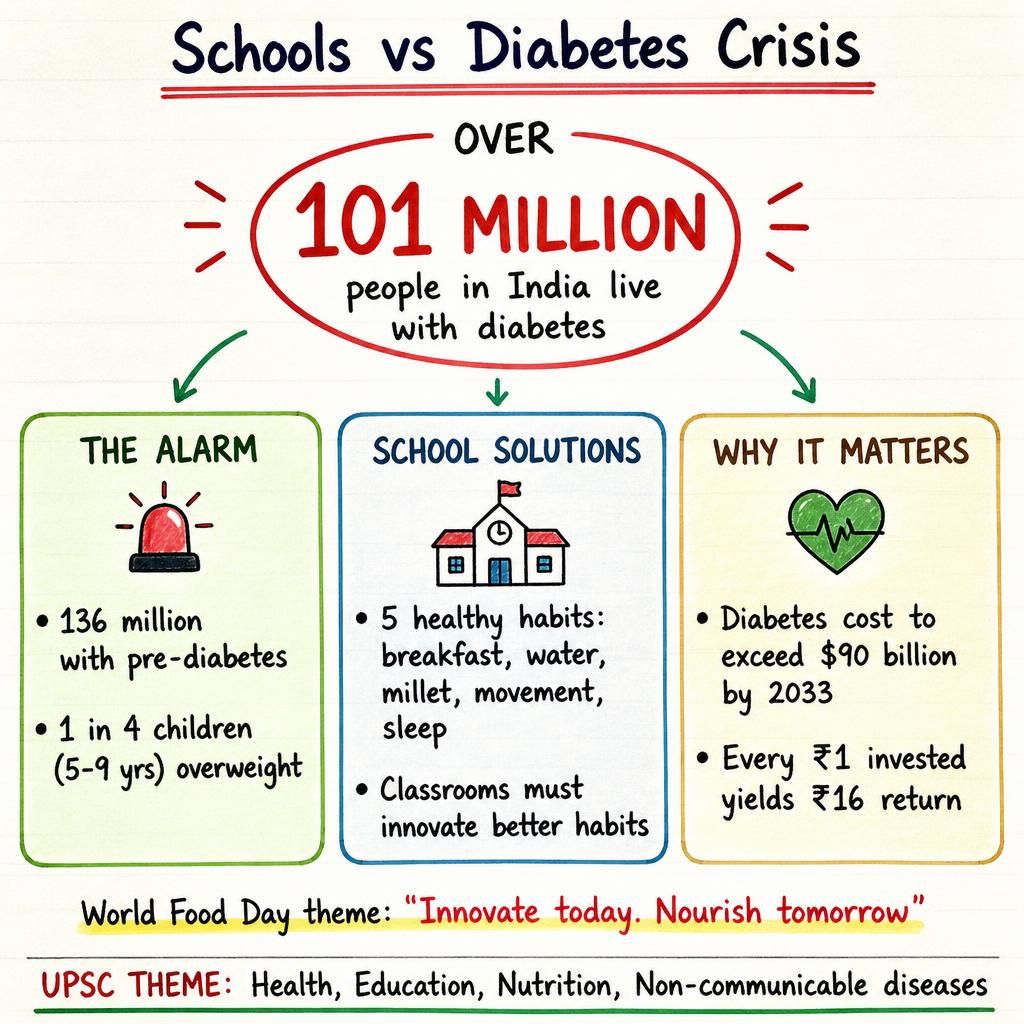
- The ICMR-INDIAB study estimates 101 million people in India live with diabetes and 136 million with pre-diabetes.
- The National Family Health Survey indicates one in four children aged 5-9 years is overweight.
- The article advocates for schools to be the primary battleground against these health issues, emphasizing the formation of healthy habits during school hours.
- It proposes five key habits: breakfast, water, millet and fruit consumption, physical movement, and adequate sleep.
- The World Food Day theme "Innovate today. Nourish tomorrow" is cited, urging innovation in classrooms for better health outcomes.
Diabetes Crisis.jpg
Detailed Insights:
- Over 50% of urban adolescents' diets consist of ultra-processed foods, contributing to the early onset of health problems.
- Approximately 70% of adult Non-communicable diseases (NCDs) are rooted in habits formed before the age of 15.
- Data shows nearly a third of urban Indian children skip breakfast, making them 40% more likely to be overweight.
- India has seen over 300% growth in sugar-sweetened beverage consumption among adolescents in a decade.
- Only 18% of Indian adolescents meet the recommended 60 minutes of daily physical activity, as per a study in The Lancet.
- Average sleep for 12-13-year-olds is 6.5 hours, significantly less than the required 8-9 hours, impacting insulin resistance.
- The National Education Policy 2020 is mentioned for its focus on foundational literacy and numeracy, but a gap in wellbeing education is noted.
- The direct economic burden of diabetes alone is projected to exceed $90 billion by 2033.
- The WHO suggests that every rupee invested in school health and nutrition yields 16 rupees in healthcare savings and productivity.
Key Concepts Involved:
- Type 2 Diabetes: A chronic condition affecting how the body processes blood sugar (glucose), often linked to lifestyle factors.
- Non-communicable Diseases (NCDs): Chronic diseases that are not passed from person to person, such as heart disease, cancer, diabetes, and chronic respiratory diseases.
- National Education Policy 2020 (NEP 2020): A comprehensive framework by the Government of India to guide the development of education in the country.
- World Food Day: An international day celebrated annually on October 16 to commemorate the founding of the Food and Agriculture Organization (FAO) of the United Nations.

SuperKalam is your personal mentor for UPSC preparation, guiding you at every step of the exam journey.
Download the App


STUDY RESOURCES
CONTACT US
ⓒ Snapstack Technologies Private Limited