GS 2: International RelationsGS 2: PolityGS 2: GovernancePrelimsGS2: Structure and Functioning of Executive and Judiciary
India Courts Will Decide Extradition Of Hasina, Talks On To Change Course, Pg1
India's courts to decide Sheikh Hasina's extradition to Bangladesh under 2013 pact, as diplomatic talks intensify amidst her planned December return.
Practice MCQs
891 Students attempted
Key Highlights:
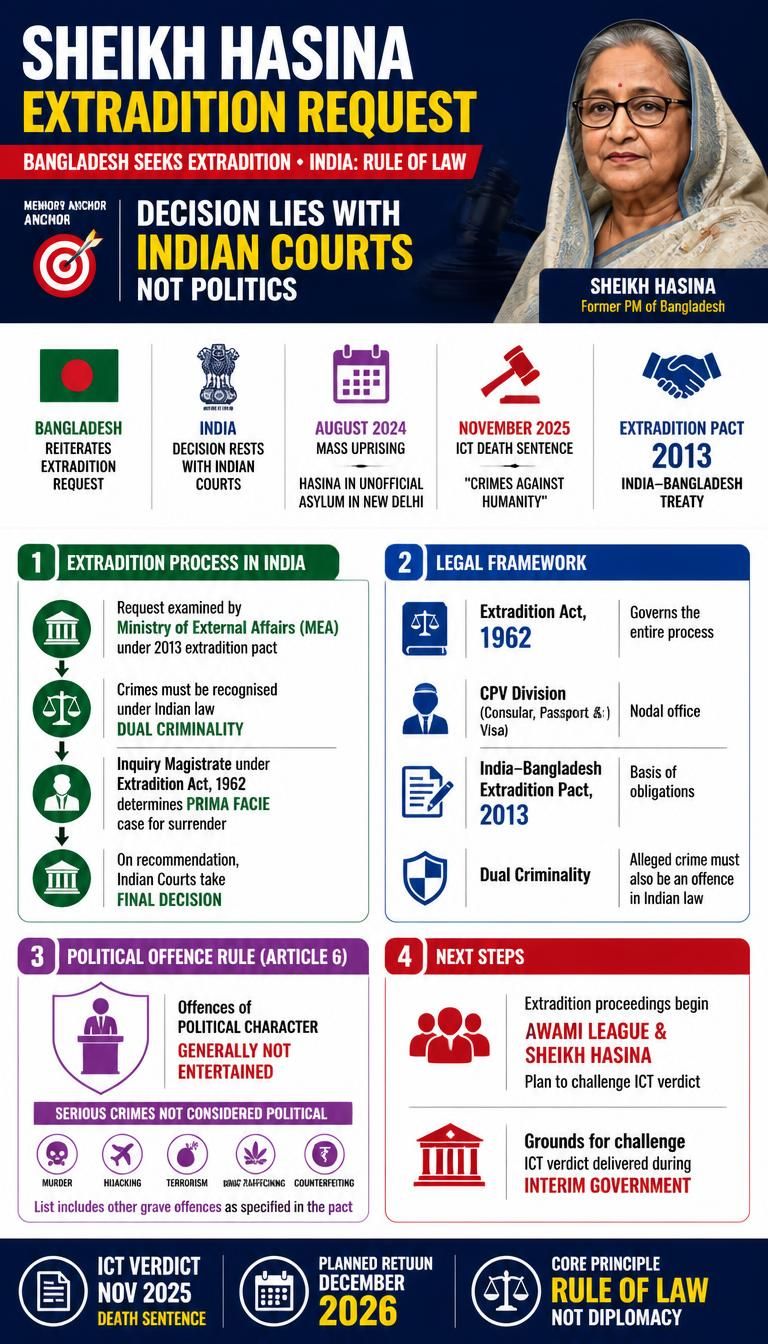
- The Tarique Rahman government of Bangladesh has reiterated its request for the extradition of former Prime Minister Sheikh Hasina from India.
- Indian officials stated that the decision on extradition rests with Indian courts, not political or diplomatic bodies.
- Sheikh Hasina, currently in unofficial asylum in New Delhi since the August 2024 mass uprising, plans to return to Bangladesh in December 2026.
- Bangladesh's request is based on a death sentence issued by the International Crimes Tribunal (ICT) in November 2025 for "crimes against humanity".
- The extradition request is being examined by India's Ministry of External Affairs (MEA) under the provisions of the 2013 extradition pact between India and Bangladesh.
Extradition.jpg
Detailed Insights:
- India maintains that for extradition, the alleged crimes must also be recognized under Indian law, a principle known as dual criminality.
- The 2013 extradition pact between India and Bangladesh outlines obligations for the return of individuals found guilty or wanted for judicially pronounced penalties.
- Article 6 of the pact specifies that offenses of a "political character" are generally not entertained, but lists specific serious crimes that are not considered political.
- India's Extradition Act, 1962, governs the process, with the CPV (Consular, Passport and Visa) division as the nodal office.
- An inquiry magistrate under the Extradition Act, 1962, determines if a prima facie case for surrender is made out before recommending extradition.
- Sheikh Hasina and her party, the Awami League, plan to challenge the ICT verdict if extradition proceedings commence, citing its delivery during an interim government.
Key Concepts Involved:
- Extradition: The formal process by which a state surrenders an individual to another state for prosecution or punishment for crimes committed.
- Dual Criminality: A principle in extradition law requiring that the offense for which extradition is sought must be a crime in both the requesting and requested states.
- Extradition Act, 1962: The primary Indian legislation that governs the extradition of fugitive criminals from India to foreign countries.

SuperKalam is your personal mentor for UPSC preparation, guiding you at every step of the exam journey.
Download the App


STUDY RESOURCES
CONTACT US
ⓒ Snapstack Technologies Private Limited