GS 2: International RelationsGS 3: EconomyPrelimsGS 3: Infrastructure: Energy, Ports, Roads, Airports, Railways etc.GS 3: Security Challenges and Management in Border Areas
Vessel transits via Hormuz crash to pre-MoU levels. Here's why, Pg13
US-Iran tensions slash Strait of Hormuz vessel transits to pre-MoU levels, spiking oil prices and worsening India's current account deficit.
Practice MCQs
883 Students attempted
Key Highlights:
- Vessel transits through the Strait of Hormuz have significantly decreased to levels last seen before the US-Iran Memorandum of Understanding (MoU) in June.
- On July 13, only 14 vessels crossed the strait, a sharp decline from 24 on July 12, indicating renewed tensions between the US and Iran.
- The drop in maritime traffic has led to an increase in oil prices, with Brent futures rising by approximately 8% over the past week to about $85 per barrel.
- Discrepancies in the interpretation of the MoU regarding designated routes and transit fees are emerging as major flashpoints.
- India is identified as one of the most vulnerable Asian economies to rising oil prices, facing potential widening of its Current Account Deficit.
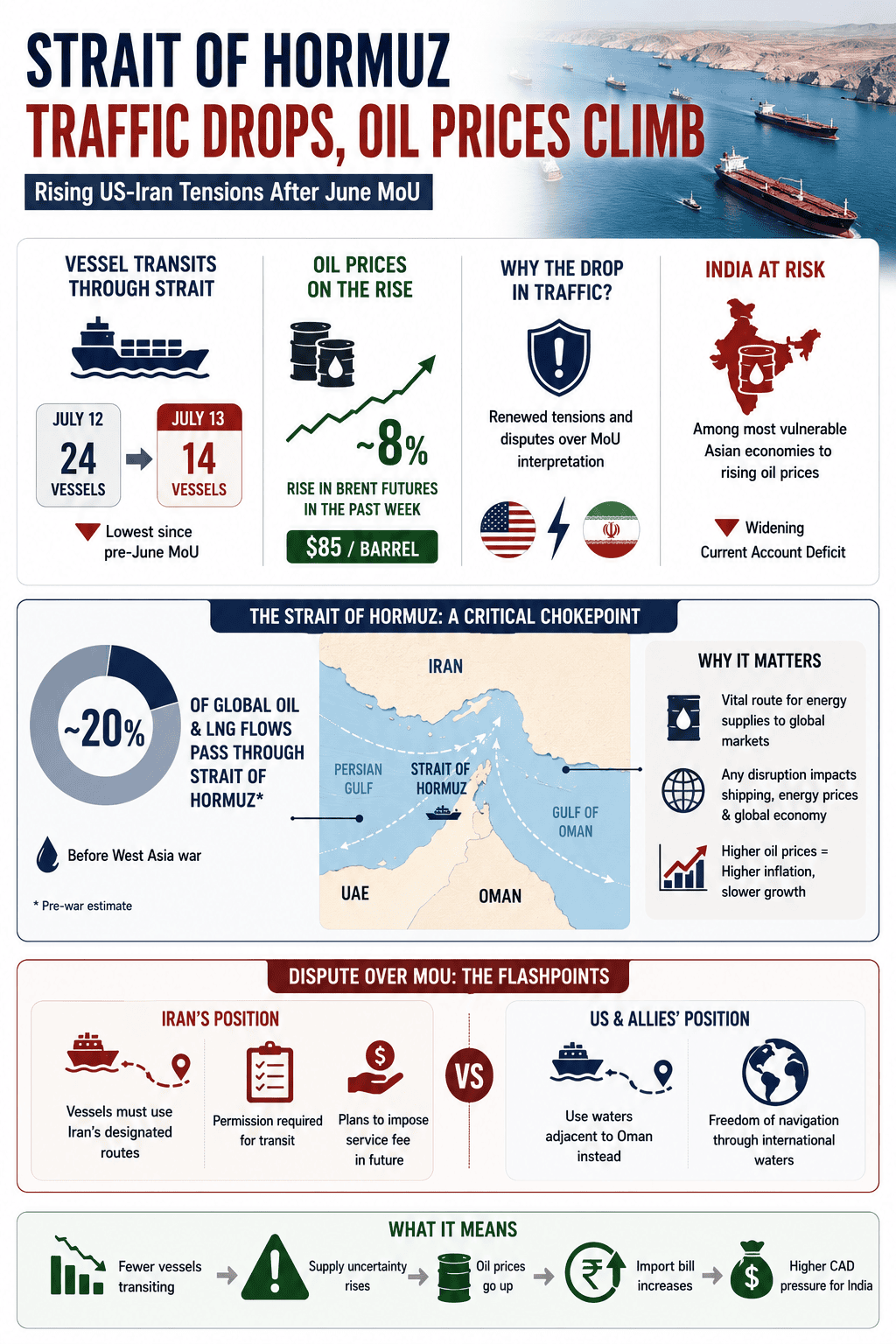
Strait of Hormuz.png
Detailed Insights:
- The Strait of Hormuz is a crucial chokepoint, historically accounting for one-fifth of global oil and Liquefied Natural Gas (LNG) flows before the West Asia war.
- Iran insists that vessels use its designated routes and seek permission for transit, with plans to impose a service fee later.
- The US and its allies encourage vessels to use waters adjacent to Oman as an alternative to Iranian-designated lanes.
- Maritime data indicates a shift towards "dark routes" and Iranian-designated paths, with activity on IMO and Omani corridors almost disappearing.
- The escalation has extended beyond the strait, with Iran reportedly engaging four Gulf states and Jordan, and Qatar suspending all maritime activity.
- Project Freedom, a US escort initiative for the southern corridor, has effectively collapsed, with only one of 12 outbound vessels using it on July 11.
- A 10% increase in oil prices typically widens India's Current Account Deficit by 0.4% of the GDP.
Key Concepts Involved:
- Strait of Hormuz: A narrow sea passage between the Persian Gulf and the Gulf of Oman, critical for global oil and gas shipments.
- US-Iran Memorandum of Understanding (MoU): An agreement signed in June aimed at de-escalating tensions between the United States and Iran.
- Brent futures: A leading global benchmark for crude oil prices, representing future delivery contracts.
- Automatic Identification System (AIS): An automatic tracking system used on ships for collision avoidance and maritime traffic monitoring.
- Dark shipping: The practice of vessels turning off their AIS transponders to avoid detection, often associated with illicit activities.
- Current Account Deficit (CAD): An economic indicator where a country's total value of imports of goods, services, and transfers is greater than its total value of exports.

SuperKalam is your personal mentor for UPSC preparation, guiding you at every step of the exam journey.
Download the App


STUDY RESOURCES
CONTACT US
ⓒ Snapstack Technologies Private Limited