GS 2: GovernanceGS 3: Science & TechnologyGS 3: EconomyPrelimsGS 3: Changes in Industrial Policy and Effects on Industrial Growth
Eye on supply chain, Cabinet approves Rs 1.27 lakh crore semiconductor push, Pg7
Cabinet greenlights Rs 1.27 lakh crore Semiconductor Mission 2.0, boosting chip supply chain and mobile manufacturing, aiming for global leadership by 2035.
Practice MCQs
883 Students attempted
Key Highlights:
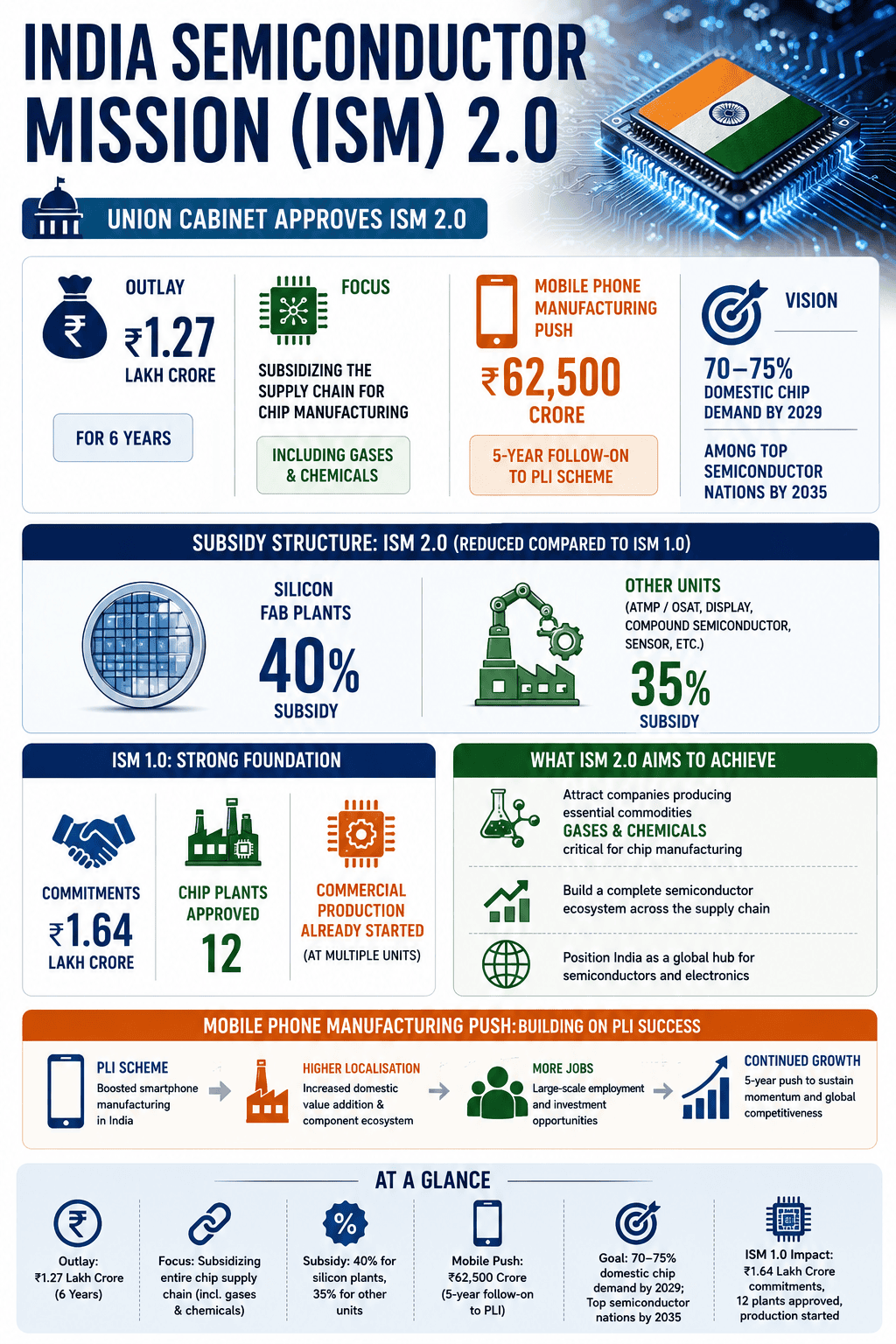
- The Union Cabinet approved India Semiconductor Mission (ISM) 2.0 with an outlay of Rs 1.27 lakh crore for six years.
- The initiative focuses on subsidizing the supply chain for chip manufacturing, including gases and chemicals.
- A Rs 62,500-crore mobile phone manufacturing push, a five-year follow-on to the Production Linked Incentive (PLI) scheme, was also approved.
- ISM 2.0 offers reduced subsidies compared to ISM 1.0, with 40% for silicon plants and 35% for other units.
- India aims to meet 70-75% of domestic chip demand by 2029 and be among the top semiconductor nations globally by 2035.
- ISM 1.0 led to commitments of Rs 1.64 lakh crore and the approval of 12 chip plants, with some already in commercial production.
ISM 2..png
Detailed Insights:
- ISM 2.0 aims to attract companies producing essential commodities like gases and chemicals required for chip production.
- The mobile phone manufacturing push is a continuation of the successful PLI scheme that significantly localized smartphone production in India.
- Subsidies under ISM 2.0 are differentiated: 40% for silicon plants, 35% for other units, 38% for advanced packaging, and 25% for conventional packaging.
- The scheme also includes government subsidies for research and development and talent development in the semiconductor sector.
- India's strategic move into semiconductor production aims to integrate into the global chip supply chain and enhance domestic value addition in electronics.
- ISM 1.0, launched in 2021, focused on building a full-stack chip ecosystem from fabrication to design and display manufacturing.
- Approved chip plants under ISM 1.0 include those by Micron Technology and Tata Electronics in partnership with PSMC.
- The new mobile manufacturing scheme targets cumulative production of Rs 39 lakh crore and aims to create 60,000 direct jobs.
- It provides incentives for domestic sourcing of key components and an additional incentive for building Indian brands through design and R&D.
- The previous PLI scheme for smartphones helped increase local value addition to 24% and created nearly 2 lakh jobs.
Key Concepts Involved:
- India Semiconductor Mission (ISM): A government initiative to build a comprehensive semiconductor ecosystem in India, from design to manufacturing.
- Production Linked Incentive (PLI) Scheme: A government scheme offering incentives to companies for increasing domestic manufacturing and exports in specific sectors.
- Semiconductor Fabrication (Fab): The process of manufacturing integrated circuits (chips) on semiconductor wafers.
- Assembly, Testing, Marking, and Packaging (ATMP): The final stages of semiconductor manufacturing, where chips are assembled, tested, and packaged for use.

SuperKalam is your personal mentor for UPSC preparation, guiding you at every step of the exam journey.
Download the App


STUDY RESOURCES
CONTACT US
ⓒ Snapstack Technologies Private Limited