GS 3: EconomyPrelimsGS2: Effect of Policies and Politics of Developed and Developing Countries on India's InterestsGS3: Indian Economy, Planning, Mobilization of Resources, Growth, Development and Employment
WPI inflation eases to 9.78% in July on softening in fuel prices, Pg29
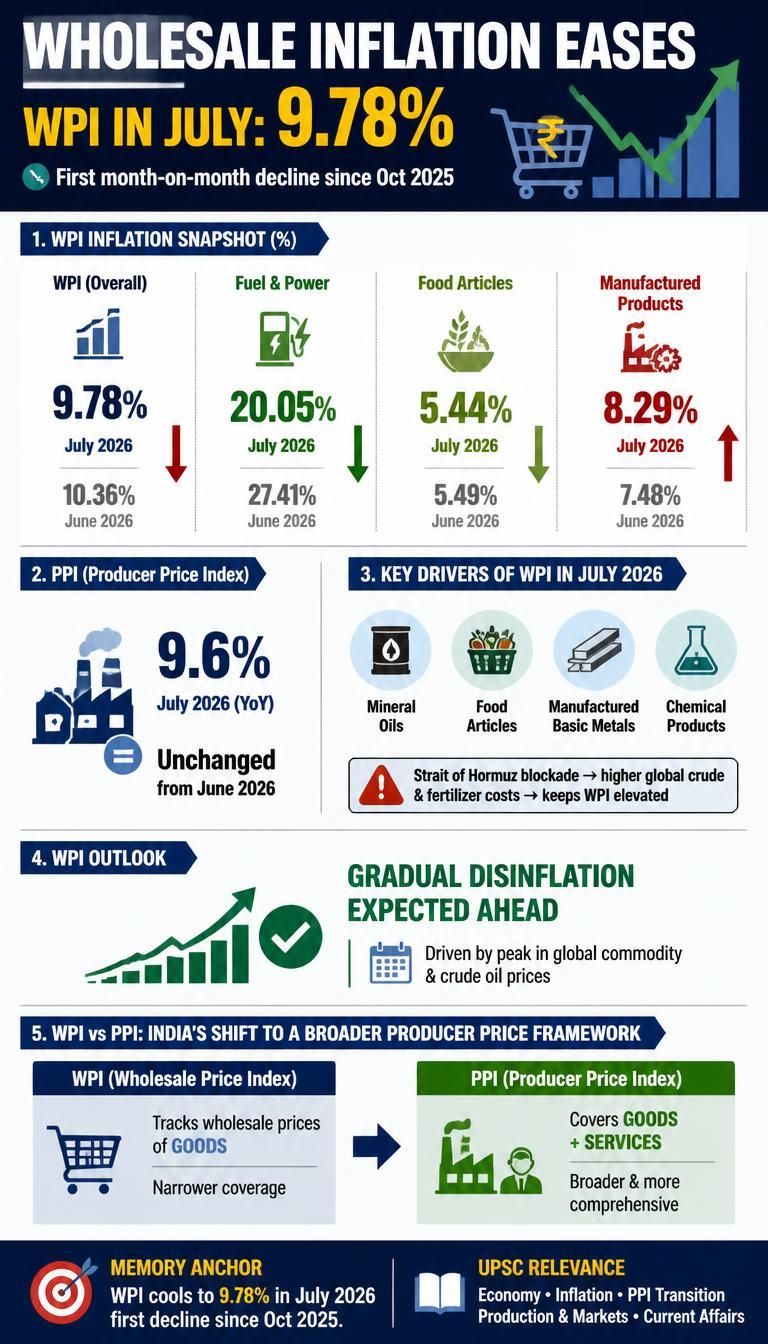
Wholesale Price Index (WPI) inflation eased to 9.78% in July, marking the first month-on-month fall in nine months, driven by softening fuel and food prices.
Practice MCQs
883 Students attempted
Key Highlights:
- Wholesale Price Index (WPI)-based inflation in India eased to 9.78% in July, marking the first month-on-month decline since October 2025.
- This softening was primarily driven by a decrease in inflation for fuel and power, which dropped to 20.05% in July from 27.41% in June.
- Food articles also saw a marginal easing in inflation, moving from 5.49% in June to 5.44% in July.
- Conversely, inflation in manufactured products increased to 8.29% in July from 7.48% in June.
- The Producer Price Index (PPI), which is intended to eventually replace the WPI, remained unchanged at 9.6% year-on-year in July.
WPI.jpg
Detailed Insights:
- The WPI measures the change in prices of goods at the wholesale or producer level, reflecting price movements before goods reach the final consumer.
- Major contributors to WPI inflation in July 2026 included mineral oils, food articles, manufactured basic metals, and chemical products.
- Experts predict a continued gradual disinflation in WPI in the coming months, attributing it to a peak in global commodity and crude oil prices.
- The Strait of Hormuz blockade has historically kept WPI elevated due to pressure on global crude and fertilizer costs.
- India is gradually moving towards adopting the Producer Price Index (PPI) framework, which is considered a more comprehensive measure of producer-level inflation.
- The PPI is broader than WPI as it can cover both goods and services, while WPI primarily tracks wholesale prices of goods.
Key Concepts Involved:
- Wholesale Price Index (WPI): An index measuring the average change in prices of goods at the wholesale level, published by the Office of the Economic Adviser, Ministry of Commerce and Industry.
- Producer Price Index (PPI): An index that measures the average change in selling prices received by domestic producers for their output, including both goods and services.
- Strait of Hormuz: A critical maritime chokepoint connecting the Persian Gulf with the Gulf of Oman and the Arabian Sea, vital for global oil and gas trade.
Previous9/9

SuperKalam is your personal mentor for UPSC preparation, guiding you at every step of the exam journey.
Download the App


STUDY RESOURCES
CONTACT US
ⓒ Snapstack Technologies Private Limited