GS 2: International RelationsGS 3: EconomyPrelimsGS 3: Effects of Liberalization on the EconomyGS 2: Bilateral, Regional and Global Groupings and Agreements
‘Gold standard’ India-U.K. trade deal is coming into effect today, Pg13
India-U.K. 'gold standard' CETA and DCC activate, eliminating tariffs on 99.5% UK trade and ending double social security for 75,000 Indian workers.
Practice MCQs
876 Students attempted
Key Highlights:
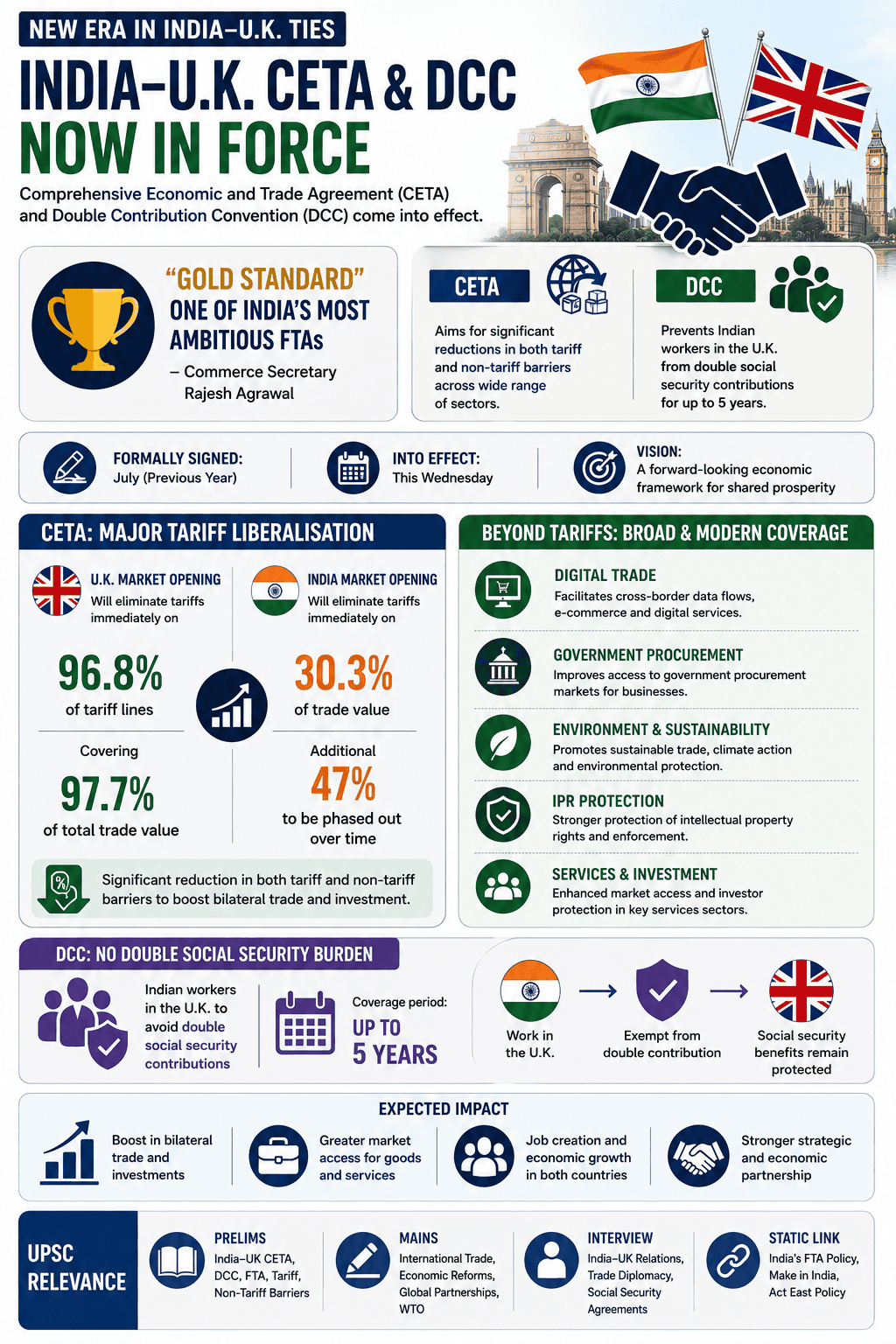
- The India-U.K. Comprehensive Economic and Trade Agreement (CETA) and Double Contribution Convention (DCC) came into effect on Wednesday.
- Commerce Secretary Rajesh Agrawal described the agreements as "gold standard" and among India's most ambitious free trade deals.
- The CETA aims for significant reductions in both tariff and non-tariff barriers across a wide range of sectors.
- The DCC is designed to prevent Indian workers in the U.K. from making double social security contributions for up to five years.
- The agreements were formally signed in July of the previous year.
Ind-UK.png
Detailed Insights:
- The CETA is envisioned to establish a forward-looking economic framework between India and the United Kingdom.
- The U.K. will immediately eliminate tariffs on 96.8% of its tariff lines, encompassing 97.7% of the total trade value.
- India will immediately eliminate tariffs on 30.3% of trade value, with an additional 47% phased out over time.
- The agreement's scope extends beyond traditional tariff liberalization to include digital trade, government procurement, and environmental considerations.
- It specifically addresses non-tariff barriers such as Sanitary and Phytosanitary Measures (SPS) and Technical Barriers to Trade (TBT).
- Sensitive Indian sectors, including dairy, cereals, gold, and smartphones, are protected under the provisions of the CETA.
- The DCC is projected to benefit over 75,000 Indian workers and more than 900 employers by streamlining social security payments.
Key Concepts Involved:
- Comprehensive Economic and Trade Agreement (CETA): A broad free trade agreement covering goods, services, investment, and other areas to deepen economic ties.
- Double Contribution Convention (DCC): An agreement preventing individuals from paying social security contributions in two countries simultaneously.
- Free Trade Agreement (FTA): A pact between two or more countries to reduce barriers to imports and exports among them.
- Tariff Barriers: Taxes or duties imposed on imported goods, making them more expensive and less competitive.
- Non-Tariff Barriers: Non-tax measures like quotas, embargoes, or technical regulations that restrict international trade.
- Sanitary and Phytosanitary Measures (SPS): Regulations to protect human, animal, or plant life or health from risks arising from food or diseases.
- Technical Barriers to Trade (TBT): Technical regulations, standards, and conformity assessment procedures that can create obstacles to international trade.

SuperKalam is your personal mentor for UPSC preparation, guiding you at every step of the exam journey.
Download the App


STUDY RESOURCES
CONTACT US
ⓒ Snapstack Technologies Private Limited