GS 2: International RelationsGS 3: Environment & EcologyGS 3: EconomyPrelimsGS 3: Government Budgeting
Polluters must pay to fight climate change, stresses Finance Minister, Pg9
FM Sitharaman advocates 'polluter pays' principle at Munich Security Conference, urging tech sharing and differentiated climate responsibilities among nations.
Practice MCQs
840 Students attempted
Key Highlights:
- Finance Minister Nirmala Sitharaman advocated for differentiated responsibility in climate change mitigation based on the 'polluter pays' principle at the Munich Security Conference.
- She urged developed nations to share climate change technologies commercially and contribute more to climate action funding, especially for countries with lower emissions.
- India has increased its GDP spending on climate action over the past six years, demonstrating its commitment despite awaiting external funds and technology.
- The Union Budget for 2026-27 shows an increase in funding for the 'Green India' mission to ₹212.5 crore, while allocation for pollution control decreased to ₹1,091 crore.
Detailed Insights:
- Sitharaman emphasized the need for immediate responses to climate change impacts on communities, focusing on resilience and adaptation alongside emissions control.
- She highlighted that funding for environmental programs is a dynamic process, with potential for supplementary need-based grants throughout the year.
- The Minister's statements come amid concerns about weakened international cooperation on climate change, particularly after the U.S. withdrawal from the Paris Agreement.
- U.S. Senator Sheldon Whitehouse criticized the Trump administration's stance on climate change, accusing the fossil fuel industry of spreading misinformation.
- The 'polluter pays' principle suggests that those responsible for pollution should bear the costs of managing it to prevent environmental damage.
- Climate security involves addressing the security risks arising from climate change, such as resource scarcity, displacement, and increased social instability.
Key Concepts Involved:
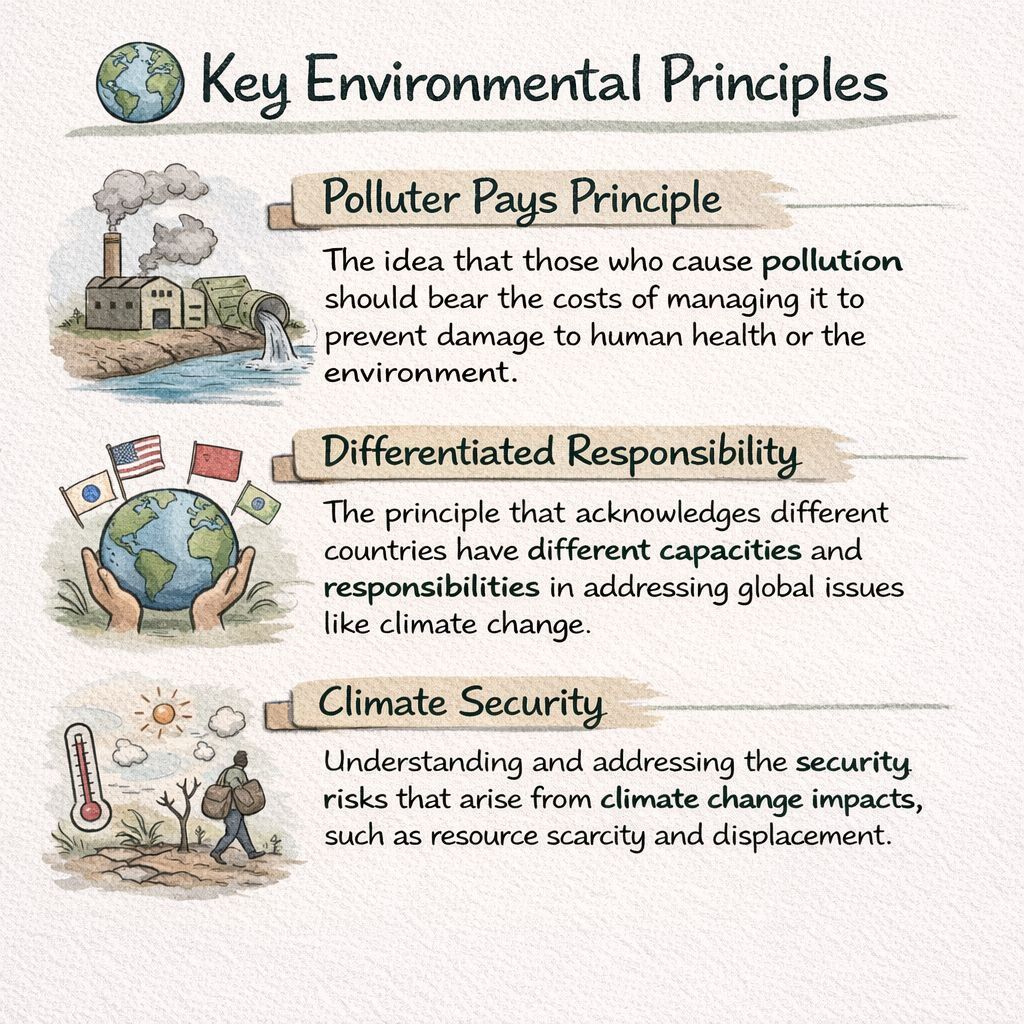
IMAGE 2026-02-15 08:43:34.jpg

SuperKalam is your personal mentor for UPSC preparation, guiding you at every step of the exam journey.
Download the App


STUDY RESOURCES
CONTACT US
ⓒ Snapstack Technologies Private Limited